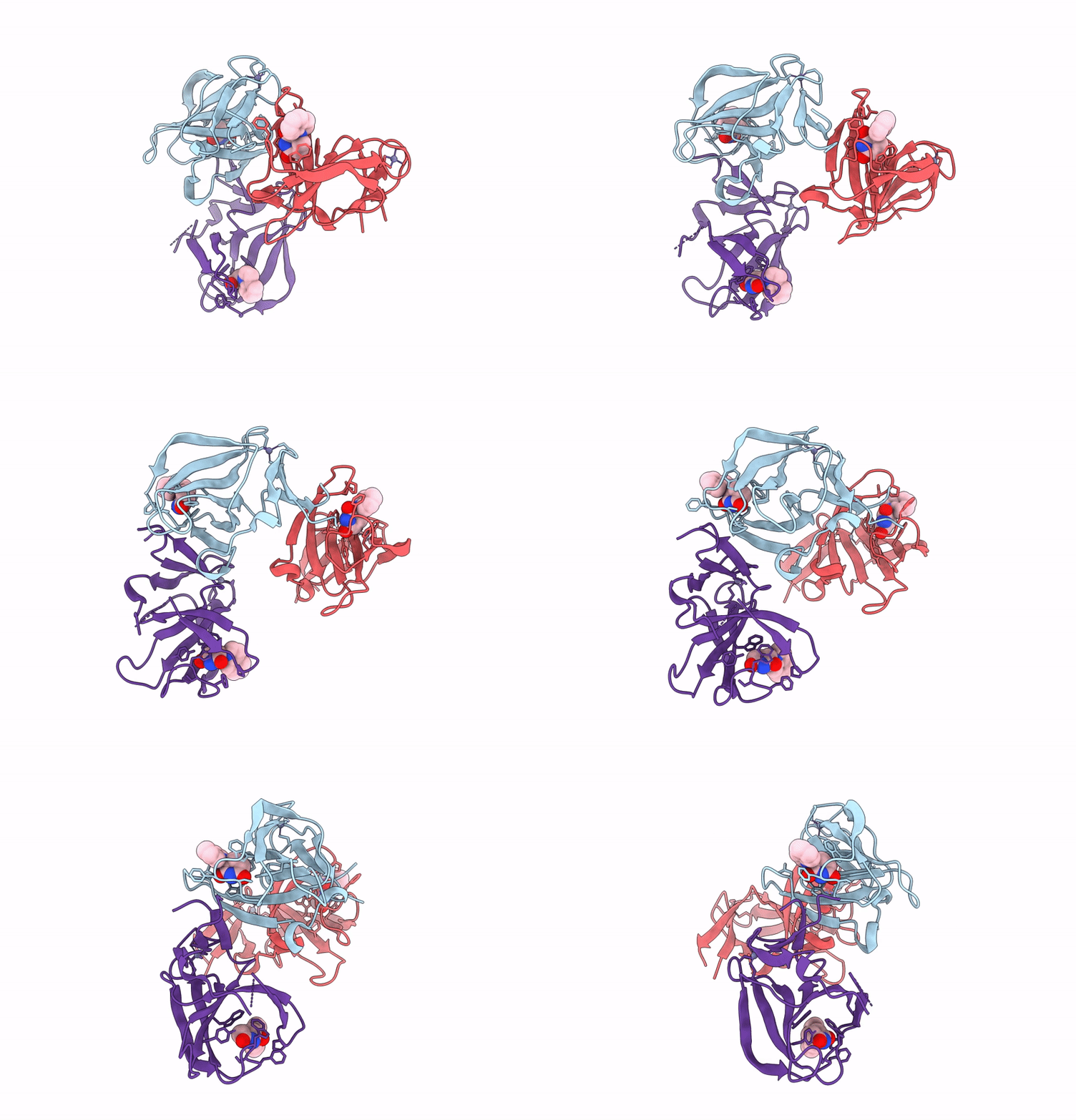
9HTO image
Deposition Date 2024-12-19
Release Date 2025-10-29
Last Version Date 2025-10-29
Entry Detail
PDB ID:
9HTO
Title:
Cereblon isoform 4 from Magnetospirillum gryphiswaldense in complex with glutarimide based compound 2r
Biological Source:
Source Organism:
Method Details:
Experimental Method:
Resolution:
1.85 Å
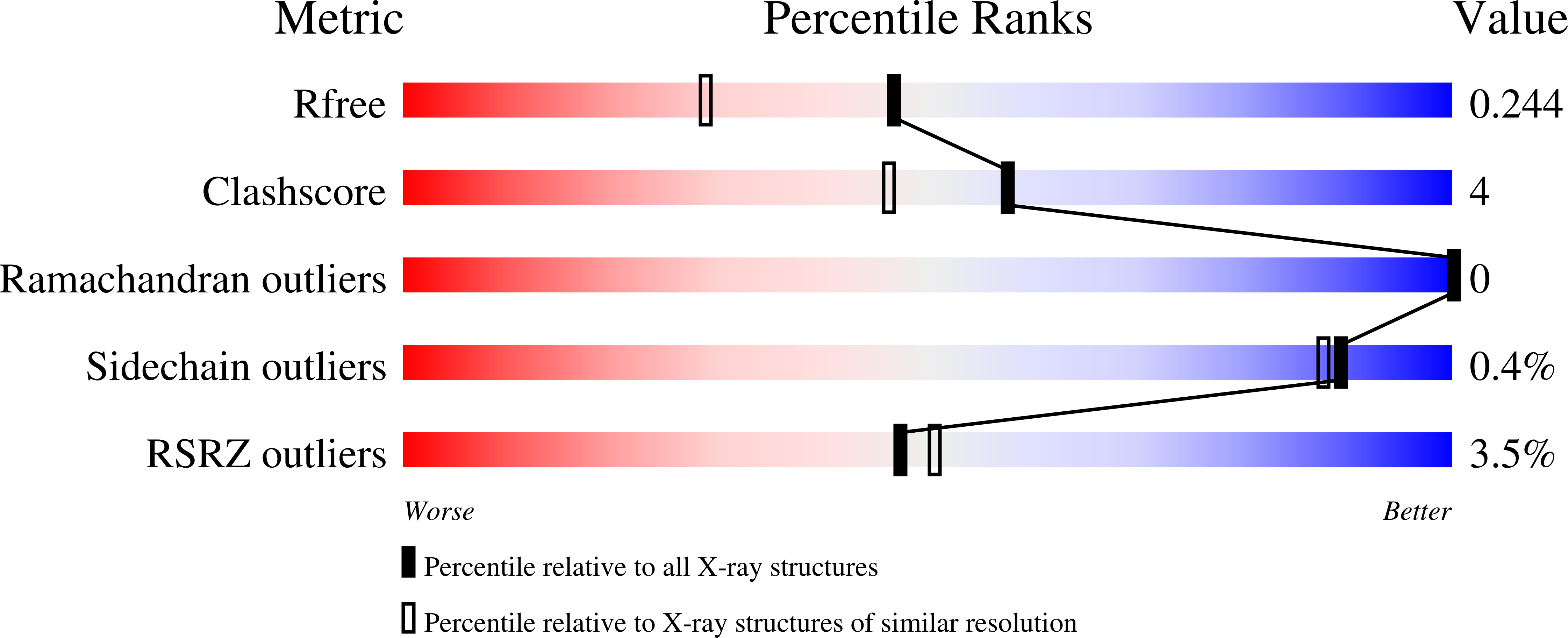
R-Value Free:
0.24
R-Value Work:
0.19
R-Value Observed:
0.19
Space Group:
P 21 21 21
Macromolecular Entities
Structures with similar UniProt ID
Protein Blast
Polymer Type:polypeptide(L)
Molecule:Cereblon isoform 4
Gene (Uniprot):MGR_0879
Chain IDs:A, B, C
Chain Length:125
Number of Molecules:3
Biological Source:Magnetospirillum gryphiswaldense
Primary Citation
Extending the chemical space of glutarimide-based cereblon ligands through an efficient Rh(II)-catalyzed X-H insertion reaction.
Eur.J.Med.Chem. 301 118235 118235 (2025)
PMID: 41086529 DOI: 10.1016/j.ejmech.2025.118235

Abstact

In this work we present an easy, one-step synthetic protocol to explore a large chemical space of glutarimide-based cereblon (CRBN) ligands for targeted protein degradation. It is built upon our recently suggested approach to generating structurally diverse series of alpha-substituted glutarimide derivatives through an efficient Rh(II)-catalyzed X-H insertion reaction of 3-diazopiperidine-2,6-dione, with moderate to high yields. In total, 25 glutarimide derivatives incorporating variable side chains were synthesized and evaluated in vitro. All ligands showed a favorable lipophilicity, and several were able to outperform the binding affinity of thalidomide as a reference. In addition, most compounds showed low intrinsic cytotoxicity in myeloma cell lines and human peripheral blood mononuclear cells, and did not recruit canonical neosubstrates. A cellular thermal shift assay further demonstrated that the most potent analogs stabilize CRBN in live cells, confirming their on-target engagement. The development of the series was accompanied by a crystallographic study, which rationalizes the observed improvements in binding affinity and neosubstrate selectivity, and can support further development towards molecular glue activity and PROTACs design.

Legend

Protein

Chemical

Disease

Primary Citation of related structures
Feedback Form
Name
Email
Institute
Feedback