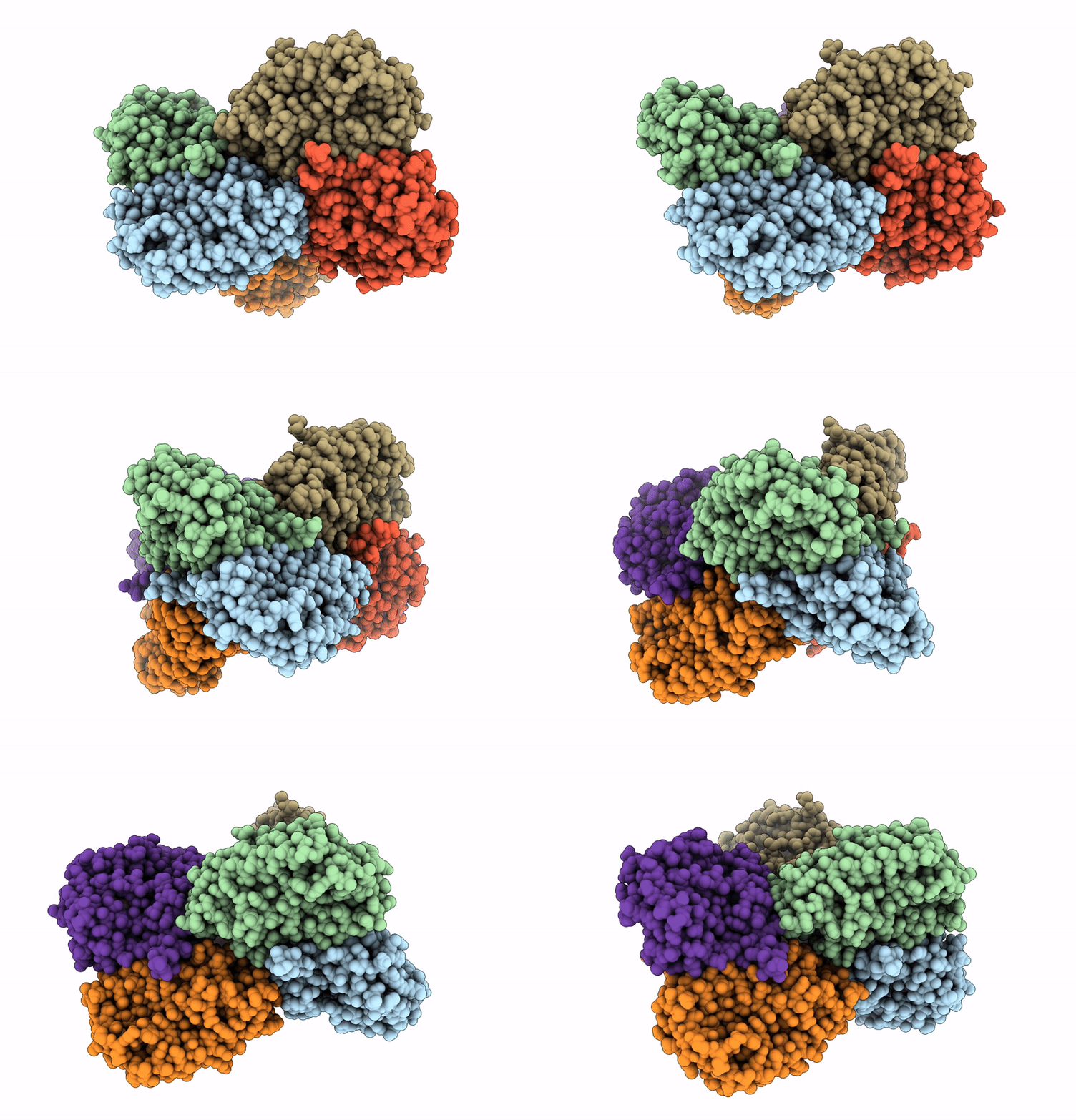
9HJS image
Deposition Date 2024-12-01
Release Date 2025-06-25
Last Version Date 2025-12-10
Entry Detail
PDB ID:
9HJS
Keywords:
Title:
Crystal structure of human geranylgeranyl diphosphate synthase mutant R235C
Biological Source:
Source Organism:
Homo sapiens (Taxon ID: 9606)
Host Organism:
Method Details:
Experimental Method:
Resolution:
2.51 Å
R-Value Free:
0.27
R-Value Work:
0.22
R-Value Observed:
0.22
Space Group:
P 1 2 1
Macromolecular Entities
Structures with similar UniProt ID
Protein Blast
Polymer Type:polypeptide(L)
Molecule:Geranylgeranyl pyrophosphate synthase
Gene (Uniprot):GGPS1
Mutagens:R235C
Chain IDs:A, B, C, D, E, F
Chain Length:307
Number of Molecules:6
Biological Source:Homo sapiens
Primary Citation
A somatic multiple myeloma mutation unravels a mechanism of oligomerization-mediated product inhibition in GGPPS.
Febs J. 292 5802 5817 (2025)
PMID: 40621901 DOI: 10.1111/febs.70181

Abstact

Protein prenylation plays a critical role in regulating the cellular localization of small GTPases and is essential for multiple myeloma (MM) pathology. Geranylgeranyl diphosphate synthase (GGPPS), producing a key prenylation moiety, exists in a dimeric or hexameric form, depending on the species. However, the functional significance of this oligomerization remains unclear. Using crystallography, mass spectrometry, and fluorescence spectroscopy, we show that the GGPPSR235C mutant-found in the widely studied MM cell line RPMI-8226-exhibits weakened inter-dimer interactions, reduced hexamer stability, and increased apparent substrate affinity and product release kinetics. These effects are even more pronounced in a dimeric mutant, GGPPSY246D, demonstrating that interdimer interactions within the hexamer help stabilize a lid region over the active site, thereby stabilizing product binding in an inhibitory conformation. Together, these findings reveal that hexamerization regulates GGPPS activity through product inhibition and underscore the importance of cell line selection and characterization in drug discovery efforts.

Legend

Protein

Chemical

Disease

Primary Citation of related structures
Feedback Form
Name
Email
Institute
Feedback