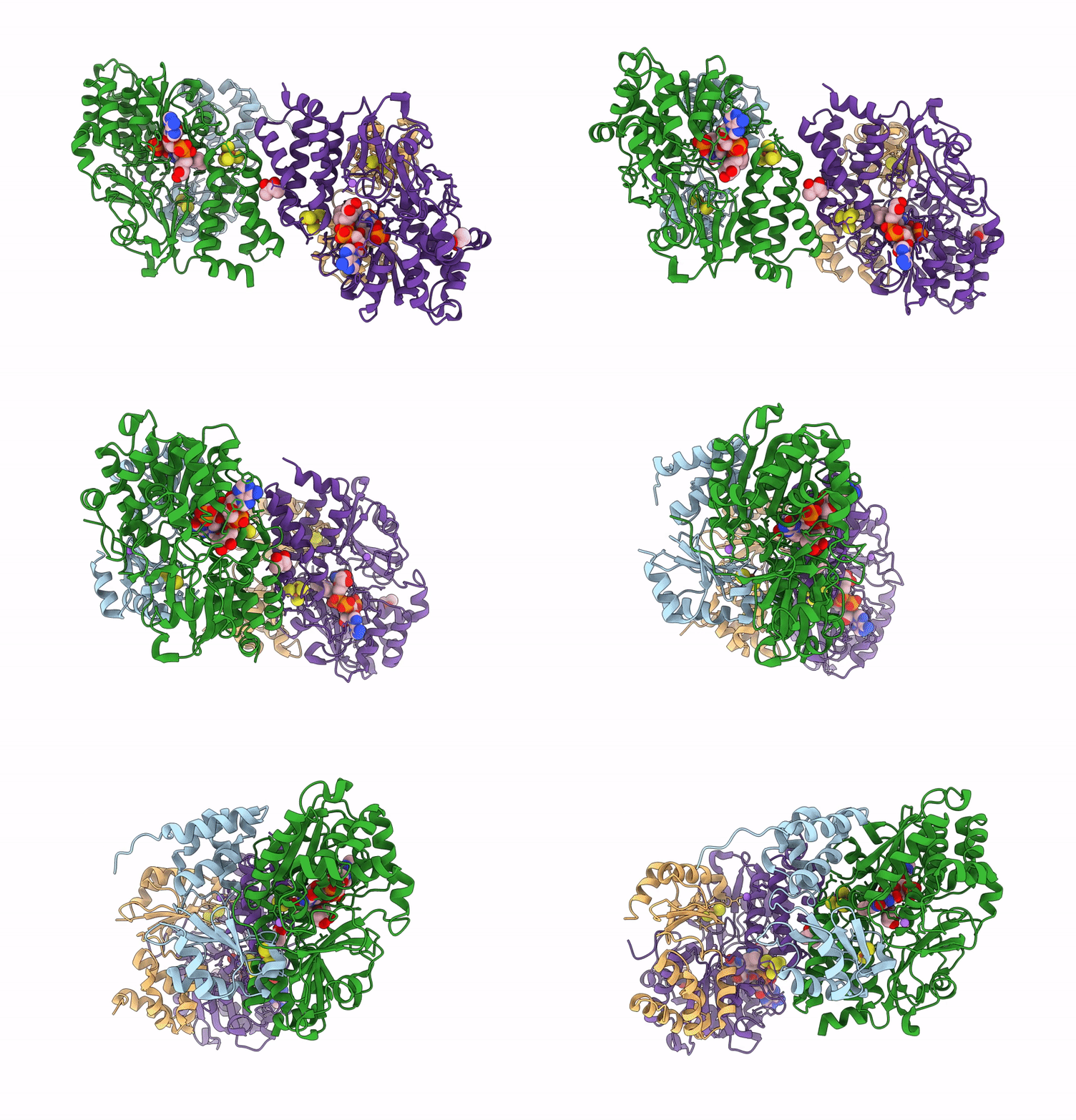
9HEN image
Deposition Date 2024-11-14
Release Date 2025-11-05
Last Version Date 2025-12-03
Entry Detail
PDB ID:
9HEN
Keywords:
Title:
Crystal structure of the oxidized respiratory complex I subunit NuoEF from Aquifex aeolicus, double mutation V90P and V136M(NuoE), bound to NAD+
Biological Source:
Source Organism:
Host Organism:
Method Details:
Experimental Method:
Resolution:
2.27 Å
R-Value Free:
0.18
R-Value Work:
0.16
Space Group:
P 1 21 1
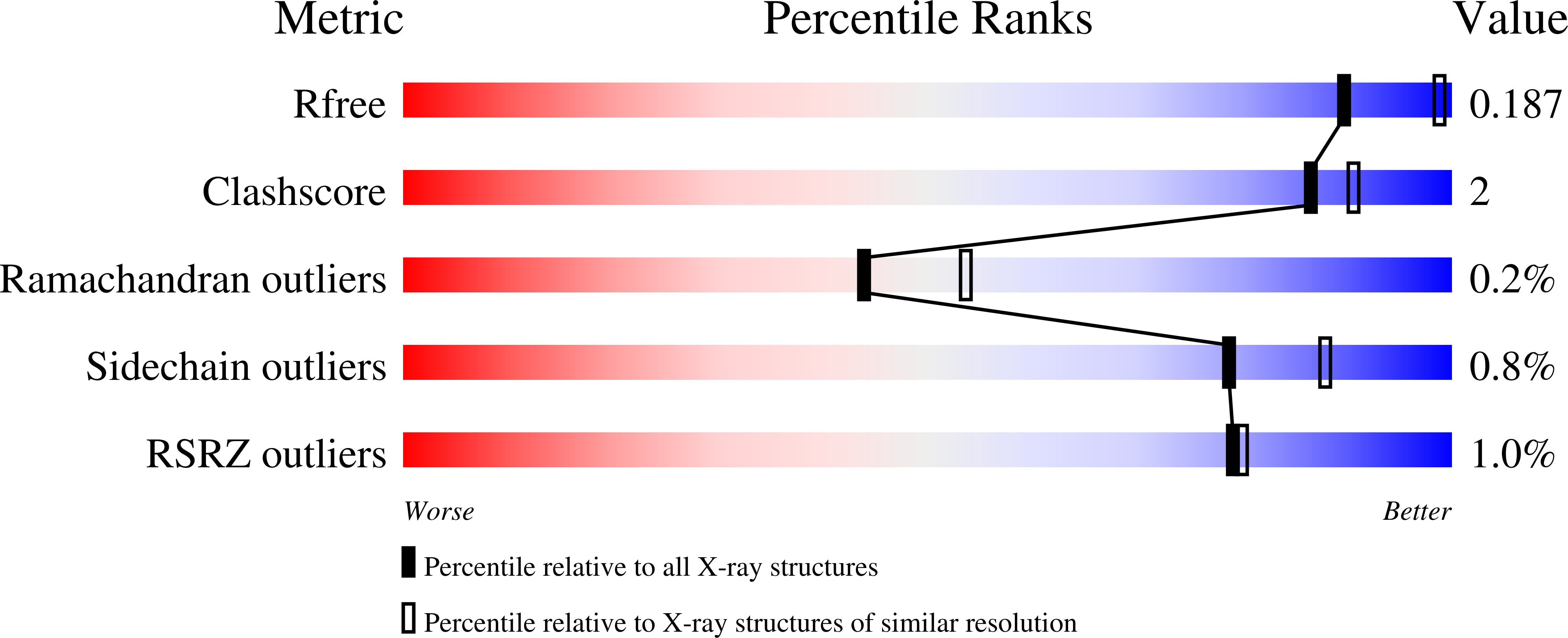
Macromolecular Entities
Structures with similar UniProt ID
Protein Blast
Polymer Type:polypeptide(L)
Molecule:NADH-quinone oxidoreductase subunit E
Gene (Uniprot):nuoE
Mutagens:V90P, V136M
Chain IDs:A, C
Chain Length:160
Number of Molecules:2
Biological Source:Aquifex aeolicus VF5
Structures with similar UniProt ID
Protein Blast
Polymer Type:polypeptide(L)
Molecule:NADH-quinone oxidoreductase subunit F
Gene (Uniprot):nuoF
Chain IDs:B, D
Chain Length:434
Number of Molecules:2
Biological Source:Aquifex aeolicus VF5
Primary Citation
Structural changes shifting the redox potential of the outlying cluster N1a in respiratory complex I.
Structure ? ? ? (2025)
PMID: 41265450 DOI: 10.1016/j.str.2025.10.016

Abstact

Energy-converting NADH:ubiquinone oxidoreductase, respiratory complex I, is central to energy metabolism by coupling NADH oxidation and quinone reduction with proton translocation across the membrane. Electrons are transferred from the primary acceptor flavin mononucleotide via a chain of iron-sulfur clusters to quinone. The enigmatic cluster N1a is conserved, but not part of this electron transfer chain. We reported on variants of the complex in which N1a is not detectable by EPR spectroscopy. This was tentatively attributed to the lower redox potential of the variant N1a. However, it remained an open question, whether the variants contain this cluster at all. Here, we determined the structures of these variants by X-ray crystallography and cryogenic-electron microscopy. Cluster N1a is present in all variants and the shift of its redox potential is explained by nearby structural changes. A role of the cluster for the mechanism of the complex is discussed.

Legend

Protein

Chemical

Disease

Primary Citation of related structures
Feedback Form
Name
Email
Institute
Feedback