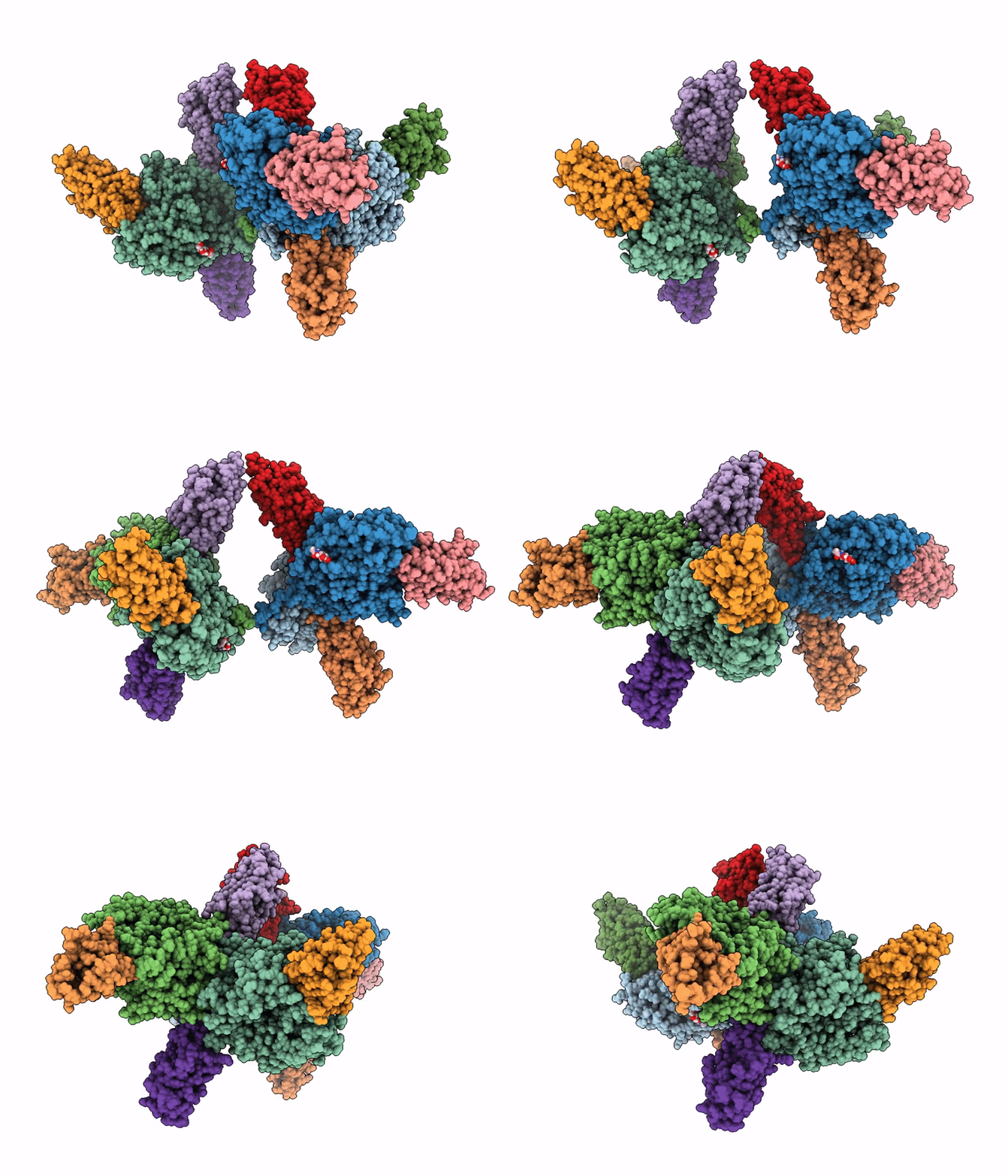
9HBP image
Deposition Date 2024-11-07
Release Date 2026-01-21
Last Version Date 2026-01-21
Entry Detail
PDB ID:
9HBP
Keywords:
Title:
Cryo-EM structure of the canine distemper virus tetrameric attachment H glycoprotein in complex with two different Nanobodies
Biological Source:
Source Organism(s):
Expression System(s):
Method Details:
Experimental Method:
Resolution:
4.30 Å
Aggregation State:
PARTICLE
Reconstruction Method:
SINGLE PARTICLE

Macromolecular Entities
Structures with similar UniProt ID
Protein Blast
Polymer Type:polypeptide(L)
Molecule:Hemagglutinin glycoprotein
Gene (Uniprot):H
Chain IDs:A, B, G (auth: C), H (auth: D)
Chain Length:607
Number of Molecules:4
Biological Source:Morbillivirus canis
Polymer Type:polypeptide(L)
Molecule:Nanobody H7
Chain IDs:C (auth: E), D (auth: F), I, J
Chain Length:124
Number of Molecules:4
Biological Source:Lama glama
Polymer Type:polypeptide(L)
Molecule:Nanobody H9
Chain IDs:E (auth: G), F (auth: H), K, L
Chain Length:127
Number of Molecules:4
Biological Source:Lama glama
Ligand Molecules
Primary Citation
Protection against lethal canine distemper virus infection by a dual epitope-targeting synthetic antibody.
Nat Commun 17 103 103 (2026)
PMID: 41501035 DOI: 10.1038/s41467-025-67600-z

Abstact

Despite vaccine availability, the morbilliviruses measles virus and canine distemper virus (CDV) are still causing major health impairments in human and animal populations. Here, we identified two potent, neutralizing single domain antibodies directed against the tetrameric receptor binding (H) protein of CDV. Structural analyses spotlighted two vulnerable sites within the H protein. While the first overlaps with the receptor binding site, the second encompasses amino acid residues of two protomers located at the distal dimeric head interface, which supports distinct mechanisms of neutralization. Upon application of an engineered tetravalent and biparatopic antibody, ferrets were protected at a remarkably low antibody dose (1 mg/kg) administered intra-peritoneally on days 3 and 7 post-exposure of a lethal CDV challenge. Collectively, this study spotlights the power of integrating multiple mechanisms of neutralization in a single format and provides a roadmap to design next-generation therapeutics against morbilliviral infections as well as other infectious pathogens.

Legend

Protein

Chemical

Disease

Primary Citation of related structures
Feedback Form
Name
Email
Institute
Feedback