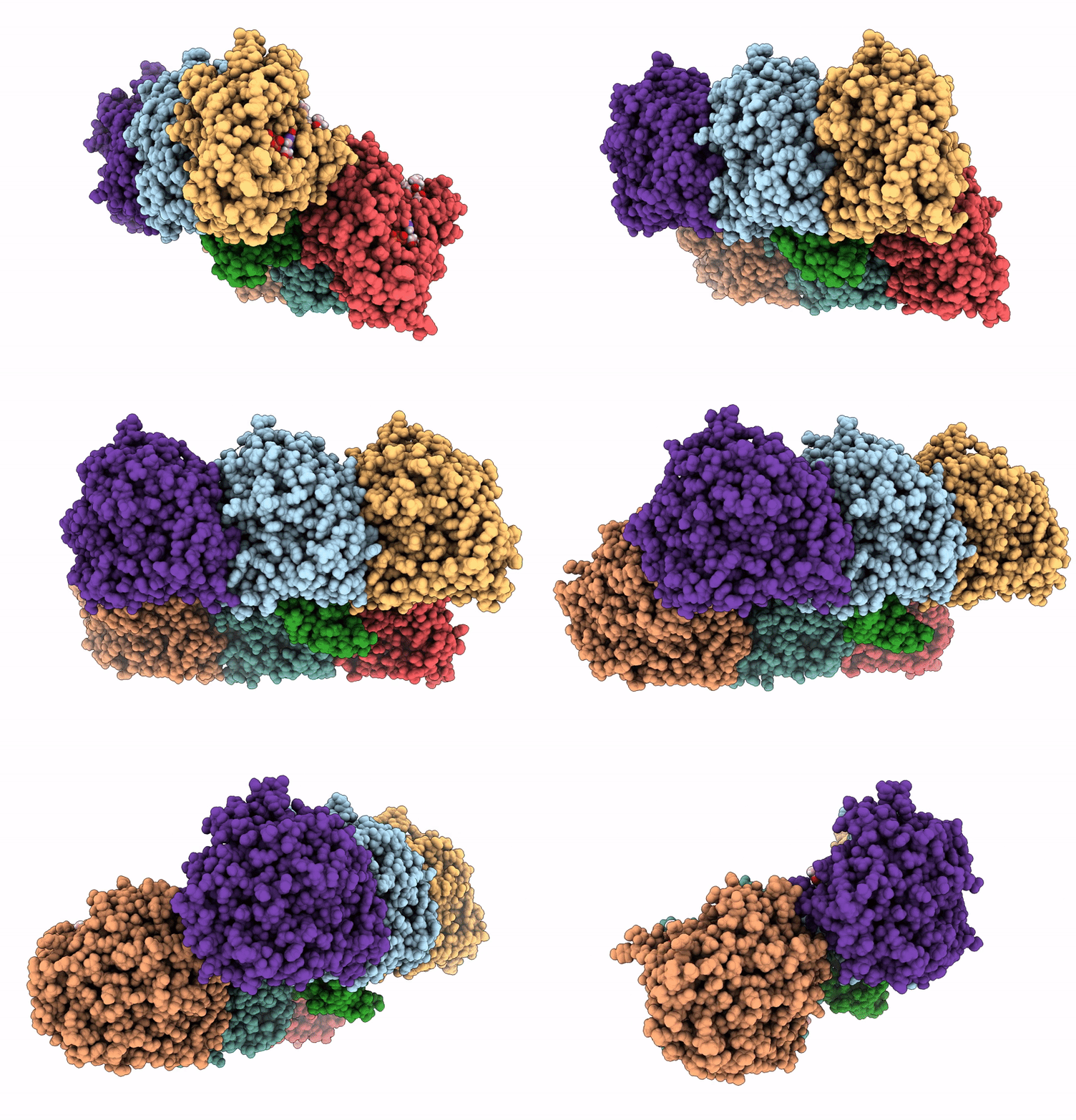
9H1O image
Deposition Date 2024-10-09
Release Date 2025-10-29
Last Version Date 2026-02-04
Entry Detail
PDB ID:
9H1O
Title:
Cryo-EM structure of taxol-microtubules in complex with the C1 domain of GEFH1
Biological Source:
Source Organism(s):
Homo sapiens (Taxon ID: 9606)
Bos taurus (Taxon ID: 9913)
Expression System(s):
Method Details:
Experimental Method:
Resolution:
3.40 Å
Aggregation State:
PARTICLE
Reconstruction Method:
SINGLE PARTICLE
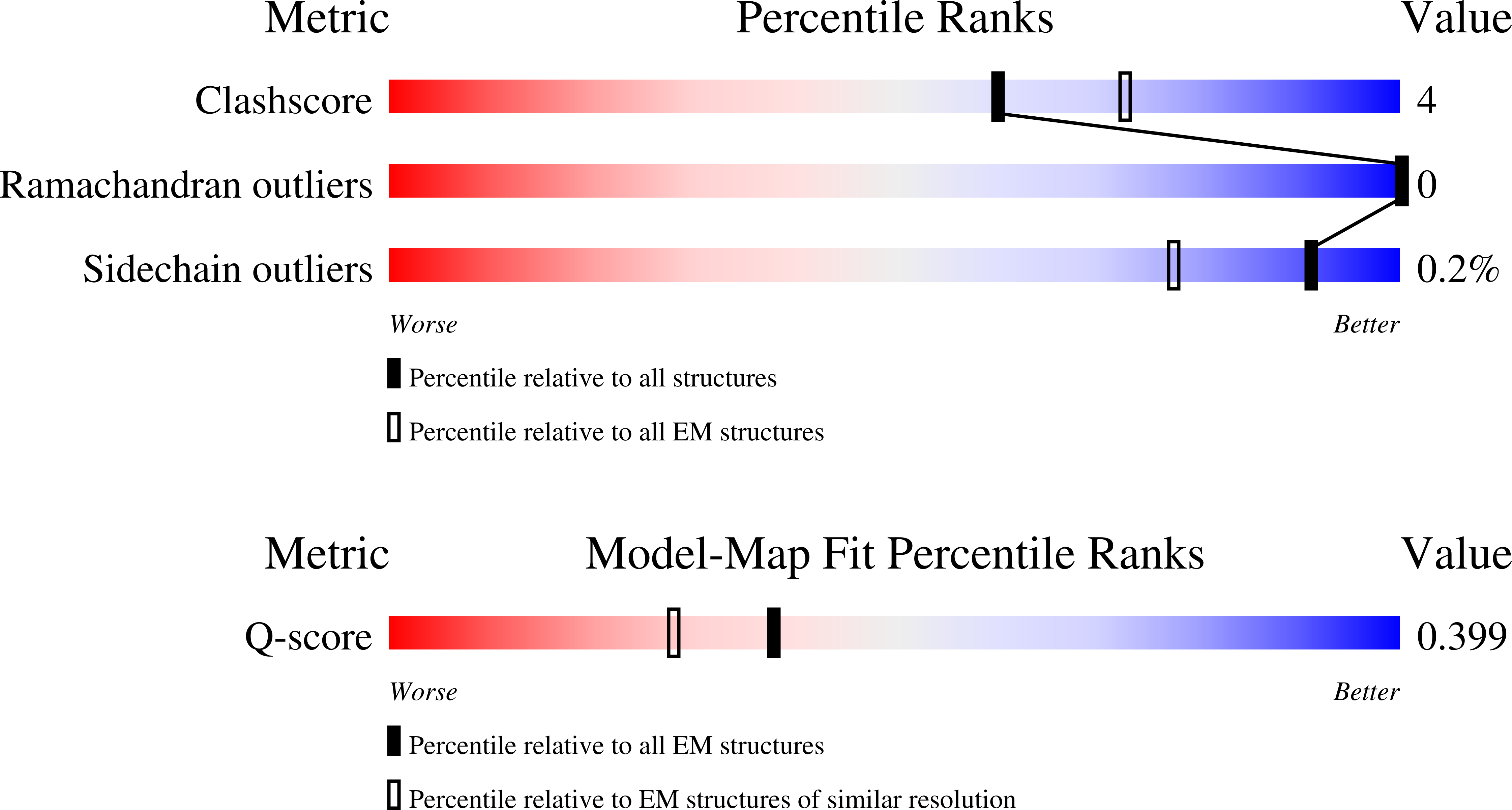
Macromolecular Entities
Structures with similar UniProt ID
Protein Blast
Polymer Type:polypeptide(L)
Molecule:Tubulin alpha-1B chain
Chain IDs:B, C (auth: A)
Chain Length:451
Number of Molecules:2
Biological Source:Bos taurus
Structures with similar UniProt ID
Protein Blast
Polymer Type:polypeptide(L)
Molecule:Rho guanine nucleotide exchange factor 2
Gene (Uniprot):ARHGEF2
Chain IDs:A (auth: C)
Chain Length:75
Number of Molecules:1
Biological Source:Homo sapiens
Structures with similar UniProt ID
Protein Blast
Polymer Type:polypeptide(L)
Molecule:Tubulin beta-2B chain
Gene (Uniprot):TUBB2B
Chain IDs:D, E, F, G
Chain Length:445
Number of Molecules:4
Biological Source:Bos taurus
Primary Citation
Structural basis of microtubule-mediated signal transduction.
Cell 189 461 ? (2026)
PMID: 41365297 DOI: 10.1016/j.cell.2025.11.011

Abstact

Microtubules have long been recognized as upstream mediators of intracellular signaling, but the mechanisms underlying this fundamental function remain elusive. Here, we identify the structural basis by which microtubules regulate the guanine nucleotide exchange factor H1 (GEFH1), a key activator of the Ras homolog family member A (RhoA) pathway. We show that specific features of the microtubule lattice bind the C1 domain of GEFH1, leading to the sequestration and inactivation of this signaling protein. Targeted mutations in C1 residues disrupt this interaction, triggering GEFH1 release and activation of RhoA-dependent immune responses. Building on this sequestration-and-release mechanism, we identify microtubule-binding C1 domains in additional signaling proteins, including other guanine nucleotide exchange factors (GEFs), kinases, a GTPase-activating protein (GAP), and a tumor suppressor, and show that microtubule-mediated regulation via C1 domains is conserved in the Ras association domain-containing protein 1A (RASSF1A). Our findings establish a structural framework for understanding how microtubules can function as spatiotemporal signal sensors, integrating and processing diverse signaling pathways to control important cellular processes.

Legend

Protein

Chemical

Disease

Primary Citation of related structures
Feedback Form
Name
Email
Institute
Feedback