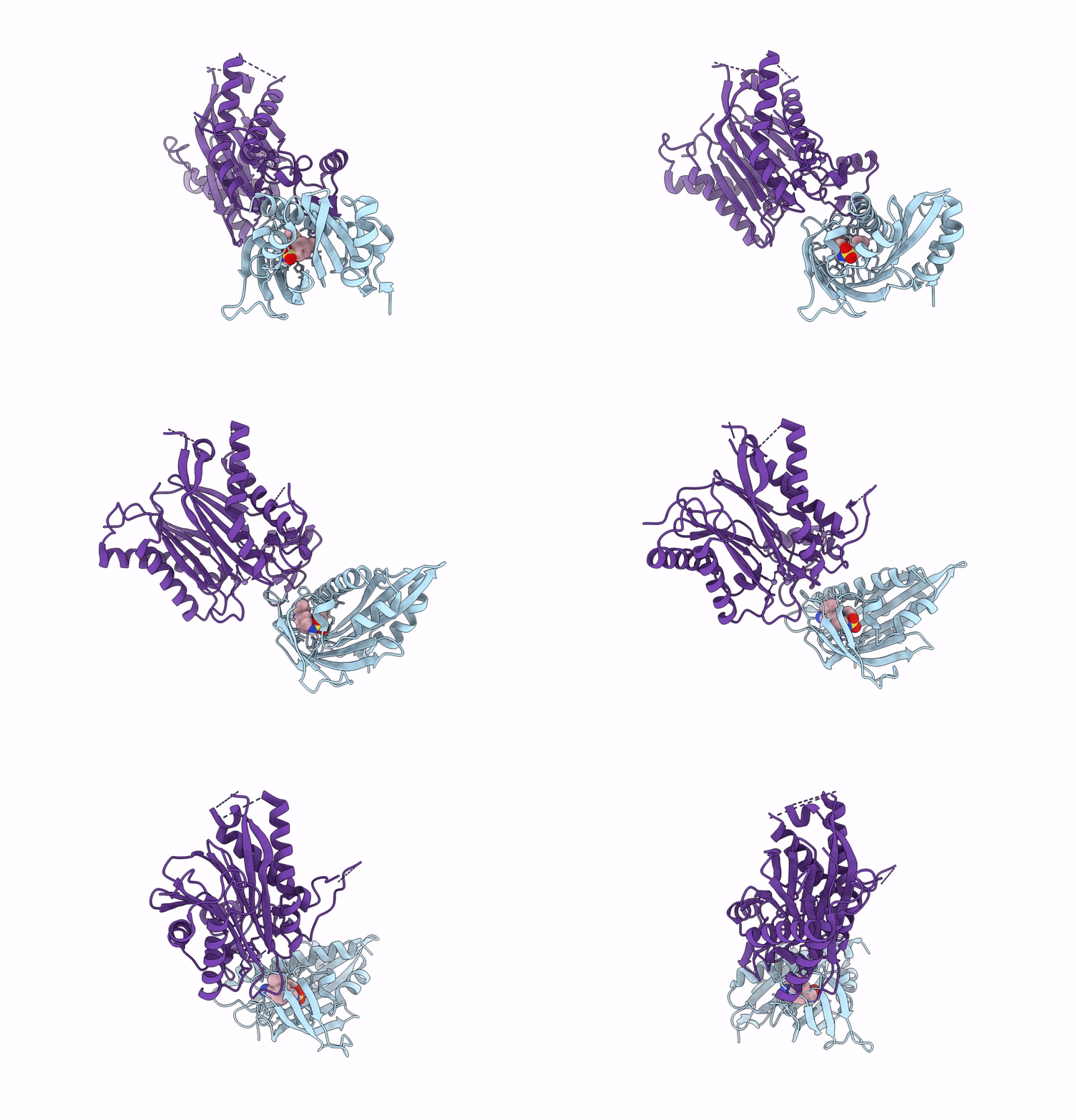
9H0J image
Deposition Date 2024-10-08
Release Date 2025-08-20
Last Version Date 2025-09-10
Entry Detail
PDB ID:
9H0J
Keywords:
Title:
X-RAY CRYSTAL STRUCTURE OF THE CsPYL1 5M (V112L, T135L, F137I, T153I, V168A)-iCB-HAB1 TERNARY COMPLEX
Biological Source:
Source Organism:
Method Details:
Experimental Method:
Resolution:
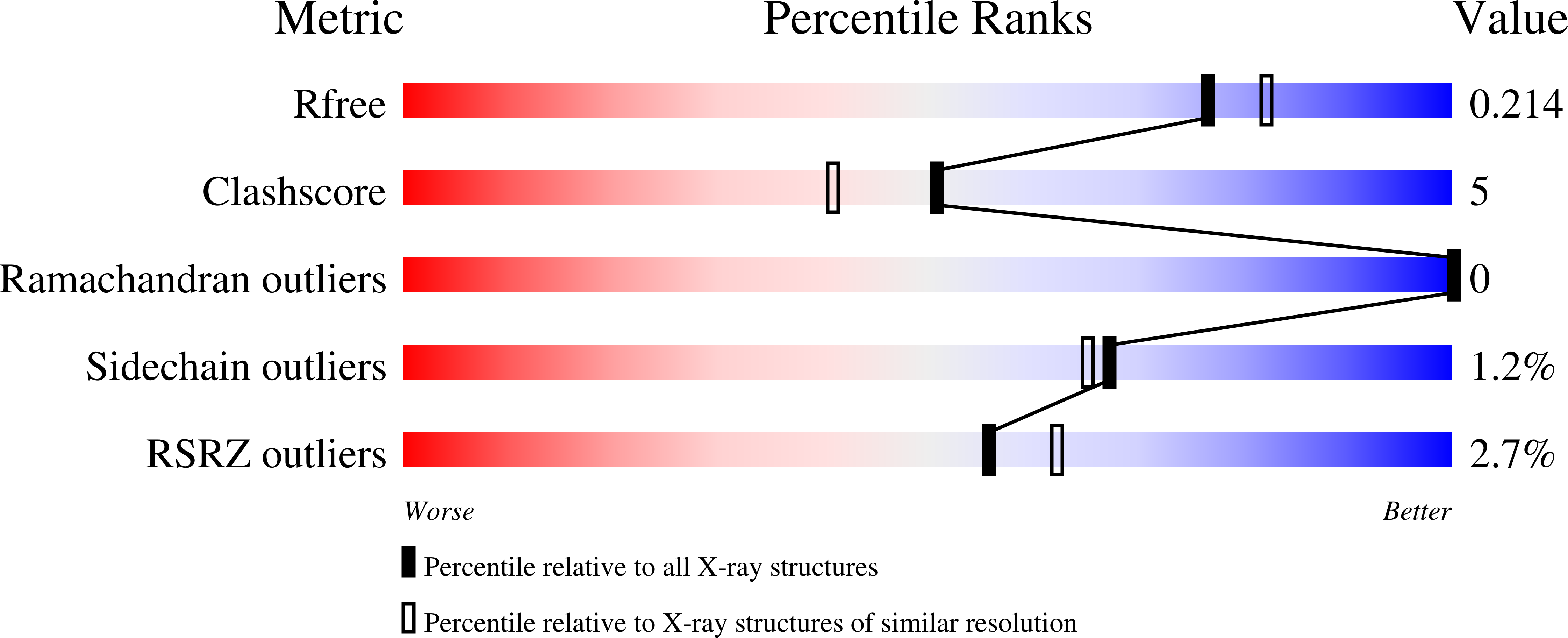
1.96 Å
R-Value Free:
0.20
R-Value Work:
0.17
R-Value Observed:
0.17
Space Group:
P 21 21 21
Macromolecular Entities
Structures with similar UniProt ID
Protein Blast
Polymer Type:polypeptide(L)
Molecule:Abscisic acid receptor PYL1
Gene (Uniprot):CISIN_1g046151mg
Chain IDs:A
Chain Length:209
Number of Molecules:1
Biological Source:Citrus sinensis
Structures with similar UniProt ID
Protein Blast
Polymer Type:polypeptide(L)
Molecule:Protein phosphatase 2C 16
Gene (Uniprot):HAB1
Chain IDs:B
Chain Length:332
Number of Molecules:1
Biological Source:Arabidopsis thaliana
Primary Citation
Structural insights into ABA receptor agonists reveal critical features to optimize and design a broad-spectrum ABA signaling activator.
Mol Plant 18 1526 1548 (2025)
PMID: 40714839 DOI: 10.1016/j.molp.2025.07.014

Abstact

Crop yield is at risk due to water scarcity and climate change. Using agrochemicals to activate hormone receptors can help regulate transpiration and modulate transcription to address water deficits. Structure-guided optimization of the multiple abscisic acid (ABA) receptor-agonist interactions is required to activate efficiently the entire PYRABACTIN RESISTANCE 1 (PYR1)/PYR1-LIKE (PYL)/REGULATORY COMPONENTS OF ABA RECEPTORS (RCAR) receptor family. The new agonist iCB, generated through scaffold-merging led by X-ray structure, activates subfamily II and III at low nM concentrations and subfamily I receptors at higher nM concentrations. Structural analysis of opabactin and iCB ternary complexes illuminates selectivity-determining residues, making PYL1/PYL4/PYL8 subfamilies sensitive to specific agonists, revealing differential sensitivity of receptor subfamilies to agonists across plant species. iCB might activate most eudicots' PYL8-like receptors in contrast to opabactin due to reduced steric constraints. This enables iCB to activate prevalent PYL8-like receptors with a bulkier Leu residue in the 3' tunnel, e.g., AtPYL8, SlPYL8, and VviPYL8, whereas opabactin activation is limited to receptors with Val at this position, e.g., TaPYL8. Therefore, iCB extends its action to a broader panel of ABA receptors than CB, iSB09, and opabactin, exhibits higher affinity than ABA for dimeric receptors, and can protect tomato plants against drought. In addition to regulating stomatal conductance and reducing water consumption, iCB protects photosystem II and improves photosynthesis after prolonged water deficit. Moreover, iCB induces an ABA-like transcriptional response, upregulates the synthesis of osmolytes, and can be hyper-potentiated when combined with the expression of a customized receptor. Our results provide structural insight for optimizing agonist design and helping plants cope with water deficit.

Legend

Protein

Chemical

Disease

Primary Citation of related structures
Feedback Form
Name
Email
Institute
Feedback