9H0B image
Deposition Date 2024-10-08
Release Date 2025-08-06
Last Version Date 2025-11-12
Entry Detail
PDB ID:
9H0B
Keywords:
Title:
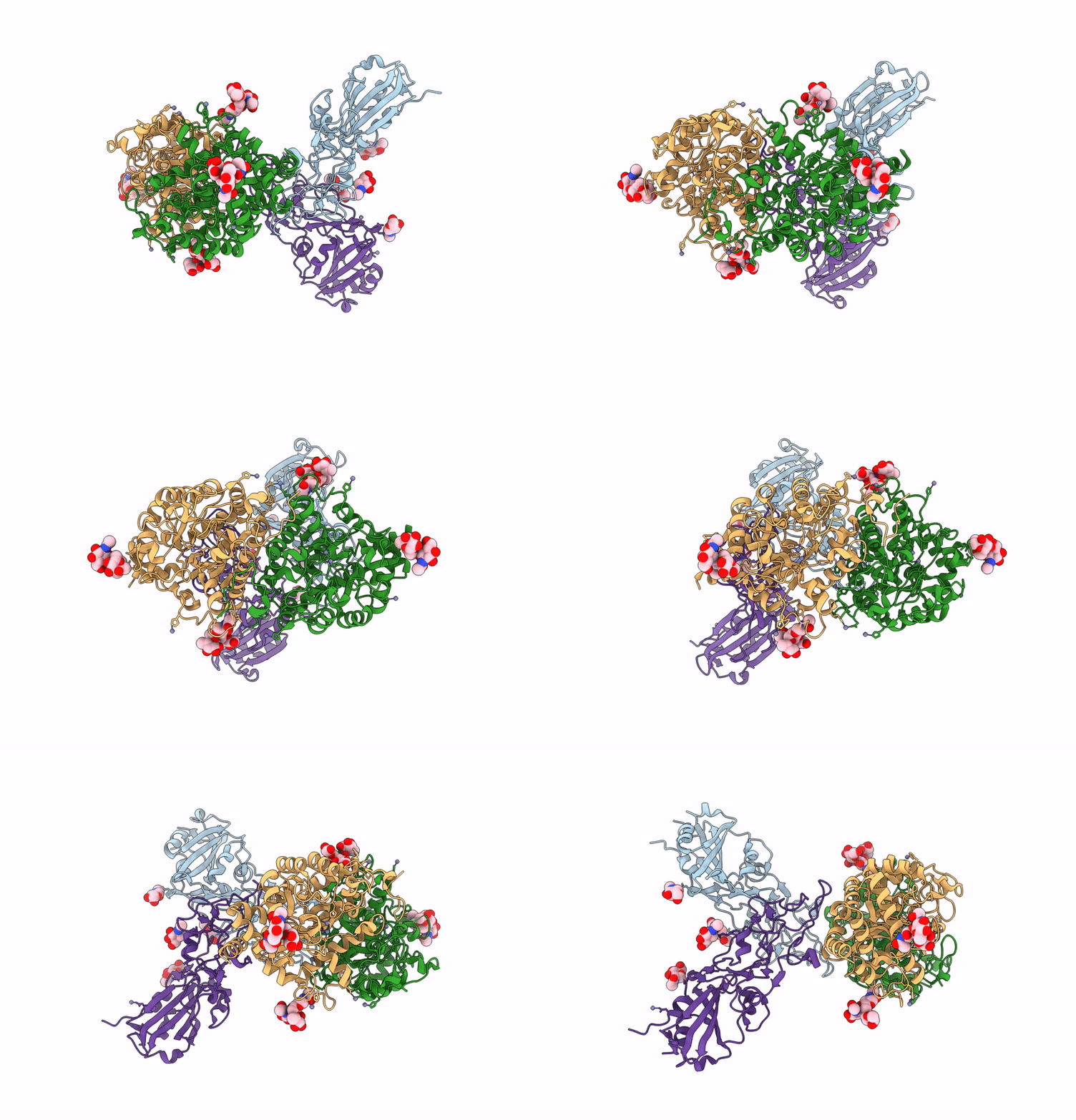
Crystal structure of the Porcine Hemagglutinating Encephalomyelitis Virus (PHEV) receptor binding domain in complex with porcine DPEP1.
Biological Source:
Method Details:
Experimental Method:
Resolution:
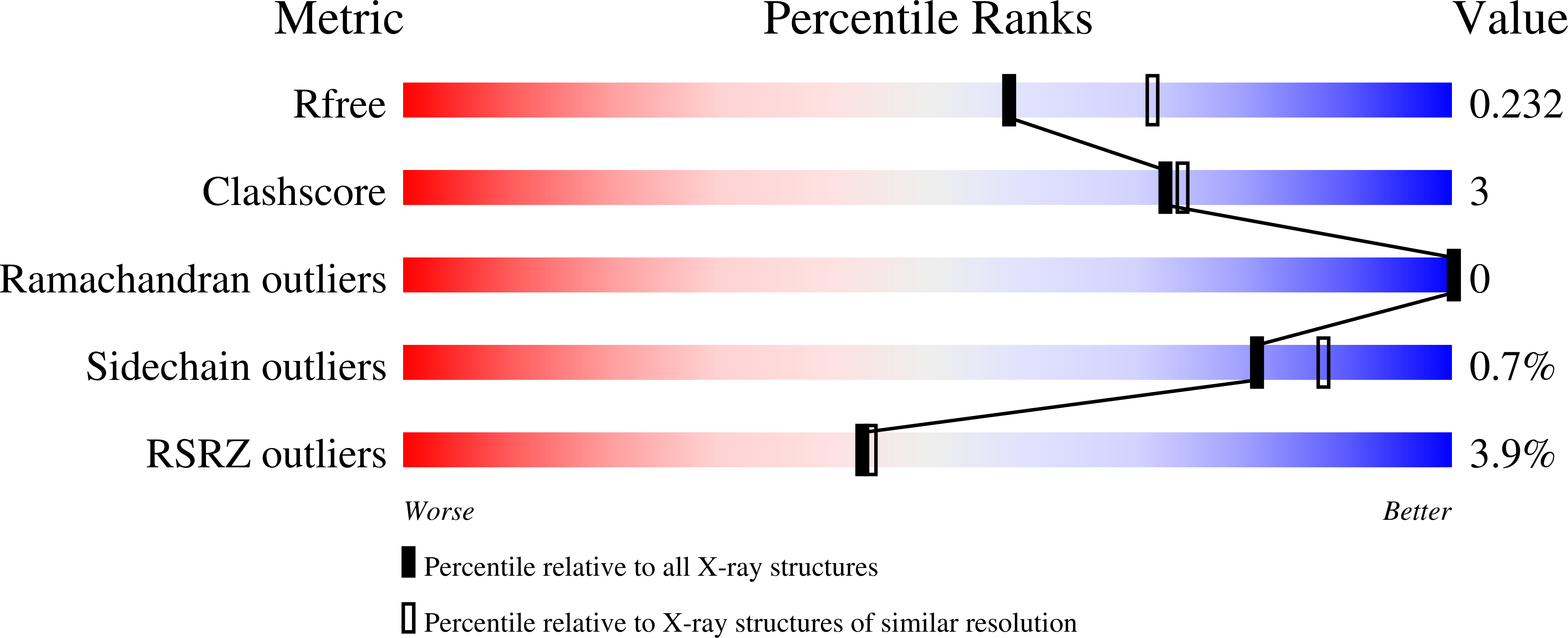
2.25 Å
R-Value Free:
0.23
R-Value Work:
0.19
R-Value Observed:
0.19
Space Group:
P 1 21 1
Macromolecular Entities
Structures with similar UniProt ID
Protein Blast
Polymer Type:polypeptide(L)
Molecule:Spike glycoprotein
Gene (Uniprot):S
Chain IDs:B (auth: A), D
Chain Length:284
Number of Molecules:2
Biological Source:Porcine hemagglutinating encephalomyelitis virus
Structures with similar UniProt ID
Protein Blast
Polymer Type:polypeptide(L)
Molecule:Dipeptidase 1
Gene (Uniprot):DPEP1
Chain IDs:A (auth: B), C
Chain Length:374
Number of Molecules:2
Biological Source:Sus scrofa
Primary Citation
Dipeptidase 1 is a functional receptor for a porcine coronavirus.
Nat Microbiol 10 2981 2996 (2025)
PMID: 41073662 DOI: 10.1038/s41564-025-02111-7

Abstact

Coronaviruses of the subgenus Embecovirus include several important pathogens, such as the human seasonal coronaviruses HKU1 and OC43, bovine coronavirus and porcine haemagglutinating encephalomyelitis virus (PHEV). While sialic acid is thought to be required for embecovirus entry, protein receptors remain unknown for most of these viruses. Here we show that PHEV does not require sialic acid for entry and instead uses dipeptidase 1 (DPEP1) as a receptor. Cryo-electron microscopy at 3.4-4.4 Å resolution revealed that, unlike other embecoviruses, PHEV displays both open and closed conformations of its spike trimer at steady state. The spike receptor-binding domain (RBD) exhibits extremely high sequence variability across embecoviruses, and we found that DPEP1 usage is specific to PHEV. In contrast, the X-ray structure of the RBD-DPEP1 complex at 2.25 Å showed that the structural elements involved in receptor binding are conserved, highlighting the remarkable versatility of this structural organization in adopting novel receptor specificities.

Legend

Protein

Chemical

Disease

Primary Citation of related structures
Feedback Form
Name
Email
Institute
Feedback