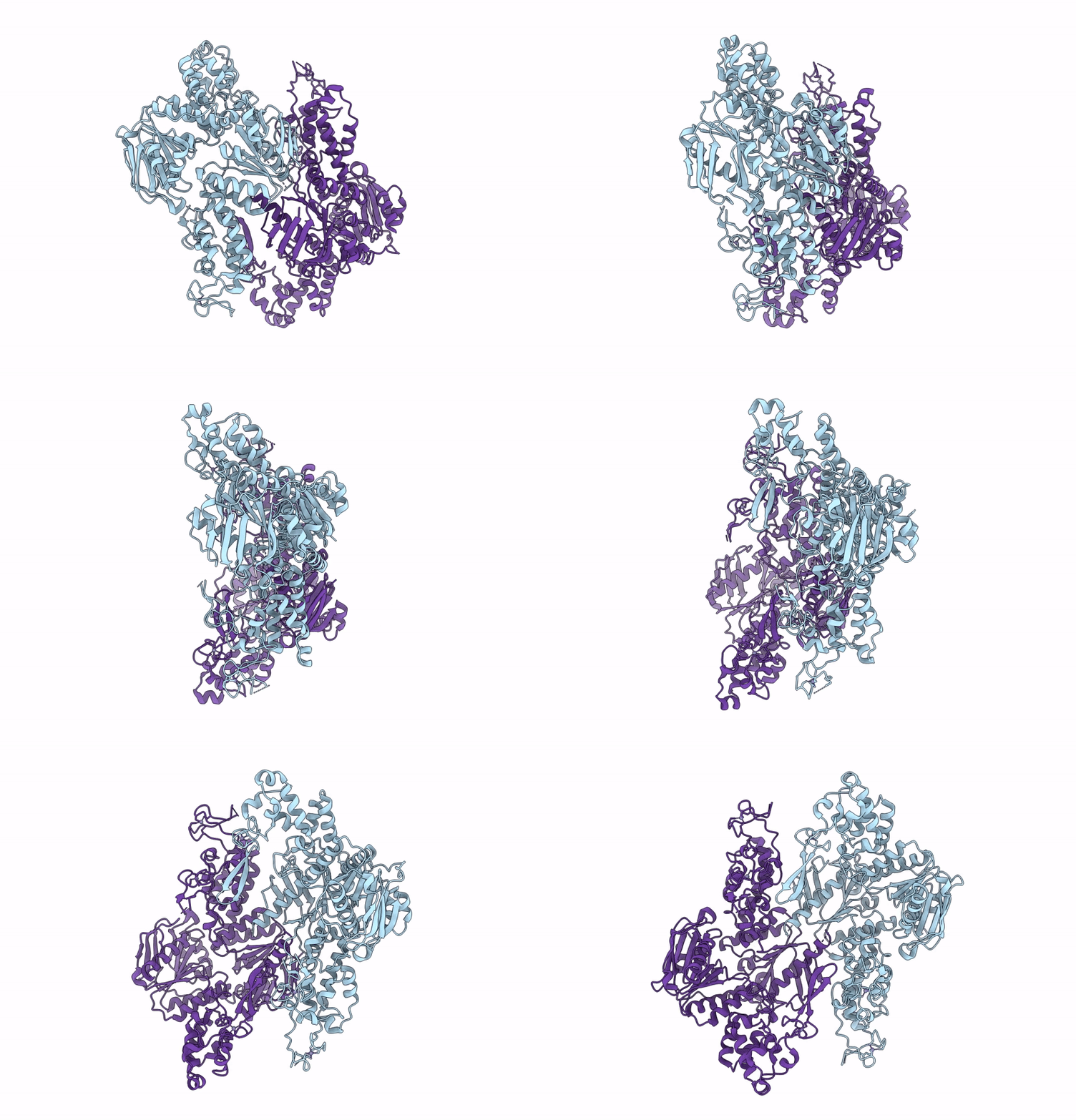
9GXK image
Deposition Date 2024-09-30
Release Date 2025-12-24
Last Version Date 2025-12-24
Entry Detail
PDB ID:
9GXK
Title:
C. thermocellum UvrA (basal conformation)
Biological Source:
Source Organism:
Host Organism:
Method Details:
Experimental Method:
Resolution:
2.97 Å
Aggregation State:
PARTICLE
Reconstruction Method:
SINGLE PARTICLE
Macromolecular Entities
Structures with similar UniProt ID
Protein Blast
Polymer Type:polypeptide(L)
Molecule:UvrABC system protein A
Gene (Uniprot):uvrA
Chain IDs:A, B
Chain Length:962
Number of Molecules:2
Biological Source:Acetivibrio thermocellus
Ligand Molecules
Primary Citation
Structural snapshots of the mechanism of ATP-dependent DNA damage recognition by UvrA.
Nat Commun ? ? ? (2025)
PMID: 41381534 DOI: 10.1038/s41467-025-67075-y

Abstact

Nucleotide excision repair is a DNA repair pathway which detects and fixes various DNA lesions that distort the structure of DNA. In bacteria, the pathway starts with the UvrA protein which has two adenosine triphosphatase modules and forms dimers. The DNA is handed over from UvrA to UvrB, which is a weak helicase that verifies the presence of damage. Despite intense studies, the role of the ATPase activity of UvrA in damage recognition is unclear. Here, we present a series of cryo-electron microscopy structures of UvrA in complex with three different DNAs and in the presence and absence of nucleotides. We also present a structure of UvrA:UvrB:DNA complex. These structures reveal a major rearrangement of the UvrA dimer upon ATP binding. We propose that these conformational changes are used to mechanically probe the integrity of DNA for damage localization. Collectively, our results present snapshots of UvrA's ATP-dependent DNA damage detection.

Legend

Protein

Chemical

Disease

Primary Citation of related structures
Feedback Form
Name
Email
Institute
Feedback