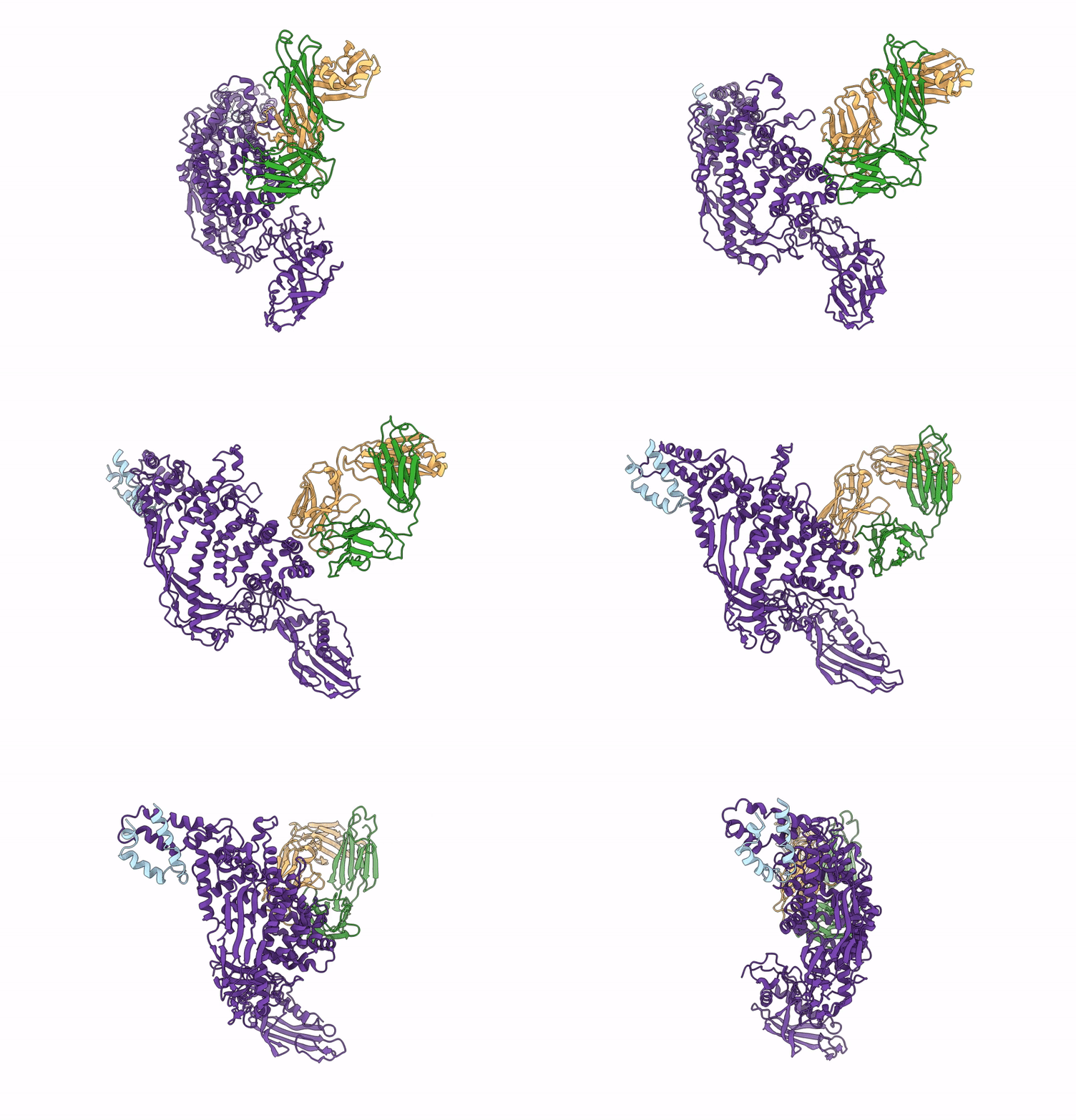
9GVG image
Deposition Date 2024-09-24
Release Date 2025-12-24
Last Version Date 2025-12-24
Entry Detail
PDB ID:
9GVG
Title:
P116 from Mycoplasma pneumoniae in complex with mild growth suppressor monoclonal antibody
Biological Source:
Source Organism:
Host Organism:
Method Details:
Experimental Method:
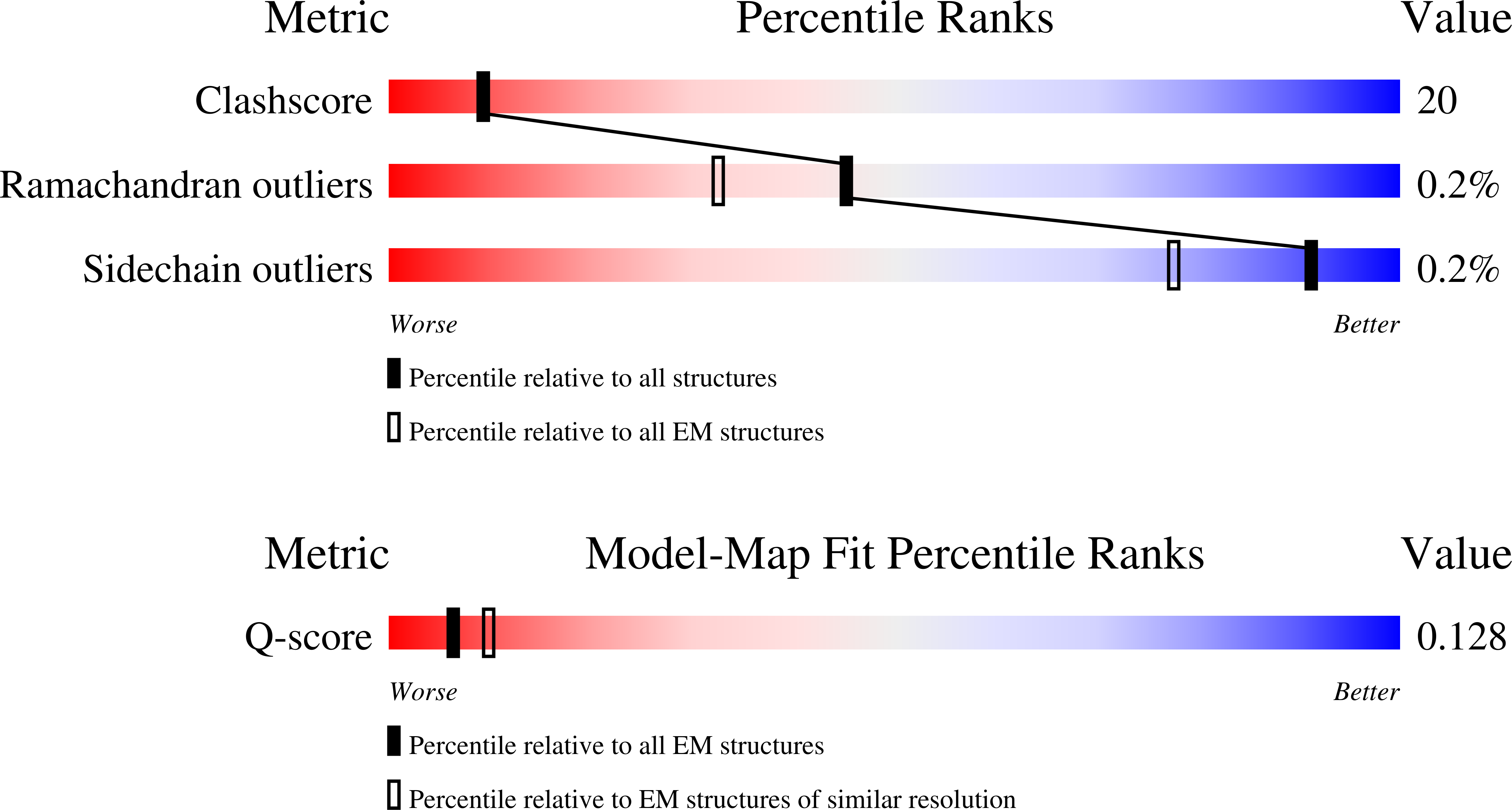
Resolution:
5.06 Å
Aggregation State:
PARTICLE
Reconstruction Method:
SINGLE PARTICLE
Macromolecular Entities
Polymer Type:polypeptide(L)
Molecule:Heavy chain monoclonal antibody
Chain IDs:A (auth: H)
Chain Length:210
Number of Molecules:1
Biological Source:Mus musculus
Polymer Type:polypeptide(L)
Molecule:Light chain monoclonal antibody
Chain IDs:B (auth: L)
Chain Length:212
Number of Molecules:1
Biological Source:Mus musculus
Structures with similar UniProt ID
Protein Blast
Polymer Type:polypeptide(L)
Molecule:Uncharacterized protein MG075 homolog
Gene (Uniprot):G07_orf1030, MP618
Chain IDs:C (auth: P), D (auth: A)
Chain Length:809
Number of Molecules:2
Biological Source:Mycoplasmoides pneumoniae M129
Ligand Molecules
Primary Citation
Sources of essential lipids for Mycoplasma pneumoniae via P116 to target liver and atherosclerotic lesions.
Nat Commun 16 11159 11159 (2025)
PMID: 41402265 DOI: 10.1038/s41467-025-66129-5

Abstact

Mycoplasma pneumoniae (MPN) is a bacterial pathogen that primarily causes atypical pneumonia. It cannot synthesize certain essential lipids and therefore relies on the host for their acquisition to survive. MPN has been detected in increased amounts within ruptured atherosclerotic plaques. In this work, we show that the protein P116 facilitates cholesterol acquisition from LDL, HDL and various cell types. Targeting P116's C-terminal domain with a monoclonal antibody inhibits cholesterol acquisition and bacterial growth in vitro. Phase contrast epifluorescence microscopy of human arteries reveals that this antibody blocks MPN binding to atherosclerotic lesions ex vivo. Additionally, an MPN chassis injected into hyperlipidemic female mice localizes to the liver and atherosclerotic plaques. Here, we report that P116 plays a role in extracting essential lipids from lipoproteins and host cells and regulates MPN localization to atheromatous plaques. The study highlights MPN's potential as a tool for targeting atherosclerotic lesions and fatty liver.

Legend

Protein

Chemical

Disease

Primary Citation of related structures
Feedback Form
Name
Email
Institute
Feedback