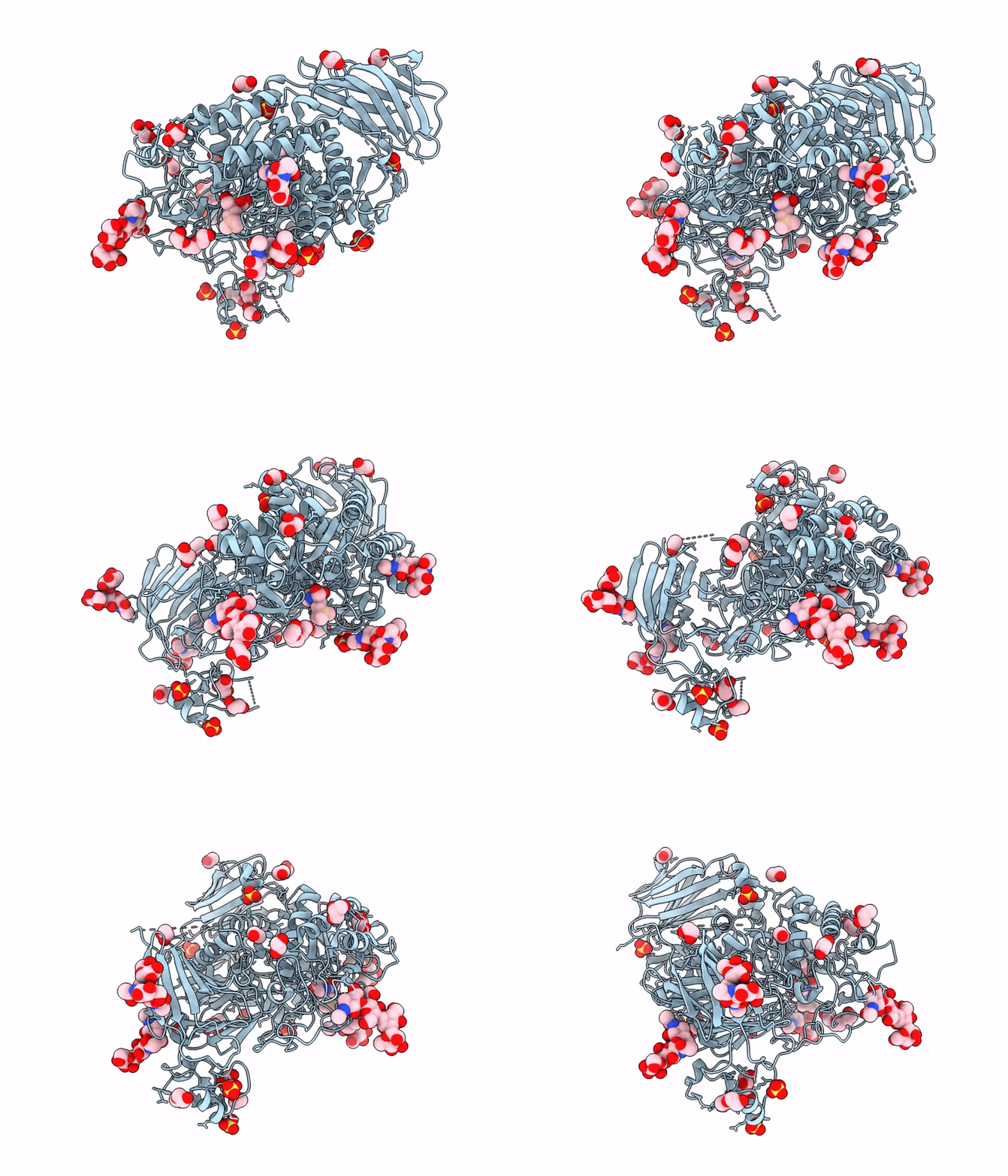
9GSW image
Deposition Date 2024-09-16
Release Date 2025-09-24
Last Version Date 2025-10-08
Entry Detail
PDB ID:
9GSW
Keywords:
Title:
Crystal structure of human lysosomal acid-alpha-glucosidase, GAA, in complex with iminosugar compound 4d
Biological Source:
Source Organism:
Homo sapiens (Taxon ID: 9606)
Host Organism:
Method Details:
Experimental Method:
Resolution:
1.95 Å
R-Value Free:
0.20
R-Value Work:
0.16
R-Value Observed:
0.16
Space Group:
P 21 21 21

Macromolecular Entities
Structures with similar UniProt ID
Protein Blast
Polymer Type:polypeptide(L)
Molecule:Lysosomal alpha-glucosidase
Gene (Uniprot):GAA
Chain IDs:A
Chain Length:952
Number of Molecules:1
Biological Source:Homo sapiens
Modified Residue
Compound ID Chain ID Parent Comp ID Details 2D Image
CSO A CYS modified residue
Primary Citation
C -Branched Iminosugars as Selective Pharmacological Chaperones of Lysosomal alpha-Glucosidase for the Treatment of Pompe Disease.
J.Med.Chem. 68 19269 19286 (2025)
PMID: 40951993 DOI: 10.1021/acs.jmedchem.5c01349

Abstact

We report herein the design and synthesis of a series of 5-C-alkyldeoxynojirimycins from l-sorbose, through an efficient and scalable method amenable to preparing a large variety of analogues. The interaction of this class of compounds with human acid α-glucosidase (GAA), the genetically defective enzyme in patients suffering from Pompe disease, was investigated to identify pharmacological chaperones exhibiting high selectivity for this enzyme. Crystallographic analyses provided a rationale for their binding mode to GAA and chaperone activity. The effects of 5-C-phenethyl-DNJ (4c) were evaluated on GAA activity enhancement in cells from Pompe disease patients and in vivo in GAA-KO mice. The significant increase of GAA activity in the presence of 4c in various tissues, particularly in the diaphragm, encourages further studies on this class of small molecules toward developing clinical drugs. Their chaperone activity and excellent selectivity may offer potential benefits over the current treatments for Pompe disease.

Legend

Protein

Chemical

Disease

Primary Citation of related structures
Feedback Form
Name
Email
Institute
Feedback