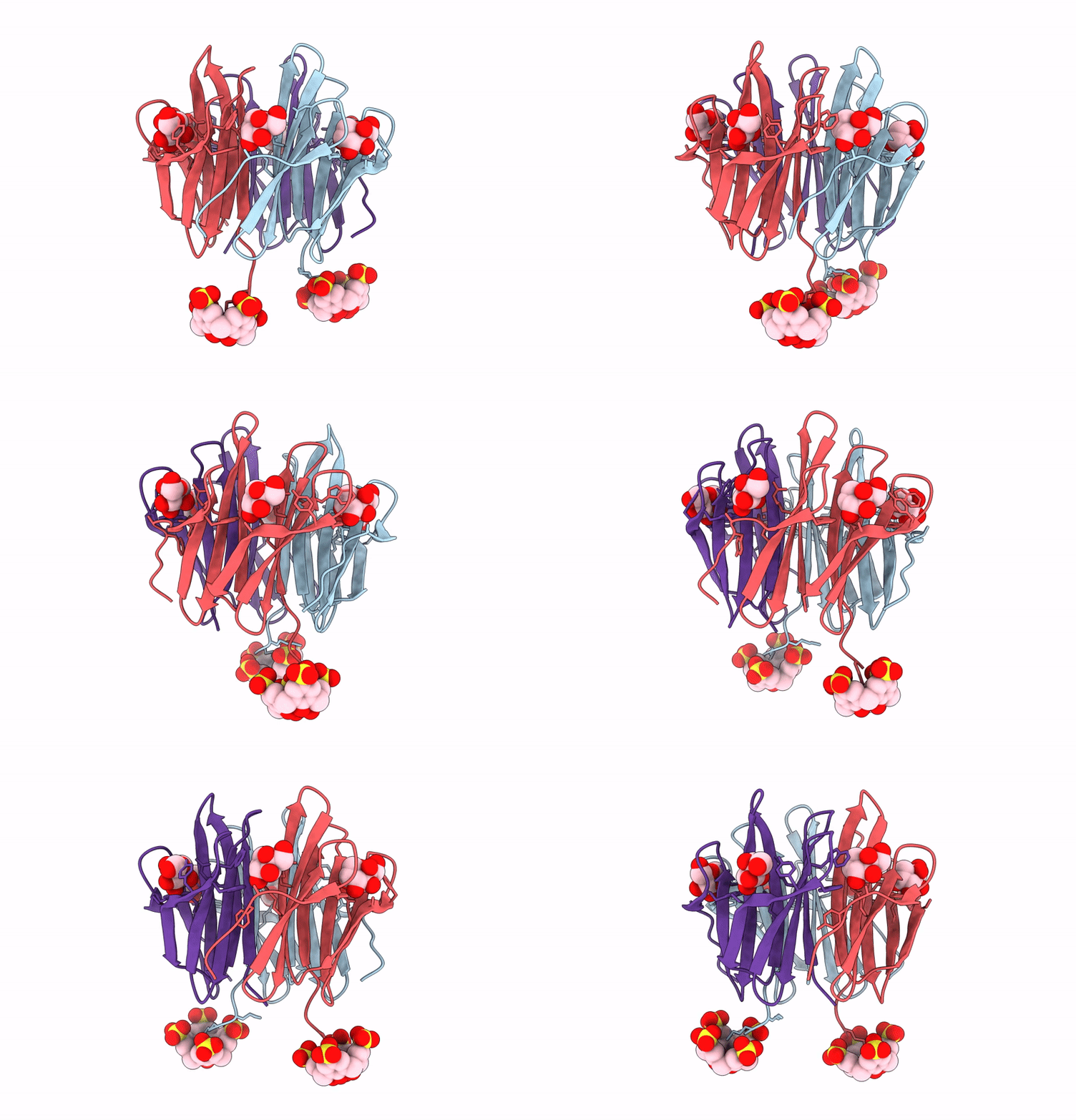
9GR3 image
Deposition Date 2024-09-10
Release Date 2025-03-05
Last Version Date 2025-03-12
Entry Detail
PDB ID:
9GR3
Title:
The MK-RSL - sulfonato-calix[4]arene complex
Biological Source:
Source Organism:
Host Organism:
Method Details:
Experimental Method:
Resolution:
1.19 Å
R-Value Free:
0.19
R-Value Work:
0.17
R-Value Observed:
0.17
Space Group:
P 1 21 1
Macromolecular Entities
Structures with similar UniProt ID
Protein Blast
Polymer Type:polypeptide(L)
Molecule:Fucose-binding lectin protein
Mutagens:Met0, S1K
Chain IDs:A, B, C
Chain Length:91
Number of Molecules:3
Biological Source:Ralstonia solanacearum
Primary Citation
N-Terminal Protein Binding and Disorder-to-Order Transition by a Synthetic Receptor.
Biochemistry 64 1092 1098 (2025)
PMID: 39977527 DOI: 10.1021/acs.biochem.4c00729

Abstact

We describe the capture and structuring of disordered N-terminal regions by the macrocycle sulfonato-calix[4]arene (sclx4). Using the trimeric β-propeller Ralstonia solanacearum lectin (RSL) as a scaffold, we generated a series of mutants with extended and dynamic N-termini. Three of the mutants feature an N-terminal methionine-lysine motif. The fourth mutant contains the disordered 8-residue N-terminus of Histone 3, a component of the nucleosome. X-ray crystallography and NMR spectroscopy provide evidence for sclx4 binding to the flexible N-terminal regions. Three crystal structures reveal that the calixarene recognizes the N-terminal Met-Lys motif, capturing either residue. We provide crystallographic proof for sclx4 encapsulation of N-terminal methionine. Calixarene capture of intrinsically disordered regions may have applications in regulating protein secondary (and tertiary) structure.

Legend

Protein

Chemical

Disease

Primary Citation of related structures
Feedback Form
Name
Email
Institute
Feedback