9GAD image
Deposition Date 2024-07-26
Release Date 2025-07-02
Last Version Date 2025-07-23
Entry Detail
PDB ID:
9GAD
Keywords:
Title:
Structure and catalytic mechanism of SAM-AMP lyase in Clostridium botulinum CorA-associated type III CRISPR system
Biological Source:
Source Organism:
Host Organism:
Method Details:
Experimental Method:
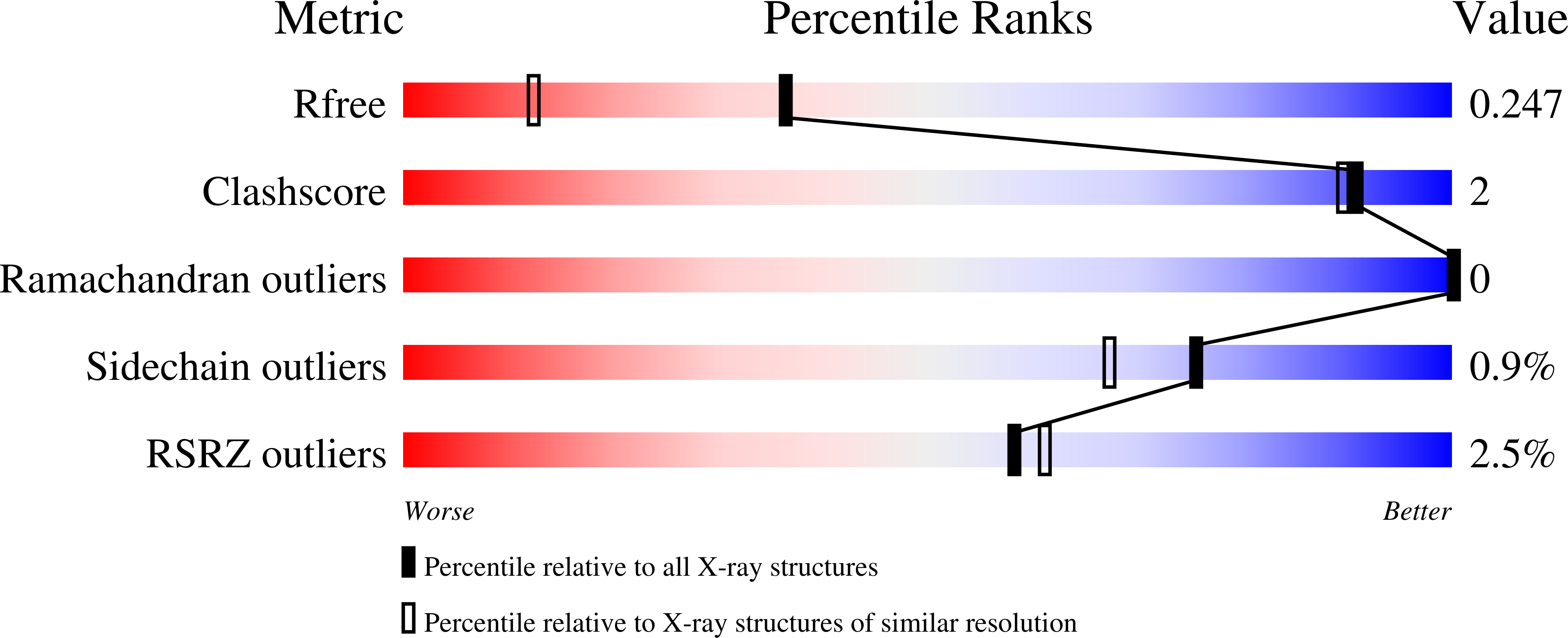
Resolution:
1.70 Å
R-Value Free:
0.23
R-Value Work:
0.20
Space Group:
P 1
Macromolecular Entities
Structures with similar UniProt ID
Protein Blast
Polymer Type:polypeptide(L)
Molecule:SAM-AMP Lyase
Gene (Uniprot):CBO2178
Chain IDs:A, B, C, D, E, F
Chain Length:131
Number of Molecules:6
Biological Source:Clostridium botulinum
Ligand Molecules
Primary Citation
SAM-AMP lyases in type III CRISPR defence.
Nucleic Acids Res. 53 ? ? (2025)
PMID: 40650973 DOI: 10.1093/nar/gkaf655

Abstact

Type III CRISPR systems detect non-self RNA and activate the enzymatic Cas10 subunit, which generates nucleotide second messengers for activation of ancillary effectors. Although most signal via cyclic oligoadenylate, an alternative class of signalling molecule SAM-AMP, formed by conjugating ATP and S-adenosylmethionine, was described recently. SAM-AMP activates a trans-membrane effector of the CorA magnesium transporter family to provide anti-phage defence. Intriguingly, immunity also requires SAM-AMP degradation by means of a specialized CRISPR-encoded NrN family phosphodiesterase in Bacteroides fragilis. In Clostridium botulinum, the nrn gene is replaced by a gene encoding a SAM-AMP lyase. Here, we investigate the structure and activity of C. botulinum SAM-AMP lyase, which can substitute for the nrn gene to provide CorA-mediated immunity in Escherichia coli. The structure of SAM-AMP lyase bound to its reaction product 5'-methylthioadenosine-AMP reveals key details of substrate binding and turnover by this PII superfamily protein. Bioinformatic analysis revealed a phage-encoded SAM-AMP lyase that degrades SAM-AMP efficiently in vitro, consistent with an anti-CRISPR function.

Legend

Protein

Chemical

Disease

Primary Citation of related structures
Feedback Form
Name
Email
Institute
Feedback