9G4S image
Deposition Date 2024-07-16
Release Date 2025-02-12
Last Version Date 2025-08-27
Entry Detail
PDB ID:
9G4S
Title:
Crystal structure of the human METTL3-METTL14 in complex with small molecule inhibitor Compound 56
Biological Source:
Source Organism:
Homo sapiens (Taxon ID: 9606)
Host Organism:
Method Details:
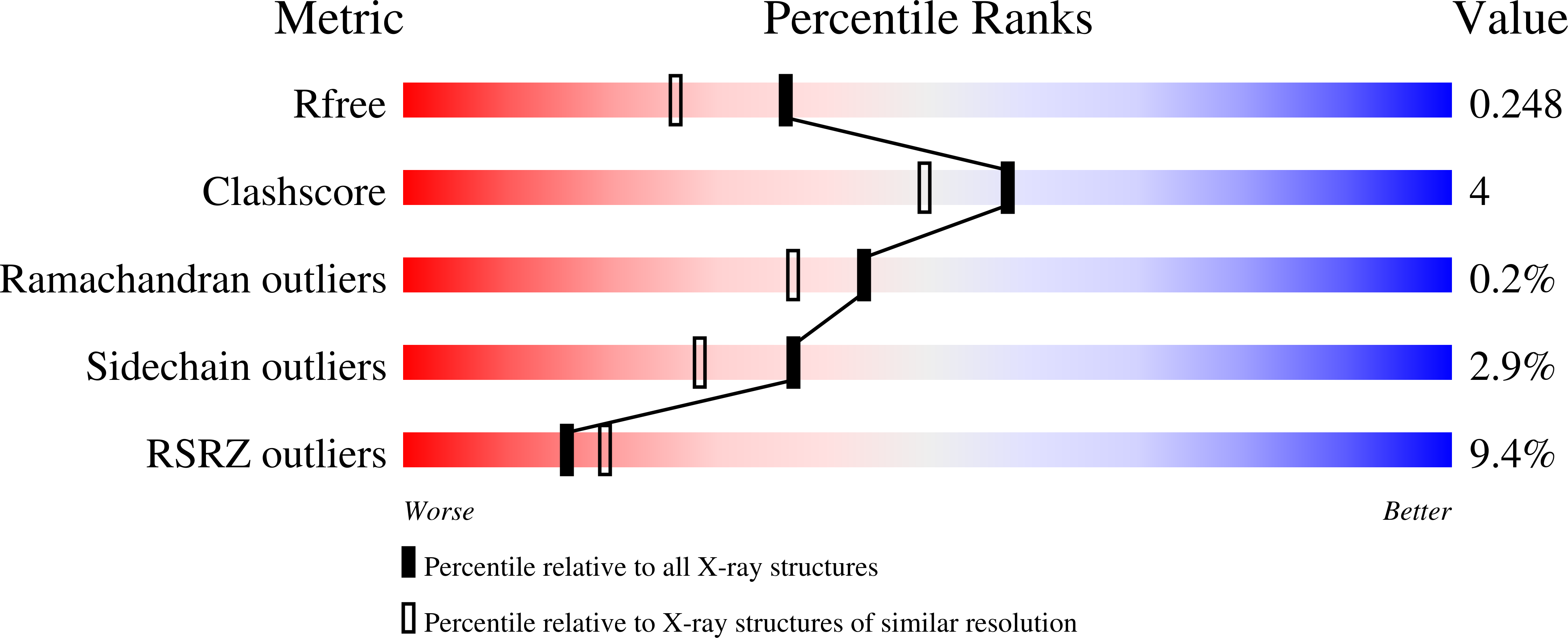
Experimental Method:
Resolution:
1.95 Å
R-Value Free:
0.24
R-Value Work:
0.19
R-Value Observed:
0.19
Space Group:
P 32 2 1
Macromolecular Entities
Structures with similar UniProt ID
Protein Blast
Polymer Type:polypeptide(L)
Molecule:N6-adenosine-methyltransferase catalytic subunit
Gene (Uniprot):METTL3
Chain IDs:A
Chain Length:214
Number of Molecules:1
Biological Source:Homo sapiens
Structures with similar UniProt ID
Protein Blast
Polymer Type:polypeptide(L)
Molecule:N6-adenosine-methyltransferase non-catalytic subunit
Gene (Uniprot):METTL14
Chain IDs:B
Chain Length:280
Number of Molecules:1
Biological Source:Homo sapiens
Primary Citation
Discovery, Optimization, and Preclinical Pharmacology of EP652, a METTL3 Inhibitor with Efficacy in Liquid and Solid Tumor Models.
J.Med.Chem. 68 2981 3003 (2025)
PMID: 39883878 DOI: 10.1021/acs.jmedchem.4c02225

Abstact

METTL3 is the RNA methyltransferase predominantly responsible for the addition of N6-methyladenosine (m6A), the most abundant modification to mRNA. The prevalence of m6A and the activity and expression of METTL3 have been linked to the appearance and progression of acute myeloid leukemia (AML), thereby making METTL3 an attractive target for cancer therapeutics. We report herein the discovery and optimization of small-molecule inhibitors of METTL3, culminating in the selection of EP652 as an in vivo proof-of-concept compound. EP652 potently inhibits the enzymatic activity of METTL3, has favorable PK parameters, and demonstrates efficacy in preclinical oncology models, indicating that pharmacological inhibition of METTL3 is a viable strategy for the treatment of liquid and solid tumors.

Legend

Protein

Chemical

Disease

Primary Citation of related structures
Feedback Form
Name
Email
Institute
Feedback