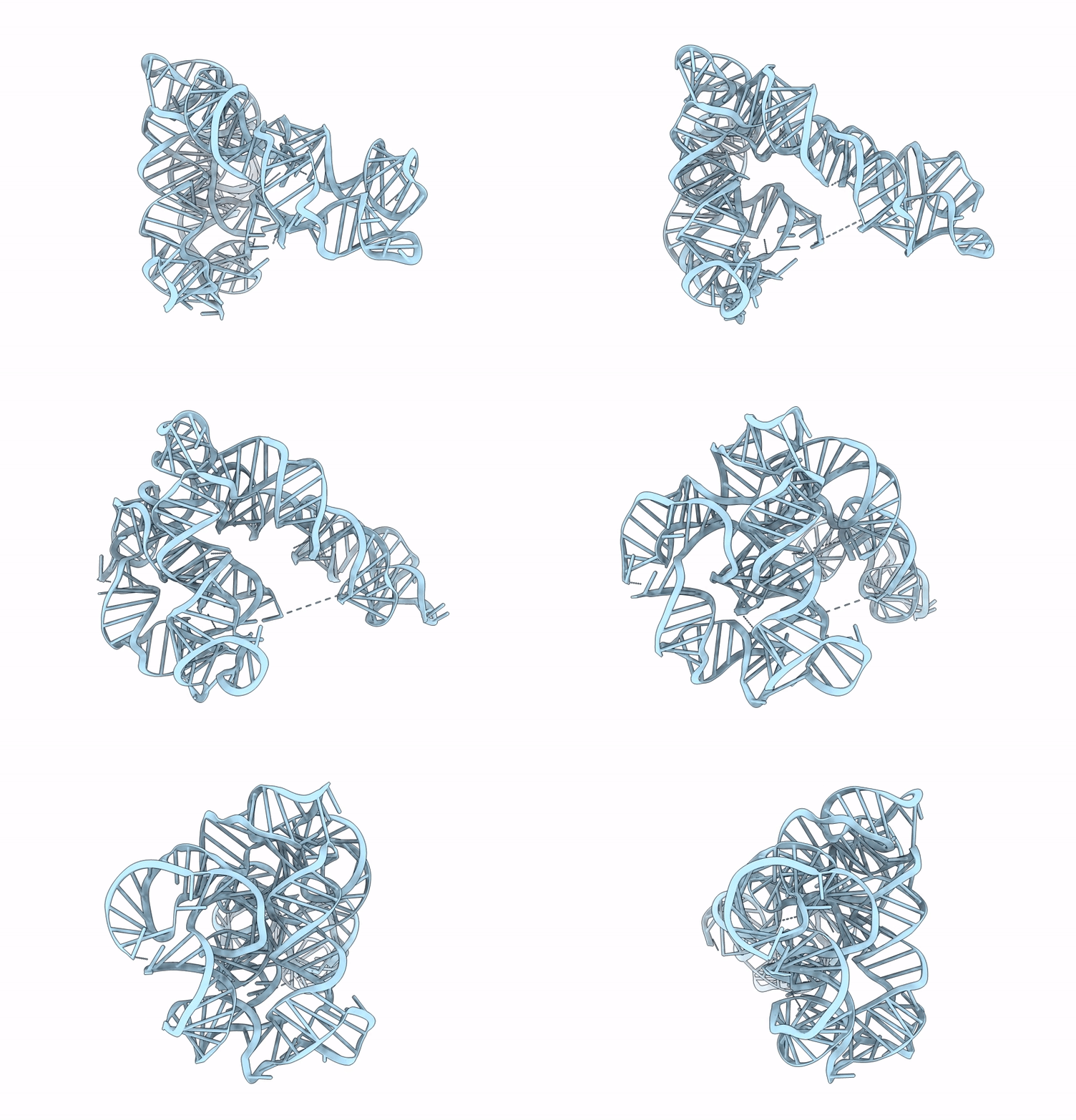
9G4I image
Deposition Date 2024-07-15
Release Date 2025-11-05
Last Version Date 2025-12-10
Entry Detail
PDB ID:
9G4I
Keywords:
Title:
Group II intron assembly intermediate Domain 1 and 2 "Partly open" state
Biological Source:
Source Organism:
Method Details:
Experimental Method:
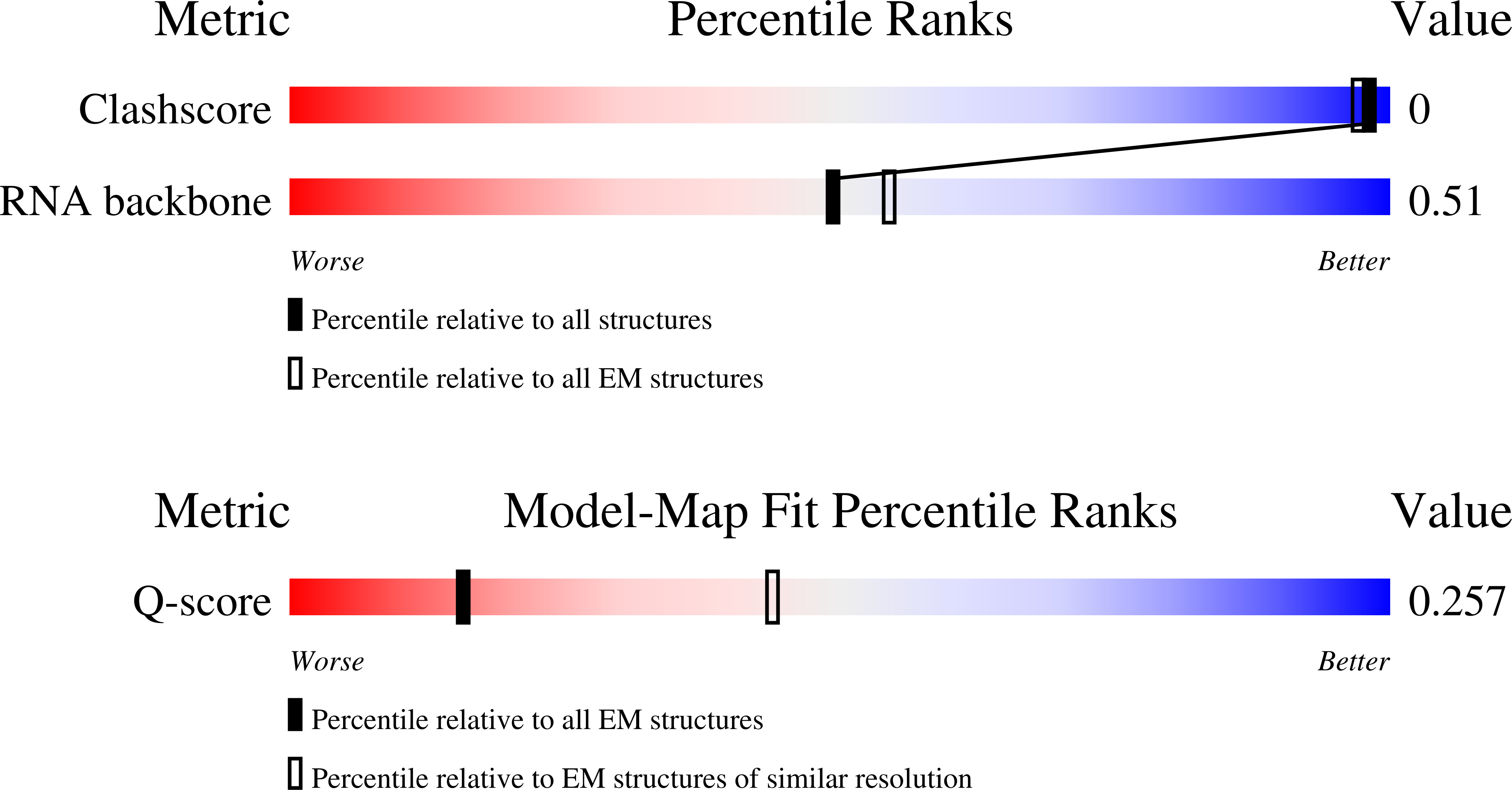
Resolution:
4.61 Å
Aggregation State:
PARTICLE
Reconstruction Method:
SINGLE PARTICLE
Macromolecular Entities
Polymer Type:polyribonucleotide
Molecule:GROUP IIC INTRON
Chain IDs:A
Chain Length:296
Number of Molecules:1
Biological Source:Oceanobacillus iheyensis
Ligand Molecules
Primary Citation
Dynamic assembly of a large multidomain ribozyme visualized by cryo-electron microscopy.
Nat Commun 16 10195 10195 (2025)
PMID: 41309593 DOI: 10.1038/s41467-025-65502-8

Abstact

Many RNAs rely on their 3D structures for function. While acquiring functional 3D structures, certain RNAs form misfolded, non-functional states ('kinetic traps'). Instead, other RNAs sequentially assemble into their functional conformations over pre-folded scaffolds. Elucidating the principles of RNA sequential assembly is thus important to understand how RNAs avoid the formation of misfolded, non-functional states. Integrating single-particle electron cryomicroscopy (cryo-EM), image processing, in solution small-angle X-ray scattering (SAXS), EM-driven molecular dynamics (MD) simulations, structure-based mutagenesis, and enzymatic assays, we have visualized the sequential multidomain assembly of a self-splicing ribozyme of biomedical and bioengineering significance. Our work reveals a distinct dynamic interplay of helical subdomains in the ribozyme's 5'-terminal scaffold, which acts as a gate to control the docking of 3'-terminal domains. We identify specific conserved and functionally important secondary structure motifs as the key players for orchestrating the energetically inexpensive conformational changes that lead to the productive formation of the catalytic pocket. Our work provides a near-atomic resolution molecular movie of a large multidomain RNA assembling into its functionally active conformation and establishes a basis for understanding how RNA avoids the formation of non-functional 'kinetic traps'.

Legend

Protein

Chemical

Disease

Primary Citation of related structures
Feedback Form
Name
Email
Institute
Feedback