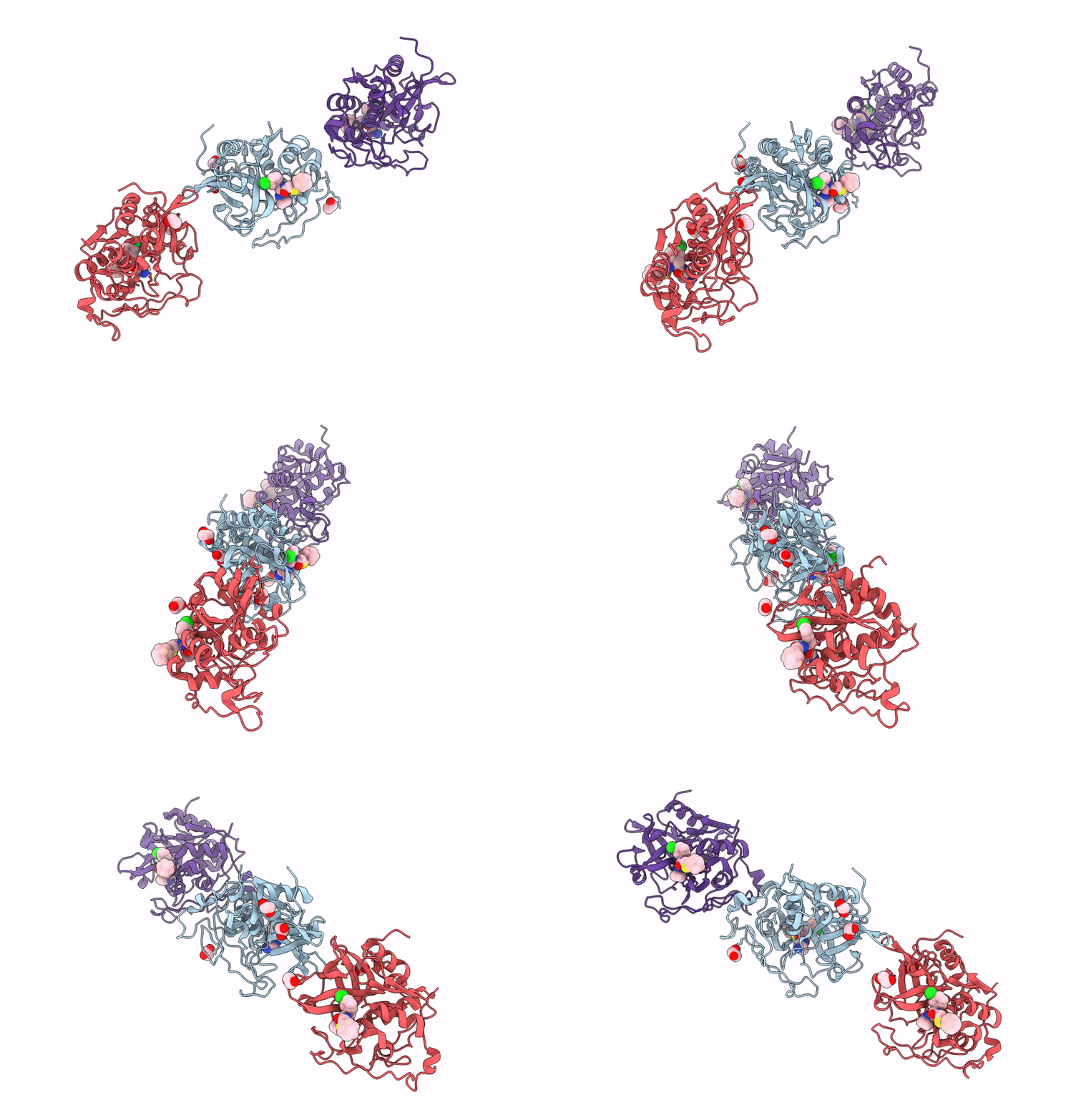
9FZV image
Deposition Date 2024-07-06
Release Date 2025-10-29
Last Version Date 2025-10-29
Entry Detail
PDB ID:
9FZV
Keywords:
Title:
Structure of cathepsin B1 from Schistosoma mansoni (SmCB1) in complex with a carborane inhibitor
Biological Source:
Source Organism:
Host Organism:
Method Details:
Experimental Method:
Resolution:
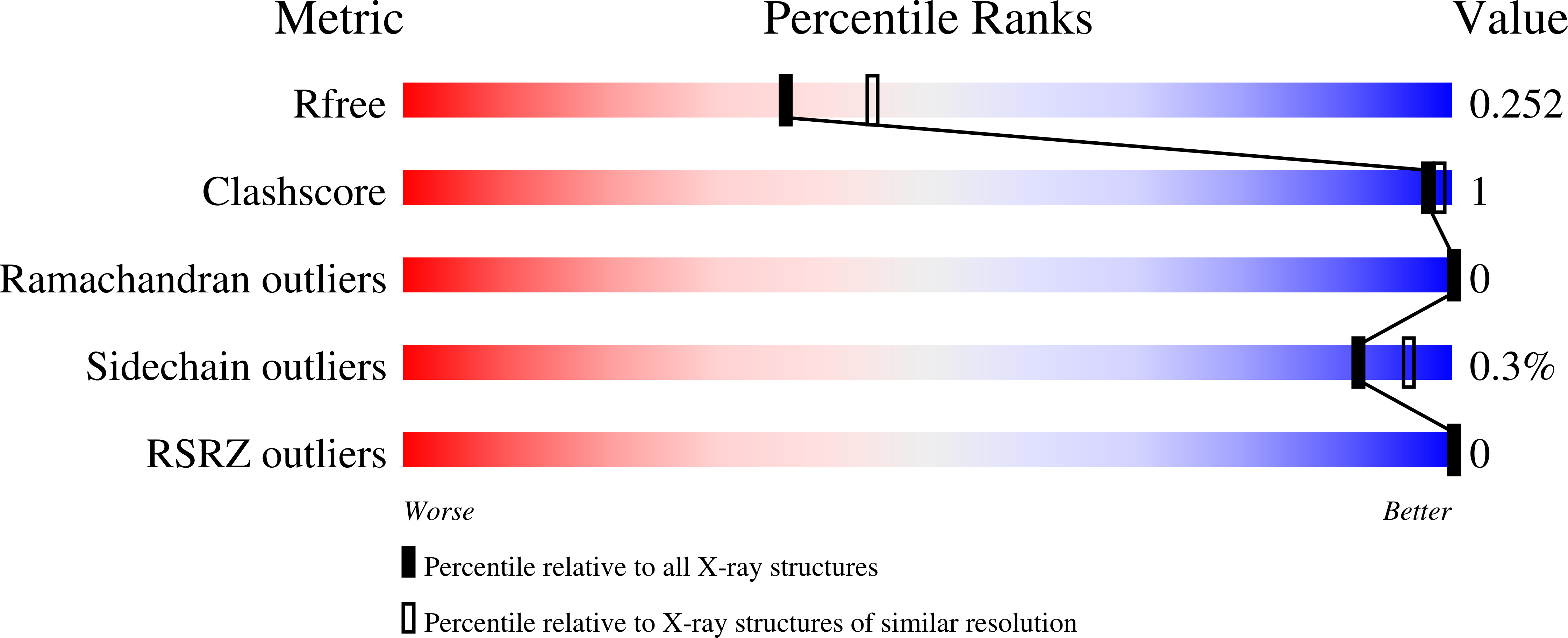
2.20 Å
R-Value Free:
0.25
R-Value Work:
0.20
R-Value Observed:
0.20
Space Group:
P 31
Macromolecular Entities
Structures with similar UniProt ID
Protein Blast
Polymer Type:polypeptide(L)
Molecule:Cathepsin B-like peptidase (C01 family)
Gene (Uniprot):cb1.1
Mutagens:T168A, T283A
Chain IDs:A, B, C
Chain Length:254
Number of Molecules:3
Biological Source:Schistosoma mansoni
Primary Citation
Fat or flat? The impact of dipole moment vectors on non-covalent interactions between aromatic tags and macromolecules.
Inorg Chem Front ? ? ? (2025)
PMID: 41127420 DOI: 10.1039/d5qi01546d

Abstact

The closo-1,2-C2B10H12 carborane is a recognized 3D aromatic icosahedral building block, with an electron distribution governed by the outer hydridic BH and acidic CH vertices. We attached the carborane cage to a peptidomimetic scaffold to generate an active-site inhibitor of SmCB1, a protease drug target in the Schistosoma pathogen. The carborane-tagged compound exhibited superior inhibitor affinity and bioactivity compared to its conventional 2D aromatic phenyl analog. Quantum mechanical computations, based on the crystal structure of the protease-inhibitor complex, revealed that the carborane tag contributed to inhibitor binding not only through nonpolar interactions but also via a key hydrogen bond between its CH vertex and a negatively charged residue in the binding site. This interaction, driven by the large dipole moment of the carborane cage, resulted in a more favorable energy contribution than that of the phenyl group in the 2D analog. The carborane pharmacophore boosted affinity for SmCB1 and conferred specific anti-schistosomal activity, highlighting its potential in protein ligand design.

Legend

Protein

Chemical

Disease

Primary Citation of related structures
Feedback Form
Name
Email
Institute
Feedback