9FY5 image
Deposition Date 2024-07-02
Release Date 2024-12-11
Last Version Date 2025-03-26
Entry Detail
PDB ID:
9FY5
Keywords:
Title:
CRYSTAL STRUCTURE OF HUMAN MONOACYLGLYCEROL LIPASE WITH COMPOUND
Biological Source:
Source Organism(s):
Homo sapiens (Taxon ID: 9606)
Expression System(s):
Method Details:
Experimental Method:
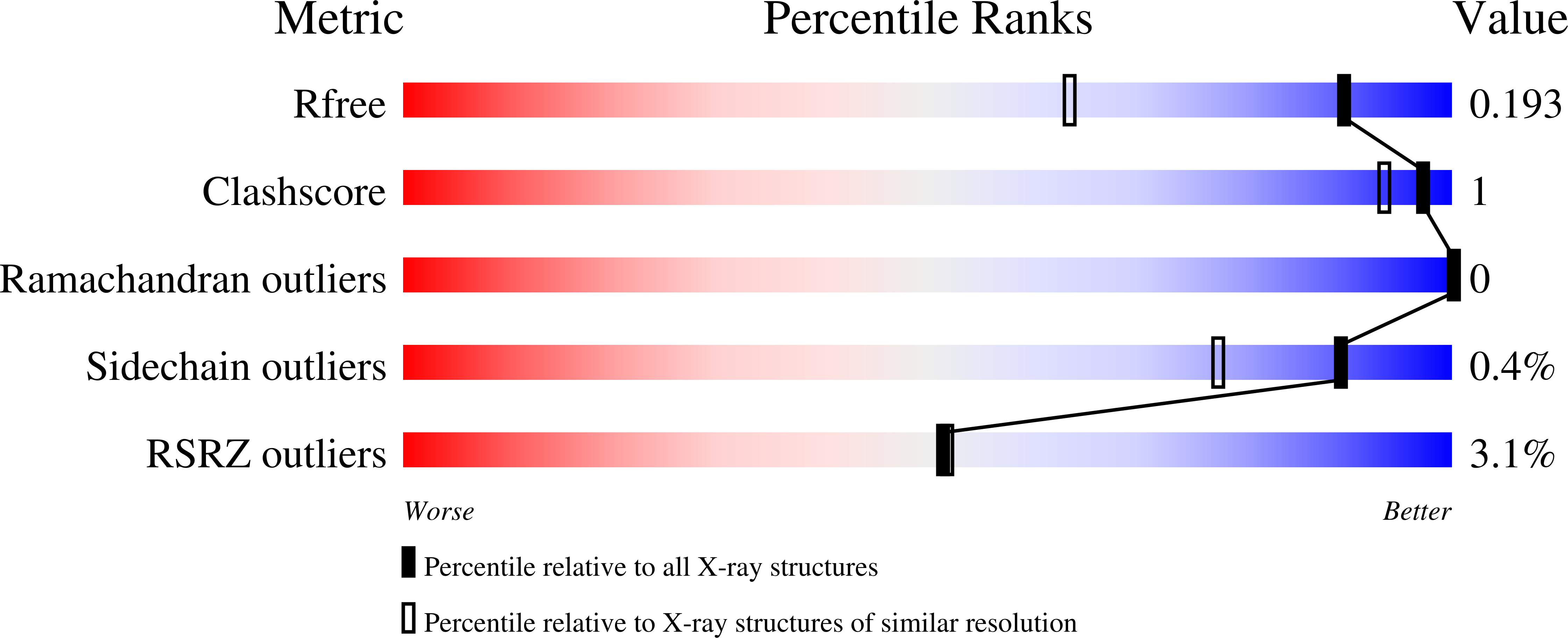
Resolution:
1.43 Å
R-Value Free:
0.19
R-Value Work:
0.15
R-Value Observed:
0.15
Space Group:
C 2 2 21
Macromolecular Entities
Structures with similar UniProt ID
Protein Blast
Polymer Type:polypeptide(L)
Molecule:Monoglyceride lipase
Gene (Uniprot):MGLL
Chain IDs:A
Chain Length:323
Number of Molecules:1
Biological Source:Homo sapiens
Primary Citation
Development of a Highly Selective NanoBRET Probe to Assess MAGL Inhibition in Live Cells.
Chembiochem 26 e202400704 e202400704 (2025)
PMID: 39607084 DOI: 10.1002/cbic.202400704

Abstact

Cell-free enzymatic assays are highly useful tools in early compound profiling due to their robustness and scalability. However, their inadequacy to reflect the complexity of target engagement in a cellular environment may lead to a significantly divergent pharmacology that is eventually observed in cells. The discrepancy that emerges from properties like permeability and unspecific protein binding may largely mislead lead compound selection to undergo further chemical optimization. We report the development of a new intracellular NanoBRET assay to assess MAGL inhibition in live cells. Based on a reverse design approach, a highly potent, reversible preclinical inhibitor was conjugated to the cell-permeable BODIPY590 acceptor fluorophore while retaining its overall balanced properties. An engineered MAGL-nanoluciferase (Nluc) fusion protein provided a suitable donor counterpart for the facile interrogation of intracellular ligand activity. Validation of assay conditions using a selection of known MAGL inhibitors set the stage for the evaluation of over 1'900 MAGL drug candidates derived from our discovery program. This evaluation enabled us to select compounds for further development based not only on target engagement, but also on favorable physicochemical parameters like permeability and protein binding. This study highlights the advantages of cell-based target engagement assays for accelerating compound profiling and progress at the early stages of drug discovery programs.

Legend

Protein

Chemical

Disease

Primary Citation of related structures
Feedback Form
Name
Email
Institute
Feedback