9FN6 image
Deposition Date 2024-06-09
Release Date 2025-06-25
Last Version Date 2025-12-10
Entry Detail
PDB ID:
9FN6
Keywords:
Title:
Full-length crystal structure of human Fascin 1
Biological Source:
Source Organism(s):
Homo sapiens (Taxon ID: 9606)
Expression System(s):
Method Details:
Experimental Method:
Resolution:
2.20 Å
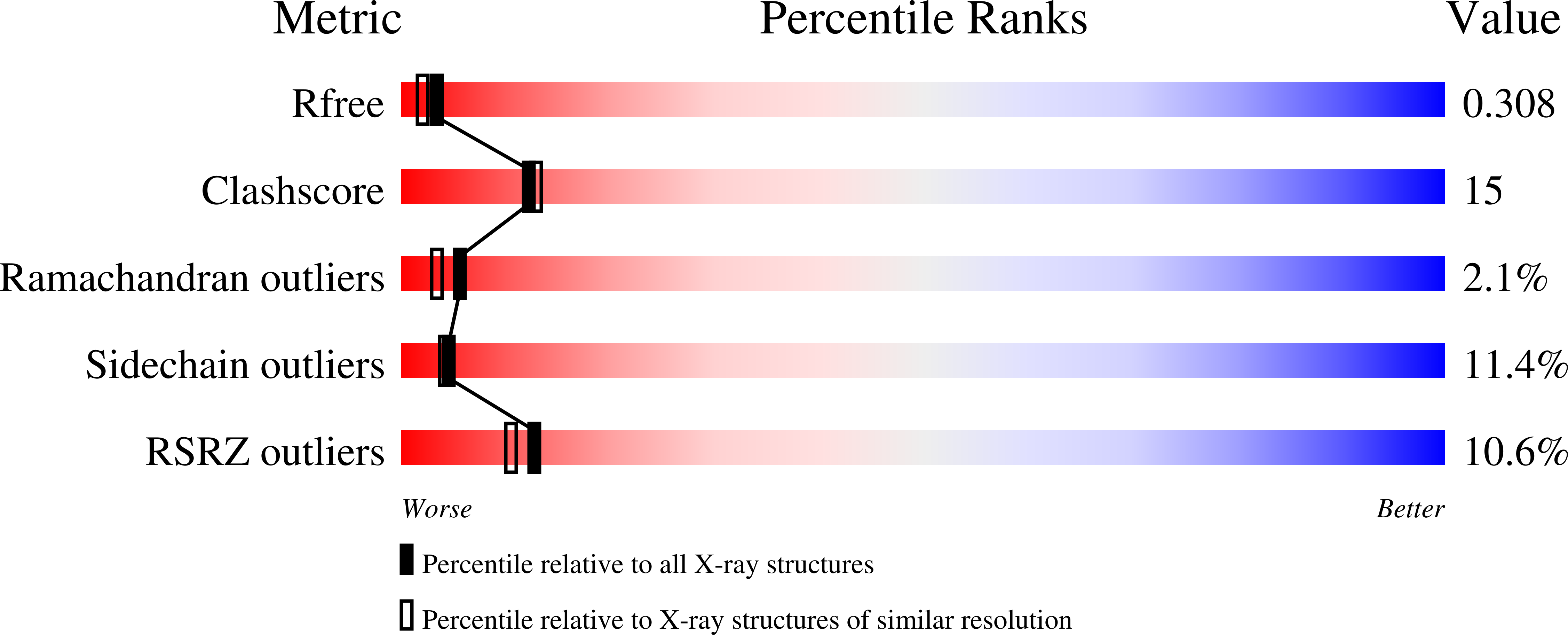
R-Value Free:
0.30
R-Value Work:
0.23
R-Value Observed:
0.23
Space Group:
I 1 2 1
Macromolecular Entities
Structures with similar UniProt ID
Protein Blast
Polymer Type:polypeptide(L)
Molecule:Fascin
Gene (Uniprot):FSCN1
Chain IDs:A, B
Chain Length:493
Number of Molecules:2
Biological Source:Homo sapiens
Primary Citation
Structural insights into full-length human fascin1: a target for cancer treatment.
Acta Crystallogr.,Sect.F 81 319 331 (2025)
PMID: 40576130 DOI: 10.1107/S2053230X25005254

Abstact

Fascin1 proteins are a family of globular proteins with actin-bundling activity that cross-link actin filaments together, allowing the formation of actin-rich structures involved in cell migration and adhesion, such as filopodia, invadopodia, stress fibers, micro-spikes and podocytes. The overexpression of human fascin1 has been linked to tumor progression in most human cancers, particularly during the epithelial-mesenchymal transition, making it a promising biomarker for cancer metastasis and a major target for the development of novel cancer therapies. X-ray crystallography has been instrumental in human fascin1-inhibition research since it provides detailed insights into the structure of the protein and its interactions with small-molecule inhibitors. This technique has allowed the characterization of a range of molecular conformations in which the protein naturally exists. However, human fascin1 has never been fully modeled until now. To the best of our knowledge, this study presents the first full-length structure of human fascin1 in which both copies are fully resolved. Comparison of this structure with the available wild-type and complexed structures provides new insights into the conformational plasticity of fascin1 that will facilitate subsequent studies on human fascin1 in the context of drug design for cancer-related therapies.

Legend

Protein

Chemical

Disease

Primary Citation of related structures
Feedback Form
Name
Email
Institute
Feedback