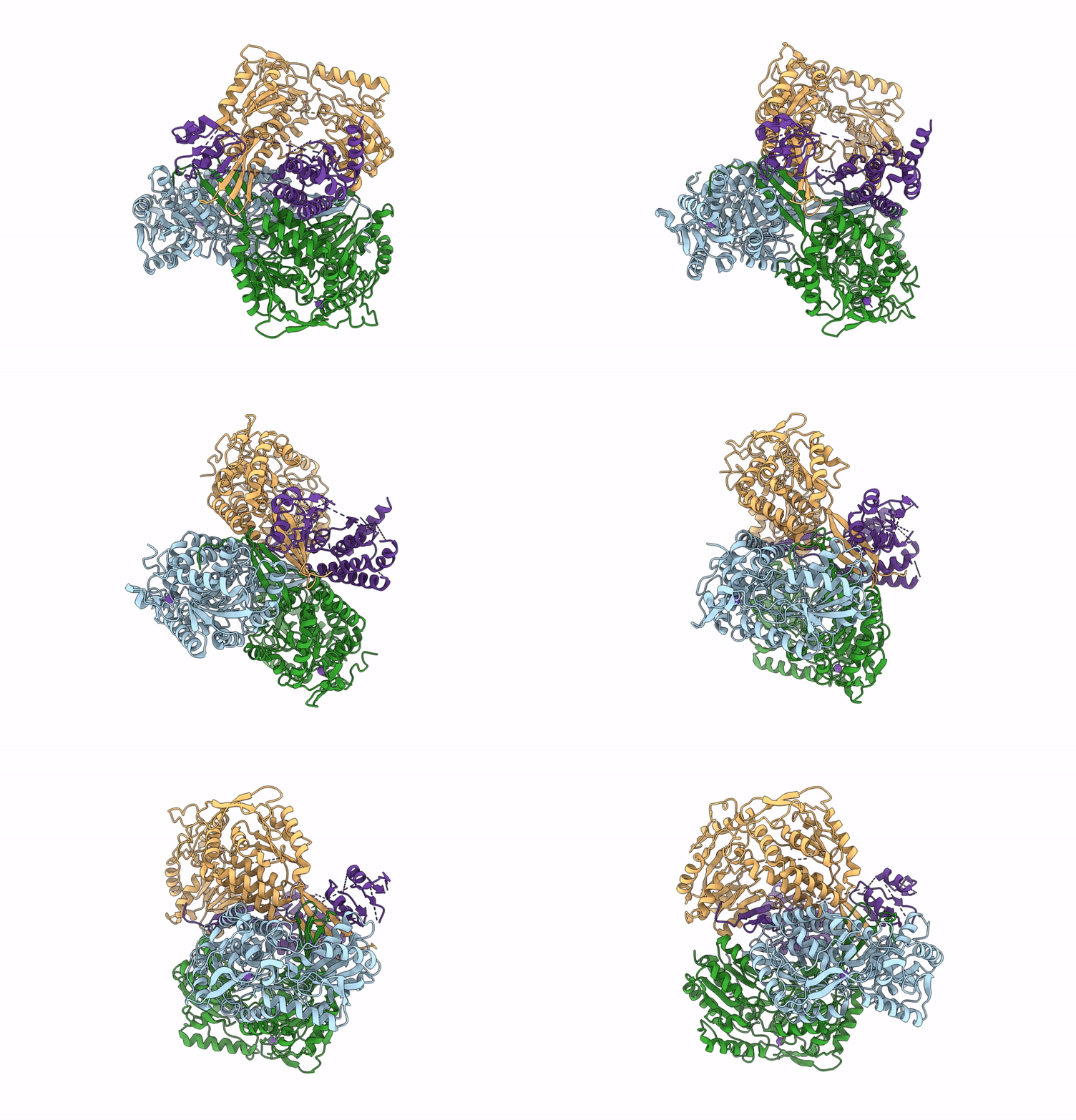
9FM9 image
Deposition Date 2024-06-05
Release Date 2025-06-11
Last Version Date 2026-02-04
Entry Detail
PDB ID:
9FM9
Keywords:
Title:
Aldehyde dehydrogenase
Biological Source:
Source Organism(s):
Expression System(s):
Method Details:
Experimental Method:
Resolution:
3.10 Å
Aggregation State:
PARTICLE
Reconstruction Method:
SINGLE PARTICLE
Macromolecular Entities
Structures with similar UniProt ID
Protein Blast
Polymer Type:polypeptide(L)
Molecule:Aldehyde dehydrogenase
Gene (Uniprot):adh
Chain IDs:A, B, C, D
Chain Length:529
Number of Molecules:4
Biological Source:Paracoccus denitrificans
Ligand Molecules
Primary Citation
NAD-dependent dehydrogenases enable efficient growth of Paracoccus denitrificans on the PET monomer ethylene glycol.
Nat Commun 16 5845 5845 (2025)
PMID: 40592898 DOI: 10.1038/s41467-025-61056-x

Abstact

Ethylene glycol is a monomer of the plastic polyethylene terephthalate (PET) and an environmental pollutant of increasing concern. Although it is generally accepted that bacteria use ethylene glycol as growth substrate, not all involved enzymes are well understood. Here, we show that Paracoccus denitrificans assimilates ethylene glycol solely via NAD-dependent alcohol and aldehyde dehydrogenases. Using comparative proteomics, we identify a gene cluster that is strongly expressed in the presence of ethylene glycol. We report the functional and structural characterization of EtgB and EtgA, key enzymes encoded by this etg gene cluster. We furthermore show that the transcriptional activator EtgR controls expression of the gene cluster. Adaptive laboratory evolution on ethylene glycol results in faster growth, enabled by increased production of EtgB and EtgA. Bioinformatic analysis reveals that the etg gene cluster is widely distributed among bacteria, suggesting a common role of NAD-dependent dehydrogenases in microbial ethylene glycol assimilation.

Legend

Protein

Chemical

Disease

Primary Citation of related structures
Feedback Form
Name
Email
Institute
Feedback