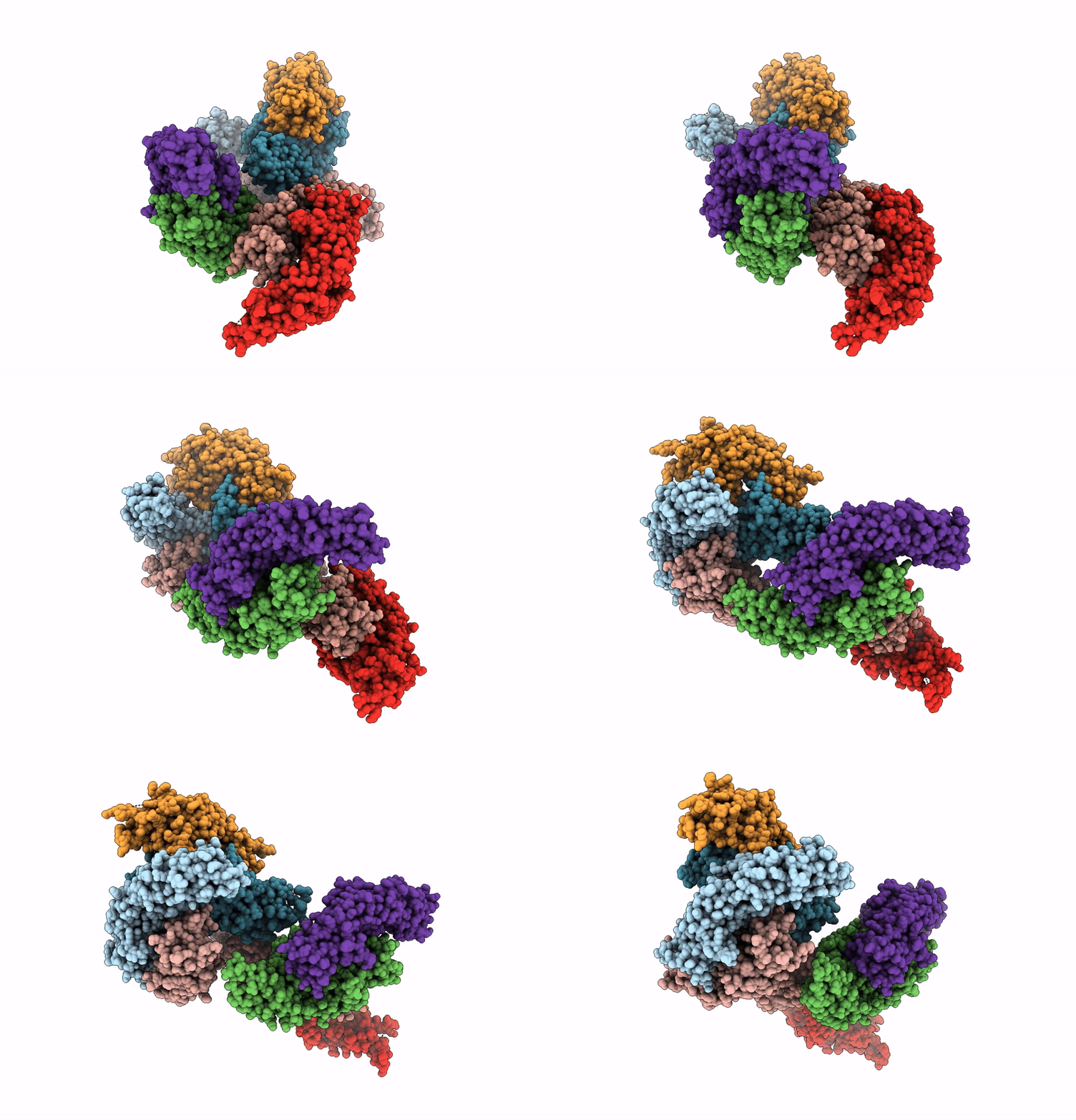
9FH8 image
Deposition Date 2024-05-26
Release Date 2025-03-26
Last Version Date 2025-04-02
Entry Detail
PDB ID:
9FH8
Keywords:
Title:
Crystal structure of the SPD-2 domain of Apis dorsata CEP192
Biological Source:
Source Organism:
Apis dorsata (Taxon ID: 7462)
Host Organism:
Method Details:
Experimental Method:
Resolution:
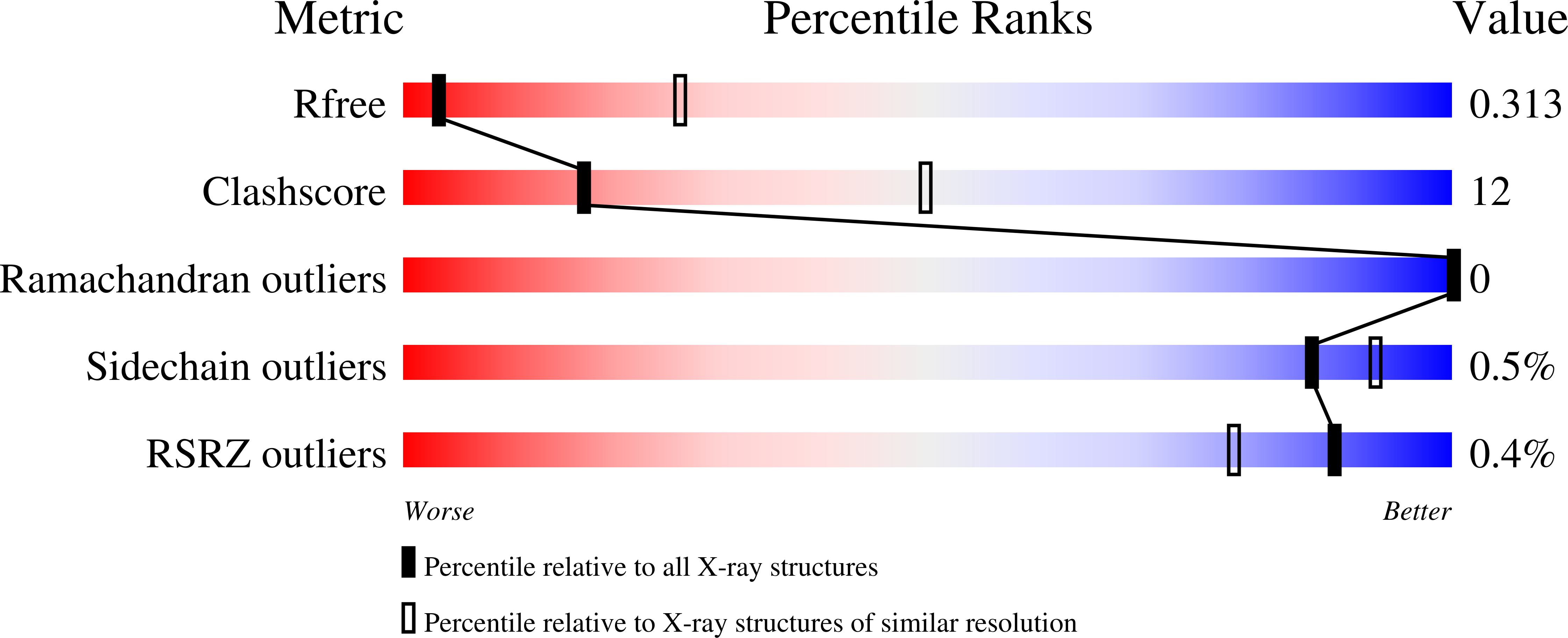
3.50 Å
R-Value Free:
0.31
R-Value Work:
0.28
R-Value Observed:
0.28
Space Group:
I 41
Macromolecular Entities
Structures with similar UniProt ID
Protein Blast
Polymer Type:polypeptide(L)
Molecule:Centrosomal protein 192 (CEP192)
Chain IDs:A, B, C, D, E, F, G, H
Chain Length:341
Number of Molecules:8
Biological Source:Apis dorsata
Modified Residue
Compound ID Chain ID Parent Comp ID Details 2D Image
MSE A MET modified residue
Ligand Molecules
Primary Citation
The conserved Spd-2/CEP192 domain adopts a unique protein fold to promote centrosome scaffold assembly.
Sci Adv 11 eadr5744 eadr5744 (2025)
PMID: 40106572 DOI: 10.1126/sciadv.adr5744

Abstact

Centrosomes form when centrioles assemble pericentriolar material (PCM) around themselves. Spd-2/CEP192 proteins, defined by a conserved "Spd-2 domain" (SP2D) comprising two closely spaced AspM-Spd-2-Hydin (ASH) domains, play a critical role in centrosome assembly. Here, we show that the SP2D does not target Drosophila Spd-2 to centrosomes but rather promotes PCM scaffold assembly. Crystal structures of the human and honeybee SP2D reveal an unusual "extended cradle" structure mediated by a conserved interaction interface between the two ASH domains. Mutations predicted to perturb this interface, including a human mutation associated with male infertility and Mosaic Variegated Aneuploidy, disrupt PCM scaffold assembly in flies. The SP2D is monomeric in solution, but the Drosophila SP2D can form higher-order oligomers upon phosphorylation by PLK1 (Polo-like kinase 1). Crystal-packing interactions and AlphaFold predictions suggest how SP2Ds might self-assemble, and mutations associated with one such potential dimerization interface markedly perturb SP2D oligomerization in vitro and PCM scaffold assembly in vivo.

Legend

Protein

Chemical

Disease

Primary Citation of related structures
Feedback Form
Name
Email
Institute
Feedback