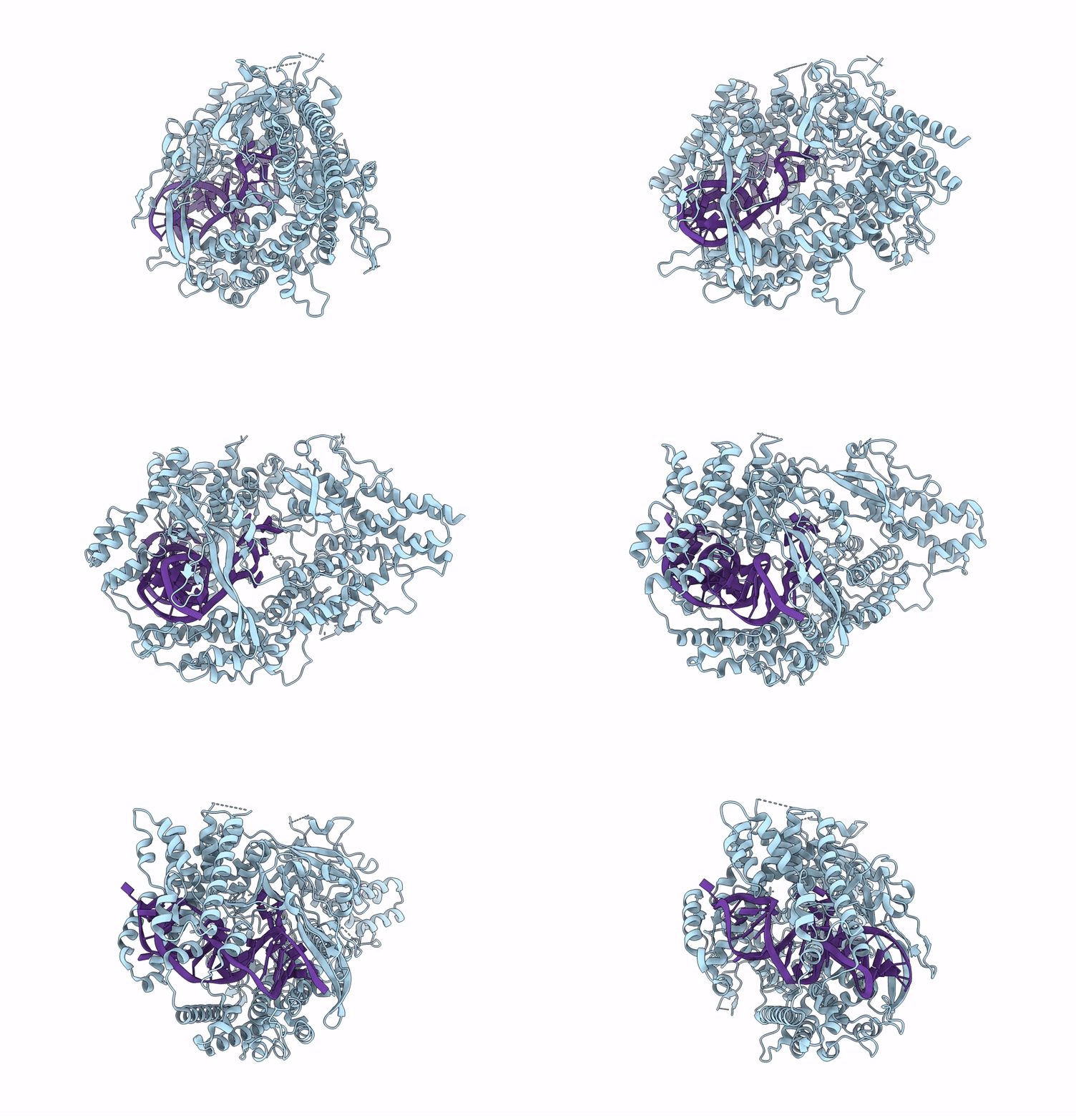
9FCV image
Deposition Date 2024-05-16
Release Date 2025-02-12
Last Version Date 2025-04-02
Entry Detail
PDB ID:
9FCV
Title:
Cas nuclease-CRISPR (cr)RNA ribonucleoprotein (RNP) complex
Biological Source:
Source Organism(s):
Expression System(s):
Method Details:
Experimental Method:
Resolution:
3.09 Å
Aggregation State:
PARTICLE
Reconstruction Method:
SINGLE PARTICLE
Macromolecular Entities
Structures with similar UniProt ID
Protein Blast
Polymer Type:polypeptide(L)
Molecule:Phage head-tail adaptor
Gene (Uniprot):HMPREF6485_0083
Chain IDs:A
Chain Length:1127
Number of Molecules:1
Biological Source:Segatella buccae
Polymer Type:polyribonucleotide
Molecule:crRNA
Chain IDs:B
Chain Length:81
Number of Molecules:1
Biological Source:synthetic construct
Ligand Molecules
Primary Citation

Abstact

Anti-CRISPR proteins (Acrs) inhibit CRISPR-Cas immune defenses, with almost all known Acrs acting on the Cas nuclease-CRISPR (cr)RNA ribonucleoprotein (RNP) complex. Here, we show that AcrVIB1 from Riemerella anatipestifer, the only known Acr against Cas13b, principally acts upstream of RNP complex formation by promoting unproductive crRNA binding followed by crRNA degradation. AcrVIB1 tightly binds to Cas13b but not to the Cas13b-crRNA complex, resulting in enhanced rather than blocked crRNA binding. However, the more tightly bound crRNA does not undergo processing and fails to activate collateral RNA cleavage even with target RNA. The bound crRNA is also accessible to RNases, leading to crRNA turnover in vivo even in the presence of Cas13b. Finally, cryoelectron microscopy (cryo-EM) structures reveal that AcrVIB1 binds a helical domain of Cas13b responsible for securing the crRNA, keeping the domain untethered. These findings reveal an Acr that converts an effector nuclease into a crRNA sink to suppress CRISPR-Cas defense.

Legend

Protein

Chemical

Disease

Primary Citation of related structures
Feedback Form
Name
Email
Institute
Feedback