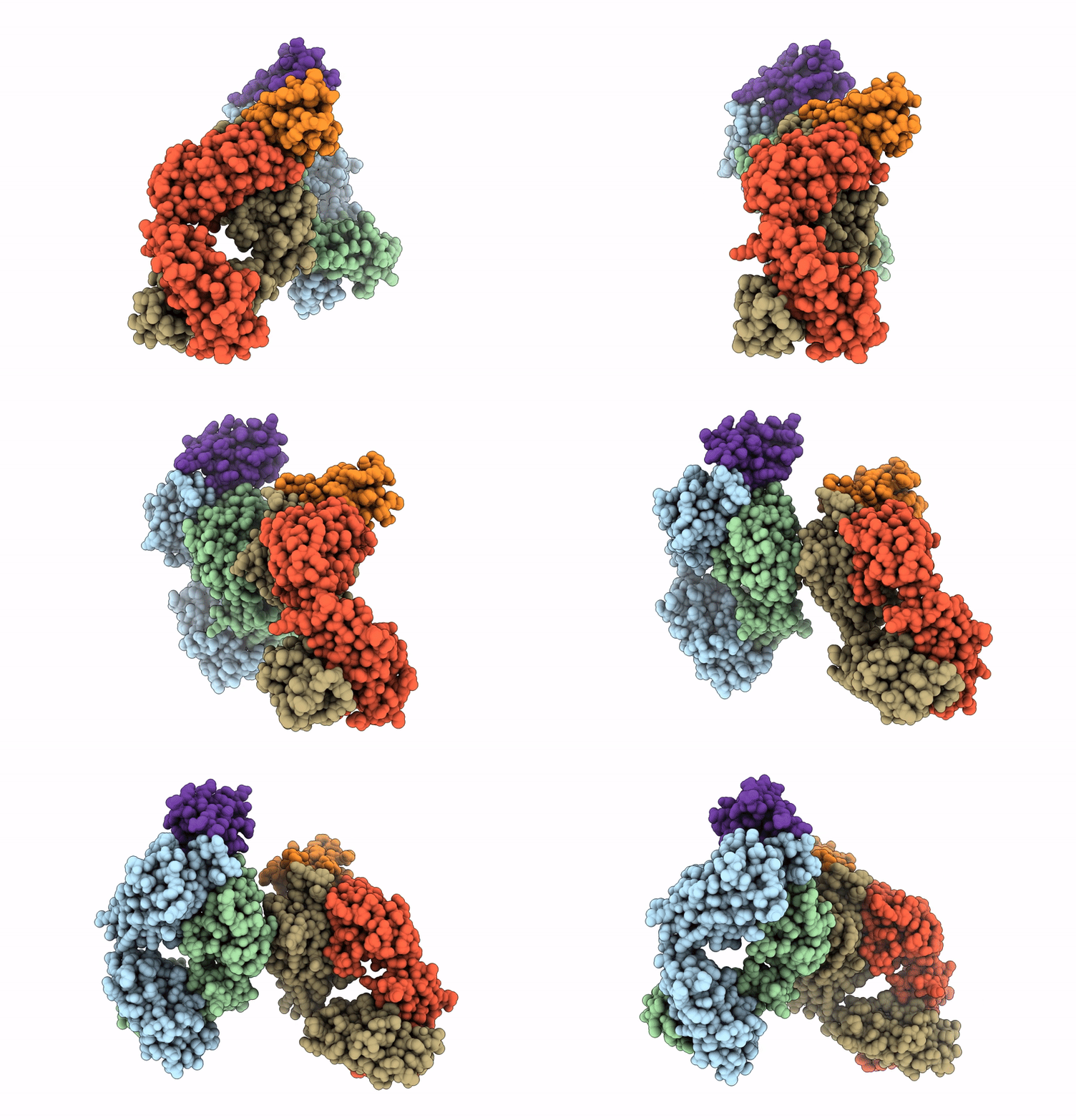
9F91 image
Deposition Date 2024-05-07
Release Date 2025-05-21
Last Version Date 2025-12-17
Entry Detail
PDB ID:
9F91
Keywords:
Title:
Crystal structure of a designed Respiratory Syncytial Virus immunogen in complex with RSV90 fab
Biological Source:
Source Organism(s):
Expression System(s):
Method Details:
Experimental Method:
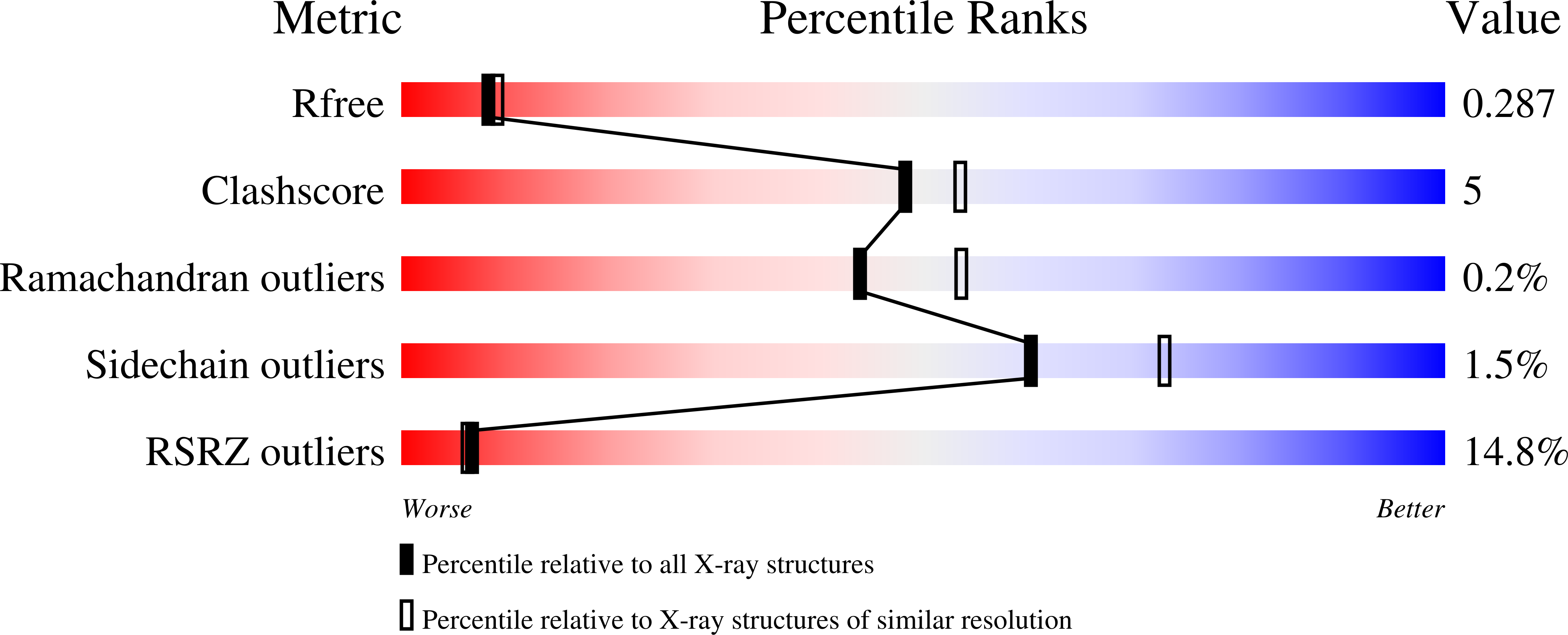
Resolution:
2.43 Å
R-Value Free:
0.28
R-Value Work:
0.25
R-Value Observed:
0.25
Space Group:
P 21 21 2
Macromolecular Entities
Polymer Type:polypeptide(L)
Molecule:RSV90 Fab heavy chain
Chain IDs:A (auth: E), C (auth: A)
Chain Length:228
Number of Molecules:2
Biological Source:Homo sapiens
Polymer Type:polypeptide(L)
Molecule:RSV90 Fab light chain
Chain IDs:B (auth: F), D (auth: B)
Chain Length:217
Number of Molecules:2
Biological Source:Homo sapiens
Polymer Type:polypeptide(L)
Molecule:Designed single epitope Respiratory Syncytial Virus immunogen in complex with RSV90 fab
Chain IDs:E (auth: I), F (auth: J)
Chain Length:97
Number of Molecules:2
Biological Source:synthetic construct
Primary Citation
Accurate single-domain scaffolding of three nonoverlapping protein epitopes using deep learning.
Nat.Chem.Biol. ? ? ? (2025)
PMID: 41350440 DOI: 10.1038/s41589-025-02083-z

Abstact

De novo protein design has seen major success in scaffolding single functional motifs; however, in nature, most proteins present multiple functional sites. Here, we describe an approach to simultaneously scaffold multiple functional sites in a single-domain protein using deep learning. We designed small single-domain immunogens, under 130 residues, that present three distinct and irregular motifs from respiratory syncytial virus. These motifs together comprise nearly half of the designed proteins; hence, the overall folds are quite unusual with little global similarity to proteins in the Protein Data Bank. Despite this, X-ray crystal structures confirmed the accuracy of presentation of each of the motifs and the multiepitope design yields improved cross-reactive titers and neutralizing response compared to a single-epitope immunogen. The successful presentation of three distinct binding surfaces in a small single-domain protein highlights the power of generative deep learning methods to solve complex protein design problems.

Legend

Protein

Chemical

Disease

Primary Citation of related structures
Feedback Form
Name
Email
Institute
Feedback