9F6B image
Deposition Date 2024-04-30
Release Date 2025-05-14
Last Version Date 2025-12-10
Entry Detail
PDB ID:
9F6B
Title:
Human neuropilin-1 in a complex with a quinoline based antagonists
Biological Source:
Source Organism:
Homo sapiens (Taxon ID: 9606)
Host Organism:
Method Details:
Experimental Method:
Resolution:
1.57 Å
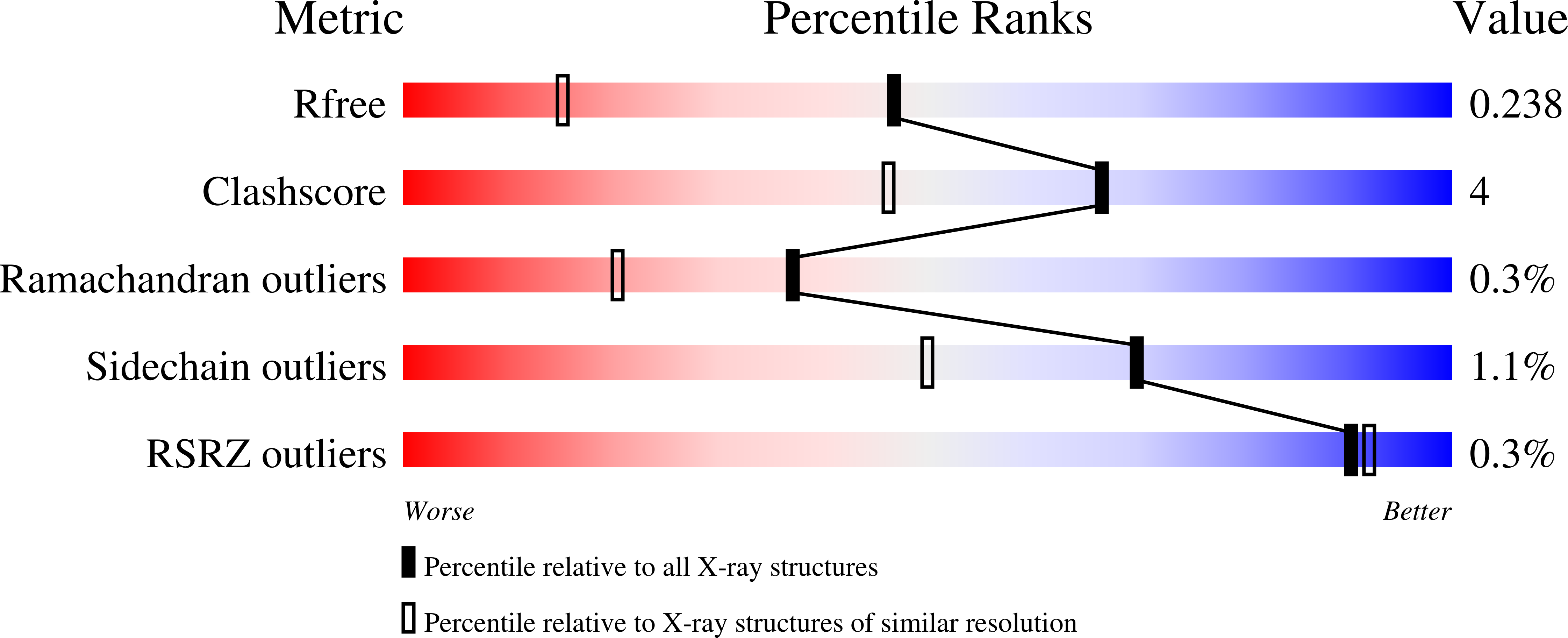
R-Value Free:
0.23
R-Value Work:
0.19
R-Value Observed:
0.19
Space Group:
P 1 21 1
Macromolecular Entities
Structures with similar UniProt ID
Protein Blast
Polymer Type:polypeptide(L)
Molecule:Neuropilin-1
Gene (Uniprot):NRP1
Chain IDs:A, B
Chain Length:158
Number of Molecules:2
Biological Source:Homo sapiens
Ligand Molecules
Primary Citation
Quinoline-Based Neuropilin‐1 Antagonists Exhibit a Pure Antagonist Profile and Block Vascular Endothelial Growth Factor-Induced Pain.
Acs Pharmacol Transl Sci 8 3844 3871 (2025)
PMID: 41262564 DOI: 10.1021/acsptsci.5c00029

Abstact

Nociceptive pain, resulting from tissue injury or inflammation, affects a large portion of the global population. This type of pain is commonly treated by small molecules that are associated with a variety of drawbacks, including addiction and potential liver or kidney damage, highlighting the need for new therapeutic strategies. Here, we report the design, synthesis, and characterization of EG01449 (12h), a quinoline-based neuropilin-1 (NRP1) antagonist with analgesic effects in vascular endothelial growth factor (VEGF)-induced pain models. Neuropilin-1 is a critical coreceptor mediating VEGF signaling. In models of VEGF-induced pain, the VEGFA165a isoform increases currents through voltage-gated sodium and calcium channels in dorsal root ganglia sensory neurons. Notably, this effect was mitigated upon the inhibition of NRP1 by 12h, while 12h alone showed no discernible impact on sodium currents. Compound 12h also attenuated sensitivity to mechanical stimuli and cold-induced allodynia. Unlike the previously reported NRP1-targeting compounds that may activate intracellular signaling, 12h did not activate p38 mitogen-activated protein kinase and exhibited a purely inhibitory pharmacological profile. Structural comparison using X-ray crystallography revealed an additional hydrogen bond that contributes to the increased stabilization of the 12h/NRP1 complex. These findings demonstrate that the NRP1 inhibitor 12h elicits an antinociceptive effect and highlight the impact of subtle structural modifications on biological outcomes. NRP1 antagonism thus represents a promising new modality for the treatment of chronic pain conditions.

Legend

Protein

Chemical

Disease

Primary Citation of related structures
Feedback Form
Name
Email
Institute
Feedback