9F26 image
Deposition Date 2024-04-22
Release Date 2024-12-04
Last Version Date 2025-01-22
Entry Detail
PDB ID:
9F26
Title:
Crystal structure of the PriS_PriL-Rpa2WH ternary complex from P. abyssi
Biological Source:
Source Organism:
Method Details:
Experimental Method:
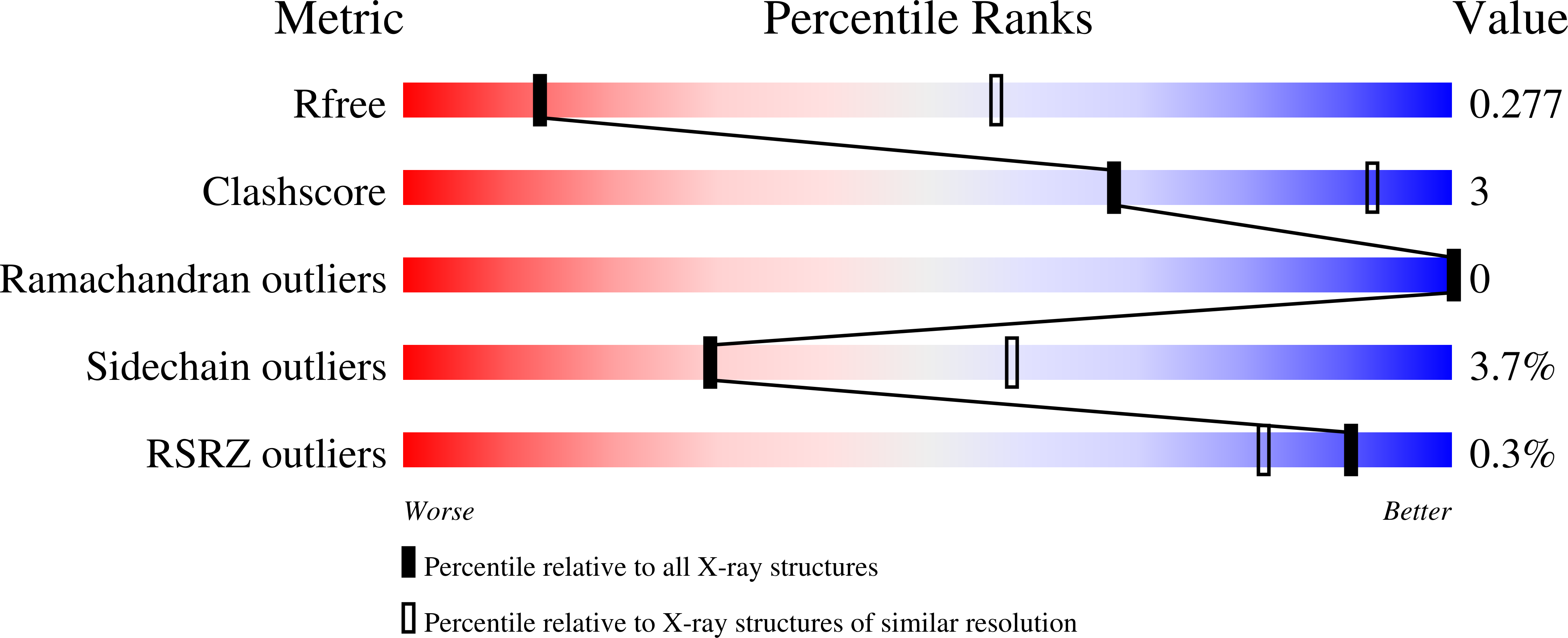
Resolution:
3.50 Å
R-Value Free:
0.25
R-Value Work:
0.23
R-Value Observed:
0.23
Space Group:
P 21 21 21
Macromolecular Entities
Structures with similar UniProt ID
Protein Blast
Polymer Type:polypeptide(L)
Molecule:DNA primase small subunit PriS
Gene (Uniprot):priS
Chain IDs:A
Chain Length:346
Number of Molecules:1
Biological Source:Pyrococcus abyssi
Structures with similar UniProt ID
Protein Blast
Polymer Type:polypeptide(L)
Molecule:DNA primase large subunit PriL
Gene (Uniprot):priL
Chain IDs:B
Chain Length:393
Number of Molecules:1
Biological Source:Pyrococcus abyssi
Structures with similar UniProt ID
Protein Blast
Polymer Type:polypeptide(L)
Molecule:RPA32 subunit of the hetero-oligomeric complex involved in homologous recombination
Gene (Uniprot):PAB2165
Chain IDs:C
Chain Length:272
Number of Molecules:1
Biological Source:Pyrococcus abyssi
Ligand Molecules
Primary Citation
Communication between DNA polymerases and Replication Protein A within the archaeal replisome.
Nat Commun 15 10926 10926 (2024)
PMID: 39738083 DOI: 10.1038/s41467-024-55365-w

Abstact

Replication Protein A (RPA) plays a pivotal role in DNA replication by coating and protecting exposed single-stranded DNA, and acting as a molecular hub that recruits additional replication factors. We demonstrate that archaeal RPA hosts a winged-helix domain (WH) that interacts with two key actors of the replisome: the DNA primase (PriSL) and the replicative DNA polymerase (PolD). Using an integrative structural biology approach, combining nuclear magnetic resonance, X-ray crystallography and cryo-electron microscopy, we unveil how RPA interacts with PriSL and PolD through two distinct surfaces of the WH domain: an evolutionarily conserved interface and a novel binding site. Finally, RPA is shown to stimulate the activity of PriSL in a WH-dependent manner. This study provides a molecular understanding of the WH-mediated regulatory activity in central replication factors such as RPA, which regulate genome maintenance in Archaea and Eukaryotes.

Legend

Protein

Chemical

Disease

Primary Citation of related structures
Feedback Form
Name
Email
Institute
Feedback