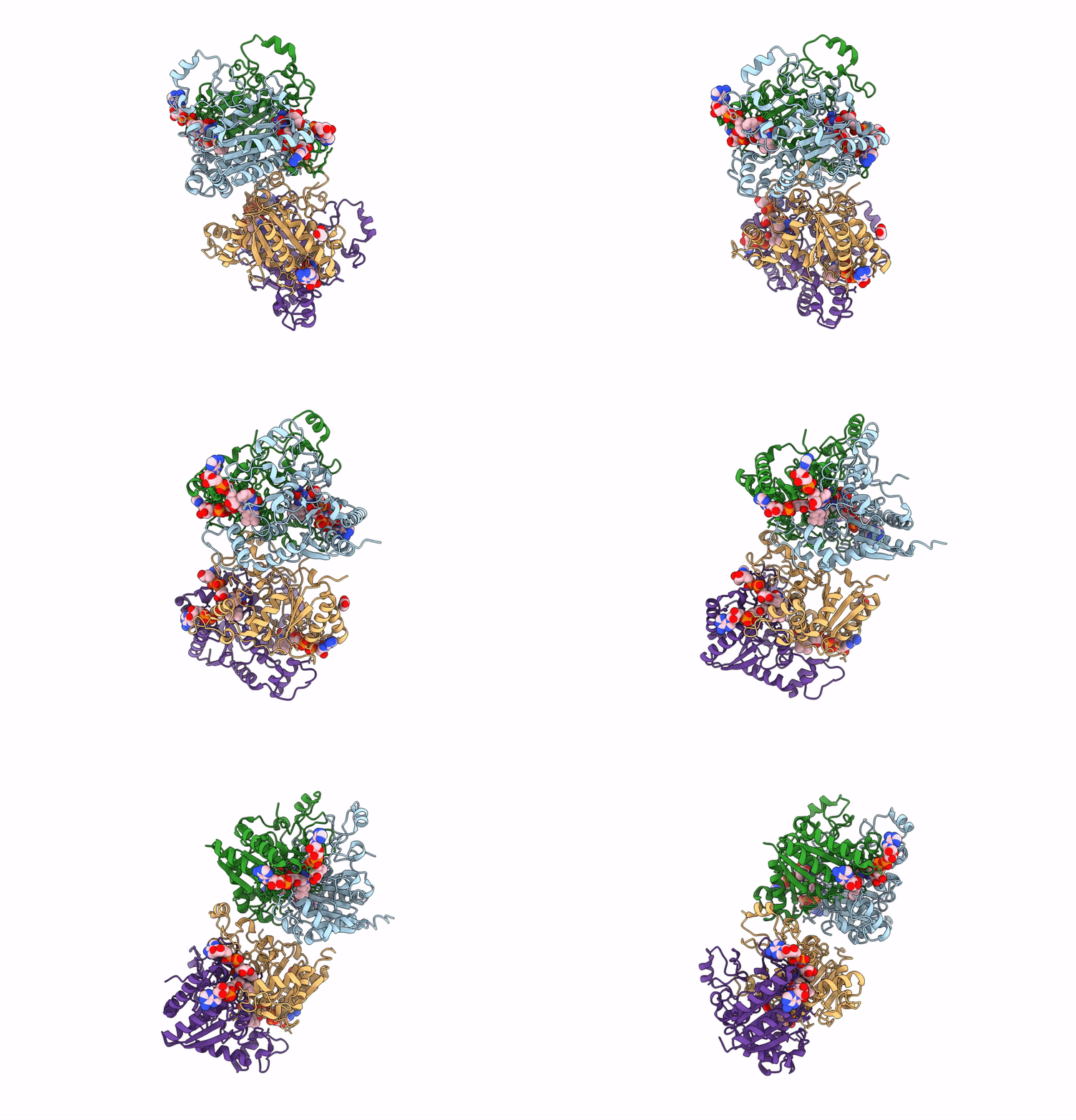
9EZR image
Deposition Date 2024-04-14
Release Date 2025-12-10
Last Version Date 2026-02-11
Entry Detail
PDB ID:
9EZR
Keywords:
Title:
XFEL structure of hNQO1 mixed with NADH in an extended orientation at 0.3 s
Biological Source:
Source Organism(s):
Homo sapiens (Taxon ID: 9606)
Expression System(s):
Method Details:
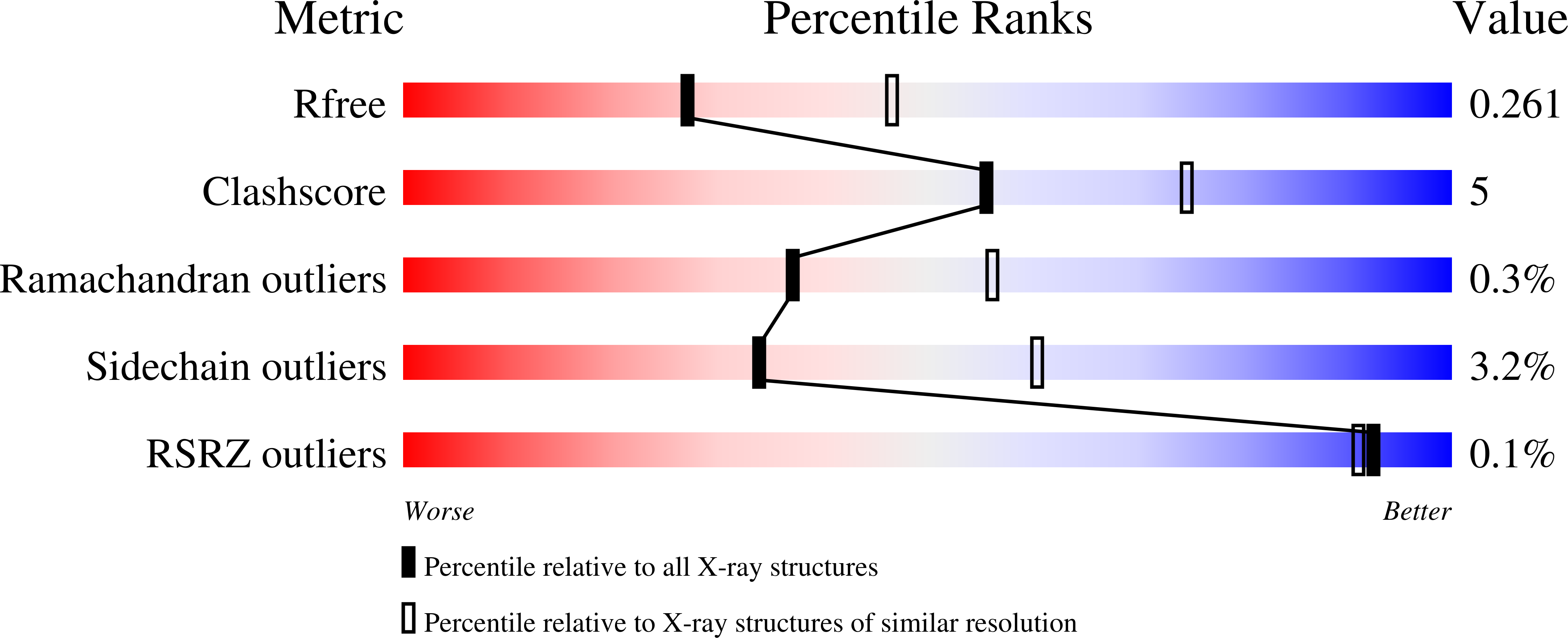
Experimental Method:
Resolution:
2.51 Å
R-Value Free:
0.25
R-Value Work:
0.19
R-Value Observed:
0.19
Space Group:
P 21 21 21
Macromolecular Entities
Structures with similar UniProt ID
Protein Blast
Polymer Type:polypeptide(L)
Molecule:NAD(P)H dehydrogenase [quinone] 1
Gene (Uniprot):NQO1
Chain IDs:A, B, C, D
Chain Length:278
Number of Molecules:4
Biological Source:Homo sapiens
Primary Citation

Abstact

Sample consumption for serial femtosecond crystallography with X-ray free electron lasers remains a major limitation preventing broader use in macromolecular crystallography. This drawback is exacerbated in time-resolved (TR) experiments, where the amount of sample required per reaction time point is multiplied by the number of time points investigated. To reduce this limitation, we demonstrate a segmented droplet generation strategy coupled to a mix-and-inject approach for TR studies at the European XFEL. The injector produces synchronized droplet trains that enable stable and reproducible injection of protein crystal slurries at significantly reduced flow rates. Using the human flavoenzyme NAD(P)H:quinone oxidoreductase 1 (NQO1) as a test system, we collected diffraction data after mixing with NADH at 0.3 s and 1.2 s delays. The segmented injection approach achieved up to 97% reduction in sample consumption compared with continuous-flow injection while maintaining data quality suitable for TR crystallography. Reproducible electron density features consistent with low-occupancy NADH binding illustrate both the feasibility and the current limits of studying dynamic redox enzymes using this approach. This work establishes segmented droplet generation as a sample-efficient and XFEL-compatible method for future time-resolved serial crystallography experiments.

Legend

Protein

Chemical

Disease

Primary Citation of related structures
Feedback Form
Name
Email
Institute
Feedback