9EYM image
Deposition Date 2024-04-09
Release Date 2025-04-23
Last Version Date 2025-11-05
Entry Detail
PDB ID:
9EYM
Keywords:
Title:
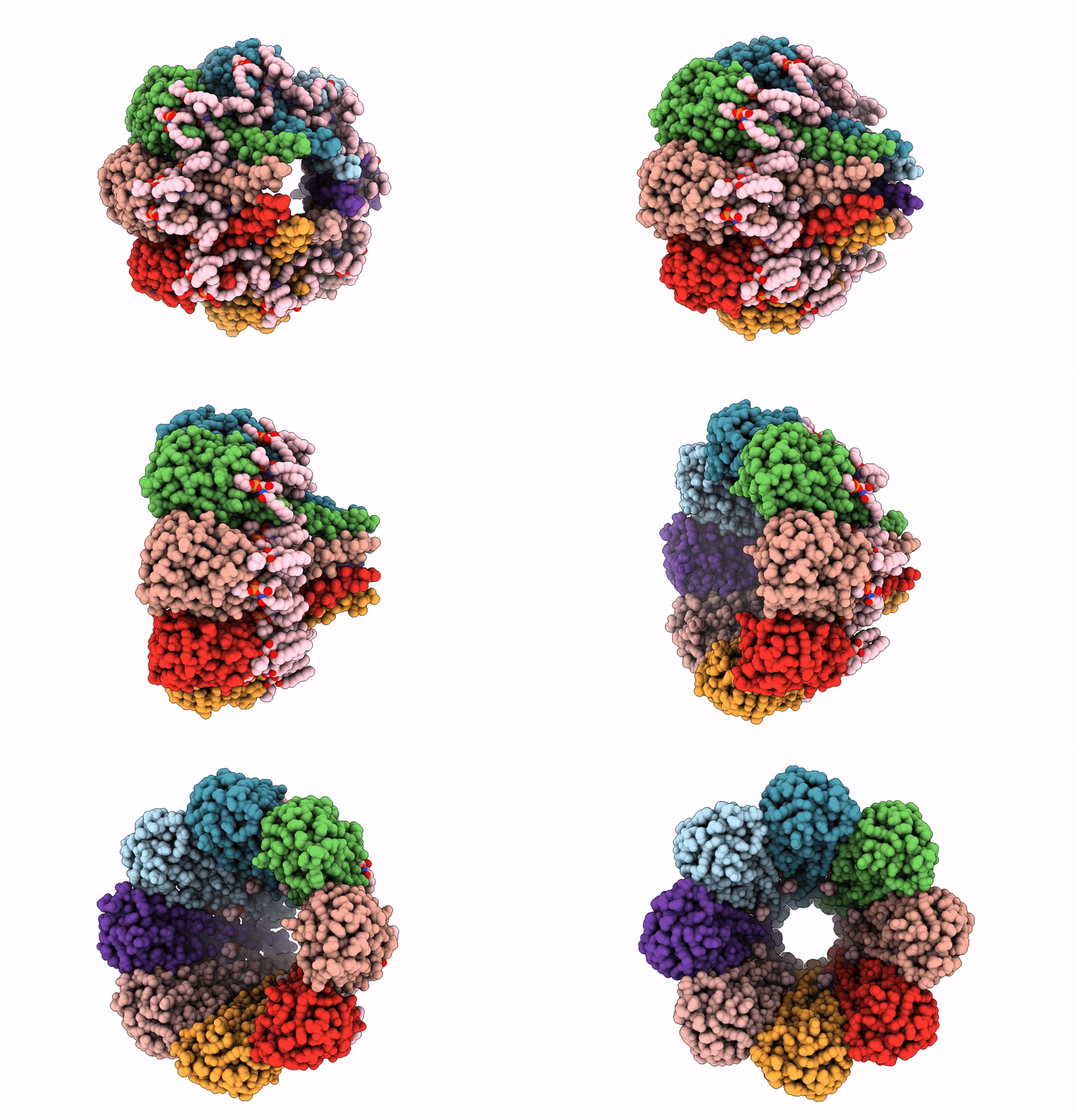
The structure of solubilized octameric pore of actinoporin Fav prepared on DOPC:sphingomyelin membranes
Biological Source:
Source Organism:
Method Details:
Experimental Method:
Resolution:
2.60 Å
Aggregation State:
PARTICLE
Reconstruction Method:
SINGLE PARTICLE
Macromolecular Entities
Polymer Type:polypeptide(L)
Molecule:Actinoporin
Chain IDs:A, B, C, D, E, F, G, H
Chain Length:262
Number of Molecules:8
Biological Source:Orbicella faveolata
Ligand Molecules
Primary Citation
Cryo-EM structures of a protein pore reveal a cluster of cholesterol molecules and diverse roles of membrane lipids.
Nat Commun 16 2972 2972 (2025)
PMID: 40140423 DOI: 10.1038/s41467-025-58334-z

Abstact

The structure and function of membrane proteins depend on their interactions with lipids that constitute membranes. Actinoporins are α-pore-forming proteins that bind preferentially to sphingomyelin-containing membranes, where they oligomerize and form transmembrane pores. Through a comprehensive cryo-electron microscopic analysis of a pore formed by an actinoporin Fav from the coral Orbicella faveolata, we show that the octameric pore interacts with 112 lipids in the upper leaflet of the membrane, reveal the roles of lipids, and demonstrate that the actinoporin surface is suited for binding multiple receptor sphingomyelin molecules. When cholesterol is present in the membrane, it forms a cluster of four molecules associated with each protomer. Atomistic simulations support the structural data and reveal additional effects of the pore on the lipid membrane. These data reveal a complex network of protein-lipid and lipid-lipid interactions and an underrated role of lipids in the structure and function of transmembrane protein complexes.

Legend

Protein

Chemical

Disease

Primary Citation of related structures
Feedback Form
Name
Email
Institute
Feedback