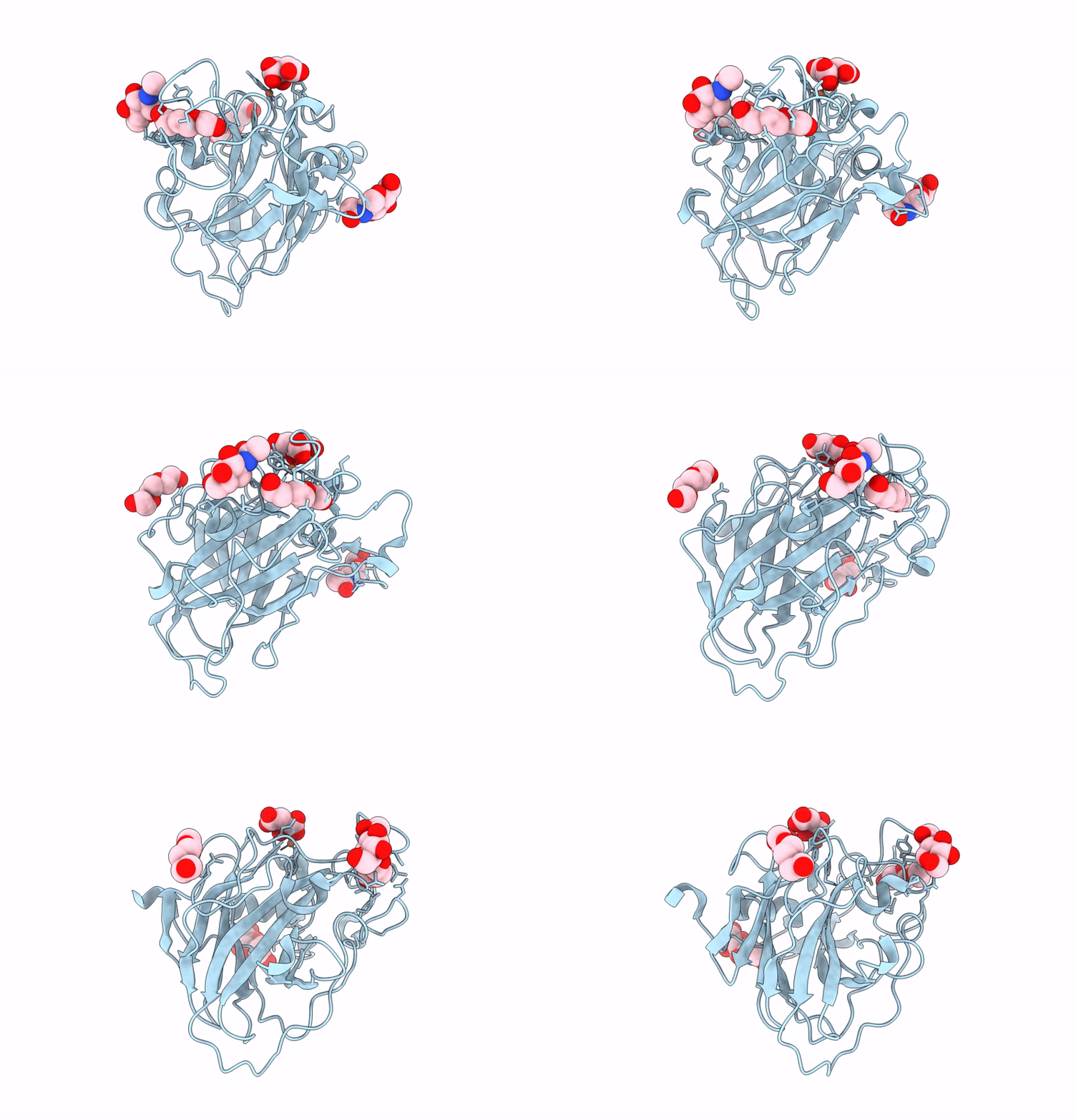
9EQE image
Deposition Date 2024-03-21
Release Date 2025-04-02
Last Version Date 2025-09-24
Entry Detail
PDB ID:
9EQE
Keywords:
Title:
X-ray crystal structure of LsAA9A
Biological Source:
Source Organism:
Panus similis (Taxon ID: 292560)
Host Organism:
Method Details:
Experimental Method:
Resolution:
2.70 Å
R-Value Free:
0.23
R-Value Work:
0.17
R-Value Observed:
0.17
Space Group:
P 41 3 2
Macromolecular Entities
Structures with similar UniProt ID
Protein Blast
Polymer Type:polypeptide(L)
Molecule:Endo-beta-1,4-glucanase D
Gene (Uniprot):LPMO9A
Chain IDs:A
Chain Length:235
Number of Molecules:1
Biological Source:Panus similis
Modified Residue
Compound ID Chain ID Parent Comp ID Details 2D Image
HIC A HIS modified residue
Primary Citation
Anions and citrate inhibit LsAA9A, a lytic polysaccharide monooxygenase (LPMO).
Febs J. 292 4375 4389 (2025)
PMID: 40424050 DOI: 10.1111/febs.70138

Abstact

Lytic polysaccharide monooxygenases (LPMOs) are oxidative enzymes that break the glycosidic linkage in recalcitrant polysaccharides such as cellulose and chitin. The LPMO LsAA9A (AA9 family lytic polysaccharide monooxygenase A) from the basidiomycete fungus Lentinus similis is biochemically and structurally well characterized, with crystallographic complexes with oligosaccharides having been obtained. Chloride ions from the crystallization solution are known to bind to the LsAA9A-substrate complex in crystals at the copper equatorial coordinating position, where activation of the co-substrate oxygen species is expected. An investigation of the effect of high concentration salts on LsAA9A activity showed that salts containing chloride and other halide anions, except for fluoride, had a clear inhibitory effect on the activity at concentrations > 100 mm, although chloride ions are known to increase the LPMO affinity for oligosaccharide binding. Surprisingly, LsAA9A crystals can be transferred for short times to considerably different chemical environments, allowing crystallographic analysis at reduced chloride concentrations. Unfortunately, these washing steps do not eliminate the chloride binding at the copper equatorial coordinating position. Furthermore, we observed that citrate buffer, also present, bound under these changed chemical conditions at the copper active site. This interaction completely blocks access to the oligosaccharide substrate and is additionally supported here by citrate inhibition of LsAA9A activities against azurine cross-linked hydroxyethylcellulose (AZCL-HEC), tamarind xyloglucan, and cellopentaose. The conclusions from our study indicate that citrate should be absolutely avoided in LPMO research, not only because of possible abstraction of copper ions from the LPMO active site but also because it might directly compete with binding of LPMOs to their target substrates.

Legend

Protein

Chemical

Disease

Primary Citation of related structures
Feedback Form
Name
Email
Institute
Feedback