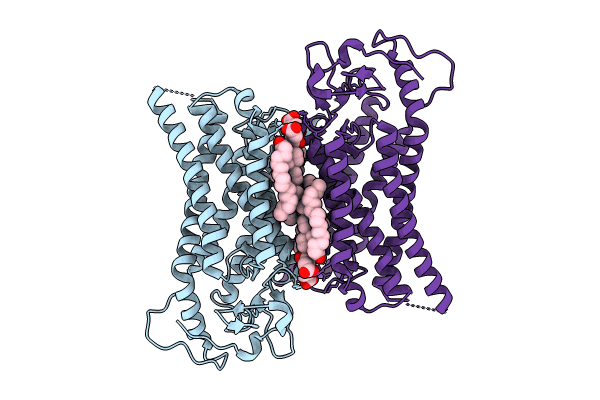
9EPO image
Deposition Date 2024-03-19
Release Date 2024-10-02
Last Version Date 2025-04-09
Entry Detail
PDB ID:
9EPO
Title:
High resolution structure of FZD7 in inactive conformation
Biological Source:
Source Organism:
Homo sapiens (Taxon ID: 9606)
Host Organism:
Method Details:
Experimental Method:
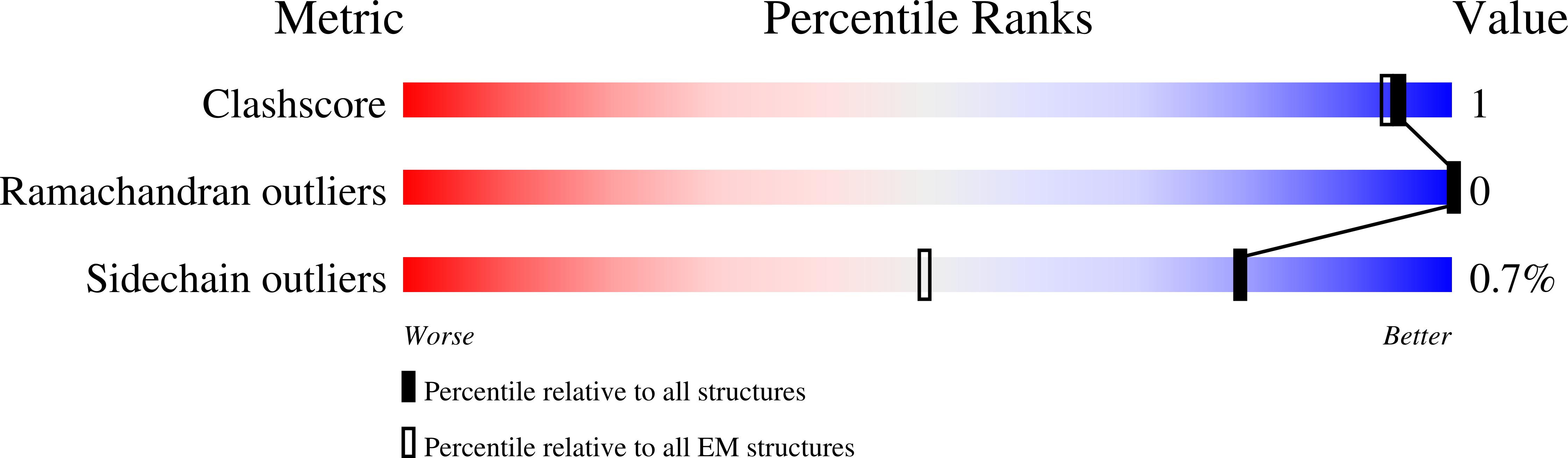
Resolution:
1.90 Å
Aggregation State:
PARTICLE
Reconstruction Method:
SINGLE PARTICLE
Macromolecular Entities
Structures with similar UniProt ID
Protein Blast
Polymer Type:polypeptide(L)
Molecule:Frizzled-7
Gene (Uniprot):FZD7
Chain IDs:A, B (auth: D)
Chain Length:603
Number of Molecules:2
Biological Source:Homo sapiens
Primary Citation
Structural basis of frizzled 7 activation and allosteric regulation.
Nat Commun 15 7422 7422 (2024)
PMID: 39198452 DOI: 10.1038/s41467-024-51664-4

Abstact

Frizzleds (ten paralogs: FZD1-10) belong to the class F of G protein-coupled receptors (GPCRs), which remains poorly understood despite its crucial role in multiple key biological functions including embryonic development, stem cell regulation, and homeostasis in the adult. FZD7, one of the most studied members of the family, is more specifically involved in the migration of mesendoderm cells during the development and renewal of intestinal stem cells in adults. Moreover, FZD7 has been highlighted for its involvement in tumor development predominantly in the gastrointestinal tract. This study reports the structure of inactive FZD7, without any stabilizing mutations, determined by cryo-electron microscopy (cryo-EM) at 1.9 Å resolution. We characterize a fluctuating water pocket in the core of the receptor important for FZD7 dynamics. Molecular dynamics simulations are used to investigate the temporal distribution of those water molecules and their importance for potential conformational changes in FZD7. Moreover, we identify lipids interacting with the receptor core and a conserved cholesterol-binding site, which displays a key role in FZD7 association with a transducer protein, Disheveled (DVL), and initiation of downstream signaling and signalosome formation.

Legend

Protein

Chemical

Disease

Primary Citation of related structures
Feedback Form
Name
Email
Institute
Feedback