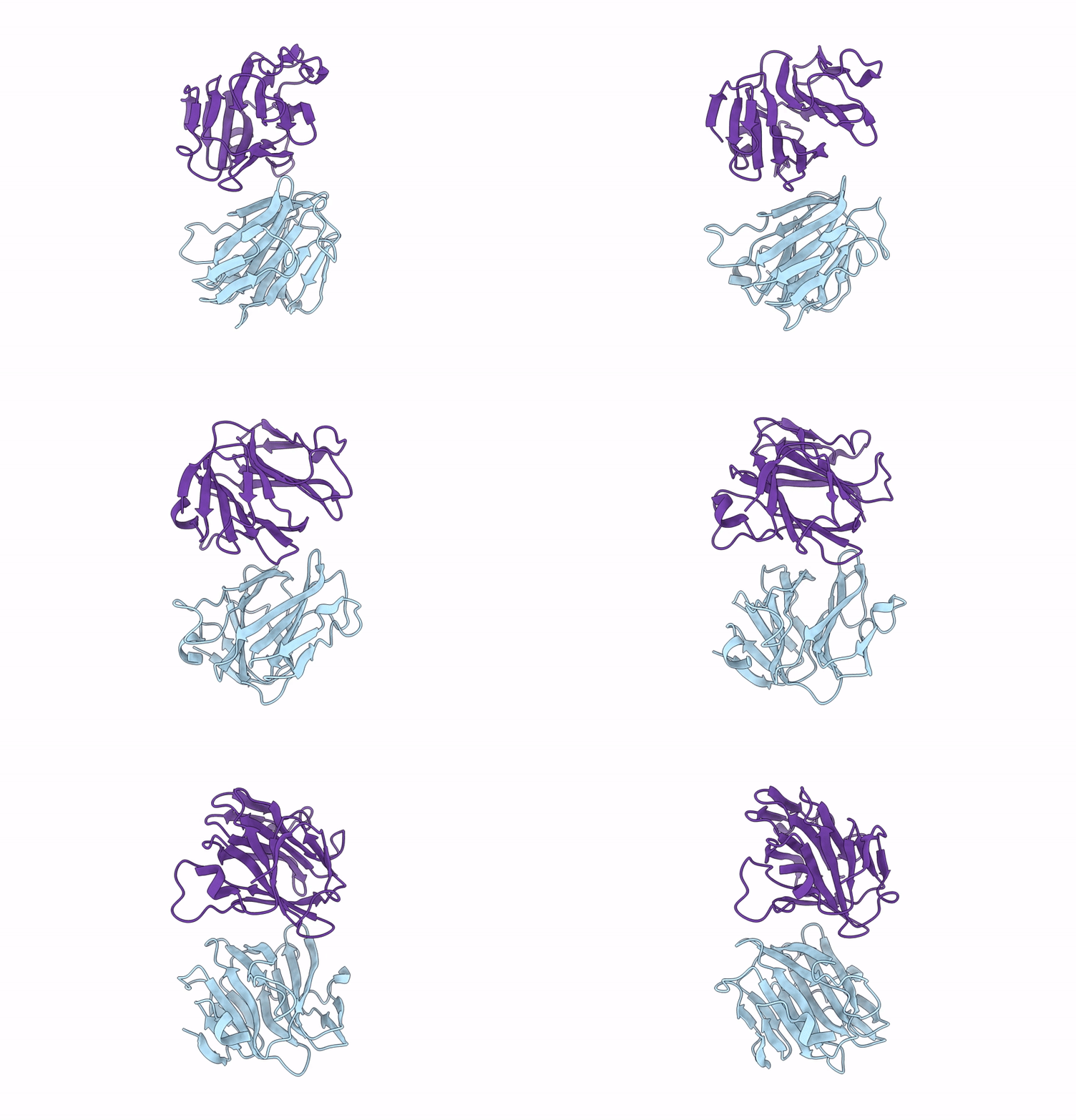
9EN4 image
Deposition Date 2024-03-12
Release Date 2025-08-20
Last Version Date 2025-12-31
Entry Detail
PDB ID:
9EN4
Keywords:
Title:
VP8* domain of the spike protein VP4 from bovine P[3] strain of rotavirus species C
Biological Source:
Source Organism(s):
Expression System(s):
Method Details:
Experimental Method:
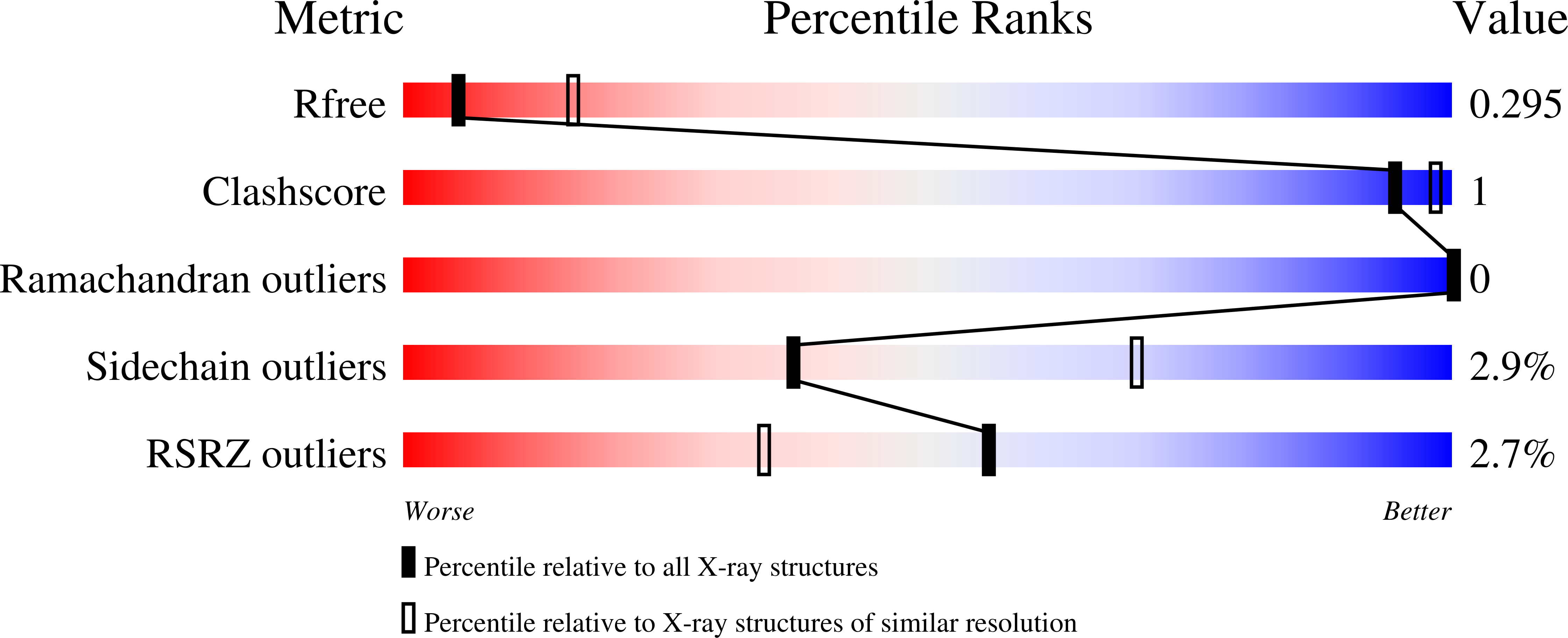
Resolution:
3.00 Å
R-Value Free:
0.29
R-Value Work:
0.24
R-Value Observed:
0.24
Space Group:
P 21 21 21
Macromolecular Entities
Structures with similar UniProt ID
Protein Blast
Polymer Type:polypeptide(L)
Molecule:Outer capsid protein VP8*
Gene (Uniprot):VP4
Chain IDs:A, B
Chain Length:165
Number of Molecules:2
Biological Source:Bovine rotavirus C
Primary Citation
Interaction of the VP8* protein of a bovine rotavirus C with the H type-2 antigen and its precursor N-acetyl-lactosamine.
Int.J.Biol.Macromol. 337 149621 149621 (2025)
PMID: 41386619 DOI: 10.1016/j.ijbiomac.2025.149621

Abstact

Rotaviruses (RVs) are the main cause of viral diarrhea among infants, small children, and the young of many animal species. Histo-blood group antigens (HBGAs) are potential RV receptors and glycan composition on mucous surfaces influences host susceptibility and cross-species virus transmission. RVs exhibit genotype-dependent glycan binding and differences are due to sequence modifications in the VP8* domain of the spike protein VP4. Nevertheless, the molecular bases for this genotype-dependent glycan specificity, especially in non-A RVs, are not thoroughly understood. This study delves into how genotypic variations configure a novel binding site in the VP8* of a bovine P[3] rotavirus species C (RVC) strain to recognize H type-2 antigen (H2) and its precursor N-acetyl-lactosamine (LacNAc) using glycan binding assays, crystallography, and STD NMR. Results reveal a specific interaction of bovine P[3] RVC VP8* with H2 and LacNAc, more strongly with the latter. In the P[3] RVC VP8*-H2 interaction, the N-acetyl glucosamine moiety displays significant interaction, while galactose participates moderately and fucose binds weakly. Moreover, the bovine VP8* structure, resolved at 3 Å, shows specific structural features which differ from human RVC, as it contains two additional β-strands (β1 and β2) contributing to β-sheet2 and conformational changes that widens the cleft to allow different carbohydrate binding modes. These subtle changes in both sequence and structure explain the H2 precursor recognition, which is abundant in the human neonate intestine and in human and bovine milk, providing insights into P[3] RVC tropism and its potential zoonotic transmission.

Legend

Protein

Chemical

Disease

Primary Citation of related structures
Feedback Form
Name
Email
Institute
Feedback