9EL5 image
Deposition Date 2024-12-03
Release Date 2025-06-18
Last Version Date 2025-07-23
Entry Detail
PDB ID:
9EL5
Keywords:
Title:
FANCM translocase domain bound to DNA
Biological Source:
Source Organism:
Host Organism:
Method Details:
Experimental Method:
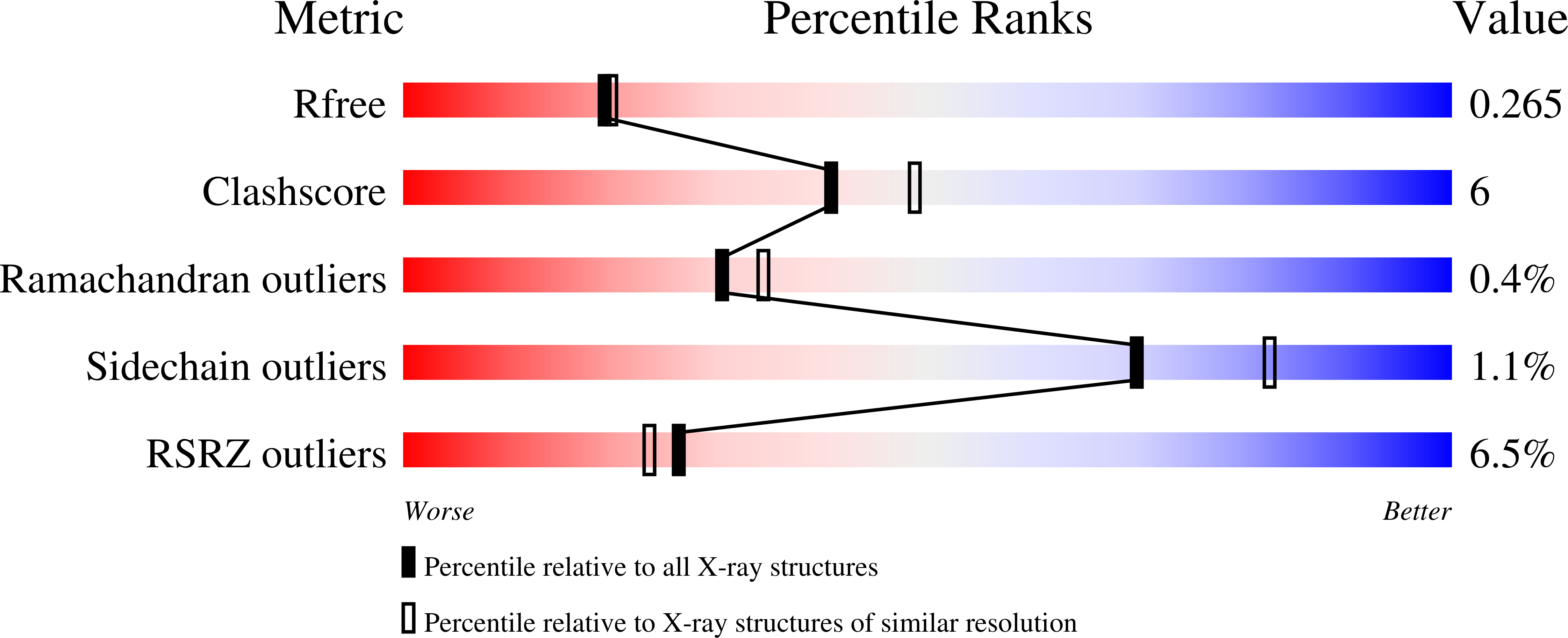
Resolution:
2.20 Å
R-Value Free:
0.26
R-Value Work:
0.21
R-Value Observed:
0.22
Space Group:
P 21 21 21
Macromolecular Entities
Structures with similar UniProt ID
Protein Blast
Polymer Type:polypeptide(L)
Molecule:Fanconi anemia group M protein
Gene (Uniprot):FANCM
Chain IDs:A
Chain Length:573
Number of Molecules:1
Biological Source:Homo sapiens
Polymer Type:polydeoxyribonucleotide
Molecule:DNA (37-MER)
Chain IDs:B (auth: P)
Chain Length:43
Number of Molecules:1
Biological Source:synthetic construct
Primary Citation

Abstact

FANCM is crucial in genome maintenance, functioning in the Fanconi anemia (FA) pathway, alternative lengthening of telomeres (ALT), and replication fork protection. FANCM recognizes branched DNA structures and promotes their remodeling through ATP-dependent branch migration. The protein has emerged as a promising therapeutic target due to synthetic lethal interactions with BRCA1, SMARCAL1, and RAD52, and in ALT-positive cancers. Here we present crystal structures of FANCM's N-terminal ATP-dependent translocase domain (2.2 Å) and C-terminal FAAP24-bound region (2.4 Å), both complexed with branched DNA. Through structural analysis, biochemical reconstitution, and cellular studies, we demonstrate that FANCM employs two distinct mechanisms: an ATP-dependent branch migration activity essential for DNA damage survival, and a branched DNA-binding mode that enhances FANCD2-FANCI monoubiquitination through FA core complex interaction. The N-terminal translocase domain specifically recognizes DNA junctions through multiple key elements, while the C-terminal FAAP24-binding domain engages adjacent double-stranded DNA. Our results reveal how FANCM evolved from an ancient DNA repair motor into a sophisticated sensor that couples DNA damage recognition to selective pathway activation, providing a structural framework for developing targeted therapeutics.

Legend

Protein

Chemical

Disease

Primary Citation of related structures
Feedback Form
Name
Email
Institute
Feedback