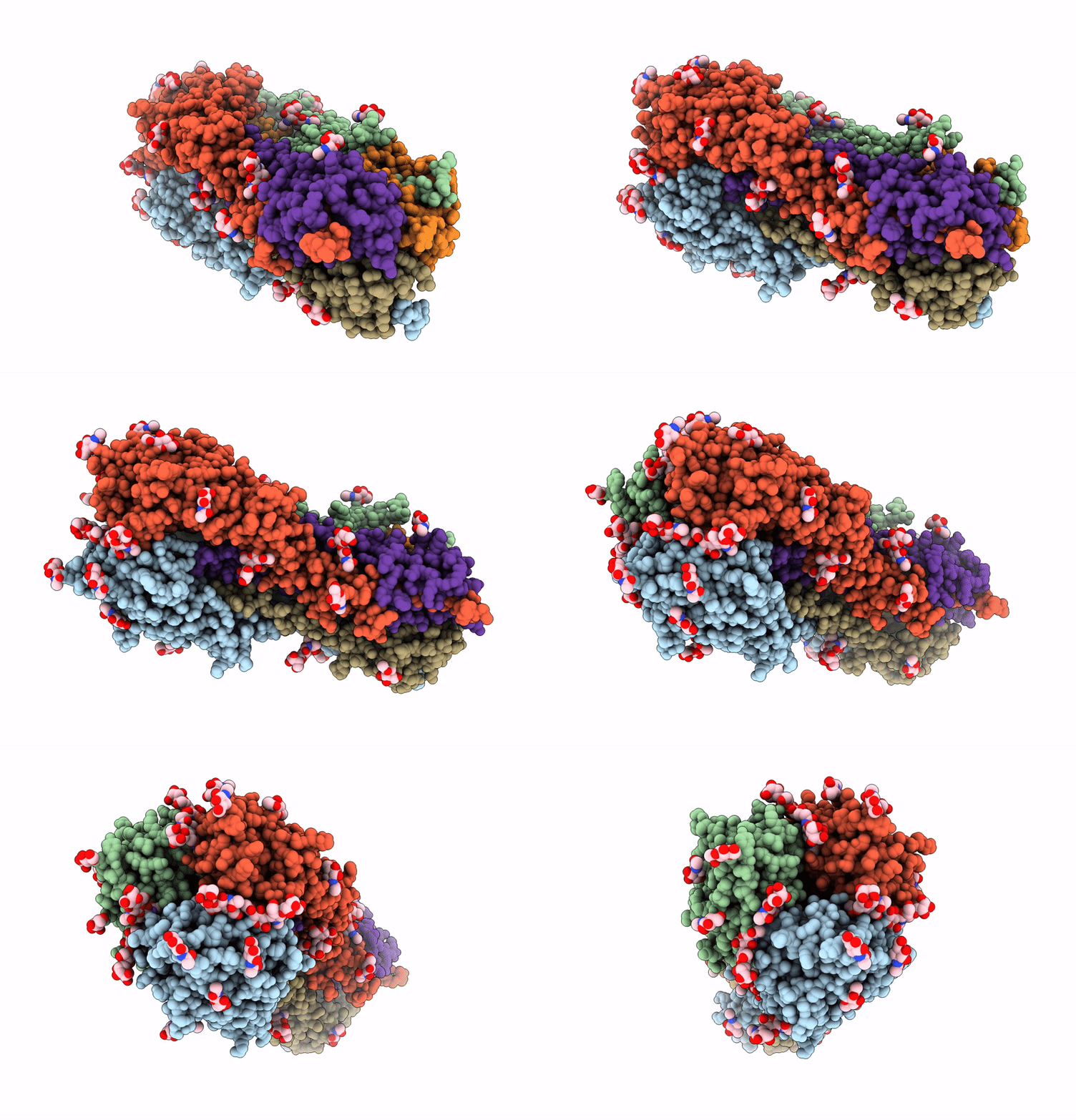
9EI8 image
Deposition Date 2024-11-25
Release Date 2025-08-06
Last Version Date 2025-11-19
Entry Detail
PDB ID:
9EI8
Keywords:
Title:
Cryo-EM structure of 5E10 Fab in complex with H3 influenza Singapore 2016 HA trimer
Biological Source:
Source Organism:
Host Organism:
Method Details:
Experimental Method:
Resolution:
3.83 Å
Aggregation State:
PARTICLE
Reconstruction Method:
SINGLE PARTICLE

Macromolecular Entities
Structures with similar UniProt ID
Protein Blast
Polymer Type:polypeptide(L)
Molecule:Hemagglutinin HA1
Chain IDs:A, B, D
Chain Length:334
Number of Molecules:3
Biological Source:Influenza A virus
Structures with similar UniProt ID
Protein Blast
Polymer Type:polypeptide(L)
Molecule:Hemagglutinin HA2
Chain IDs:C, E, F
Chain Length:232
Number of Molecules:3
Biological Source:Influenza A virus
Ligand Molecules
Primary Citation
The N terminus of H3-influenza hemagglutinin as a site-of-vulnerability to neutralizing antibody.
Structure 33 1820 ? (2025)
PMID: 40816277 DOI: 10.1016/j.str.2025.07.015

Abstact

The N terminus of the H3 subtype of influenza virus hemagglutinin is ∼10 residues longer than the N termini of most other hemagglutinins. As conserved, exposed, and linear regions may be good vaccine targets, we investigated the vaccine utility of the extended H3-N terminus. First, we identified antibody 5E10, for which structure and binding analyses revealed recognition of the H3-N terminus. Second, we immunized mice with immunogens incorporating the H3-N terminus, boosted with hemagglutinin trimer, and isolated antibodies from immunogen-elicited B cells that bound both H3-N terminus and hemagglutinin trimer. However, hemagglutinin-complex structures of two such antibodies, 3864-6 and 3864-10, that neutralized H3-influenza strains, revealed only peripheral recognition of the hemagglutinin N terminus. Collectively, these results reveal the N terminus of H3 hemagglutinin to be a suboptimal vaccine target and suggest that-in addition to being conserved, flexible, and accessible-other factors influence the elicitation of potent broadly neutralizing responses.

Legend

Protein

Chemical

Disease

Primary Citation of related structures
Feedback Form
Name
Email
Institute
Feedback