9EF0 image
Deposition Date 2024-11-19
Release Date 2024-12-04
Last Version Date 2026-02-04
Entry Detail
PDB ID:
9EF0
Keywords:
Title:
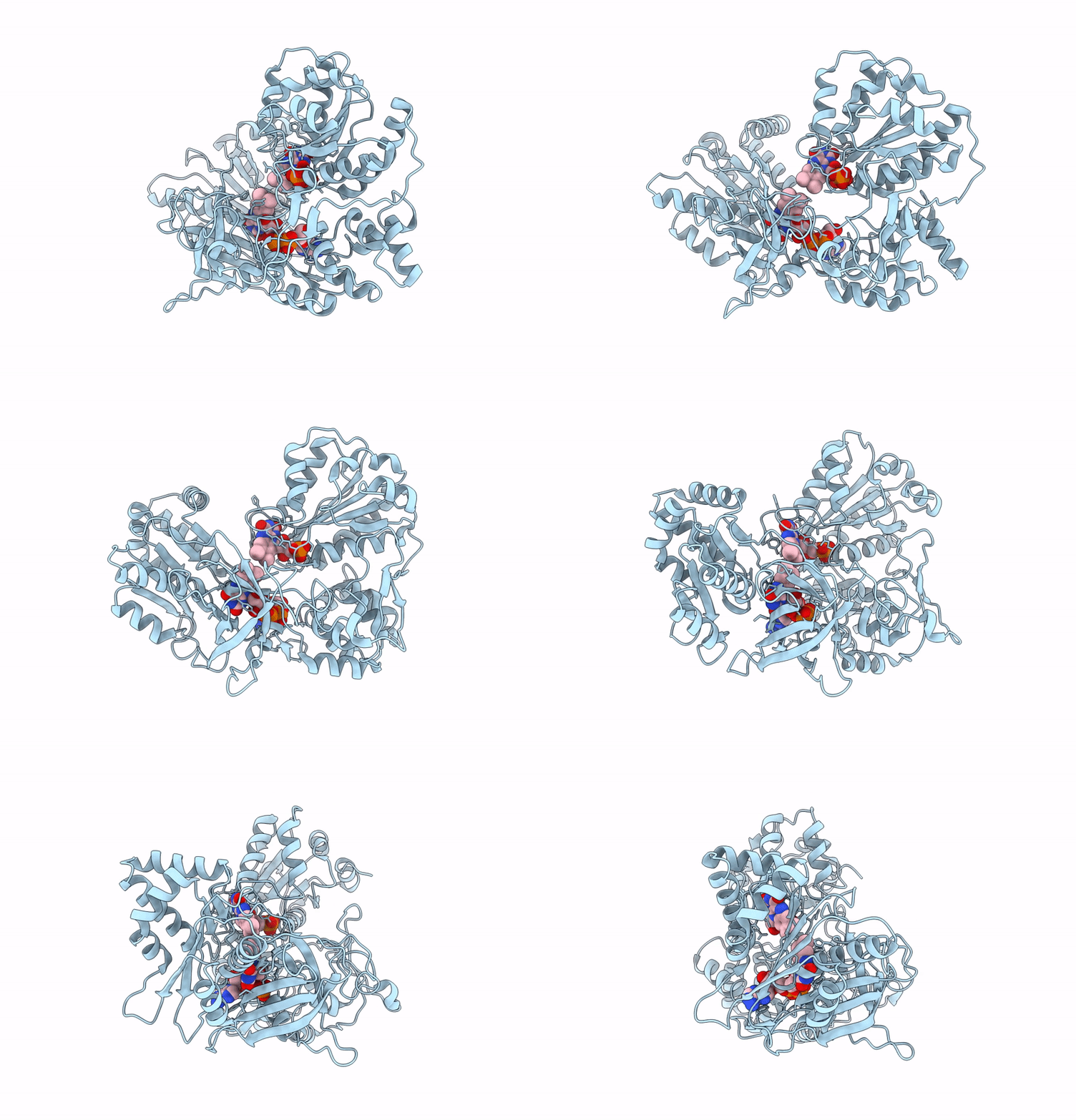
EM structure of cytochrome P450 reductase
Biological Source:
Source Organism(s):
Expression System(s):
Method Details:
Experimental Method:
Resolution:
3.33 Å
Aggregation State:
PARTICLE
Reconstruction Method:
SINGLE PARTICLE

Macromolecular Entities
Structures with similar UniProt ID
Protein Blast
Polymer Type:polypeptide(L)
Molecule:NADPH--cytochrome P450 reductase
Gene (Uniprot):Por
Chain IDs:A
Chain Length:678
Number of Molecules:1
Biological Source:Rattus norvegicus
Primary Citation
Cryo-EM reveals an ensemble of cytochrome P450 reductase conformations in solution.
Protein Sci. 35 e70448 e70448 (2026)
PMID: 41562286 DOI: 10.1002/pro.70448

Abstact

The eukaryotic electron transport system, mediated by cytochrome P450 reductase (CPR), plays a crucial role in driving myriads of reactions involved in the biosynthesis of physiologically active compounds (such as sterols, steroids, vitamins, and natural products), as well as in the metabolism of drugs, toxins, and carcinogens. CPR is a diflavin-containing enzyme found ubiquitously on the cytosolic side of the endoplasmic reticulum. While several crystal structures of CPR are available, its conformational states in solution, along with the molecular details of action, remain debatable. Here, we determined the 3.3 Å cryo-EM structure of rat CPR, marking the first electron microscopy structure of this relatively small protein (77 kDa). In this structure, the full-length, fully active enzyme adopts a compact conformation, which, however, is more relaxed than in crystal structures. Moreover, we structurally characterized less populated variations of compact CPR conformations and identified a fraction of molecules (~20%) with the FMN-binding domain either not visible or positioned far from the rest of the catalytic core. These results support the idea that large-scale interdomain rearrangements serve as the structural basis for CPR function and suggest that cryo-EM techniques can help uncover the intricate molecular mechanisms governing the CPR-mediated electron transfer cycle.

Legend

Protein

Chemical

Disease

Primary Citation of related structures
Feedback Form
Name
Email
Institute
Feedback