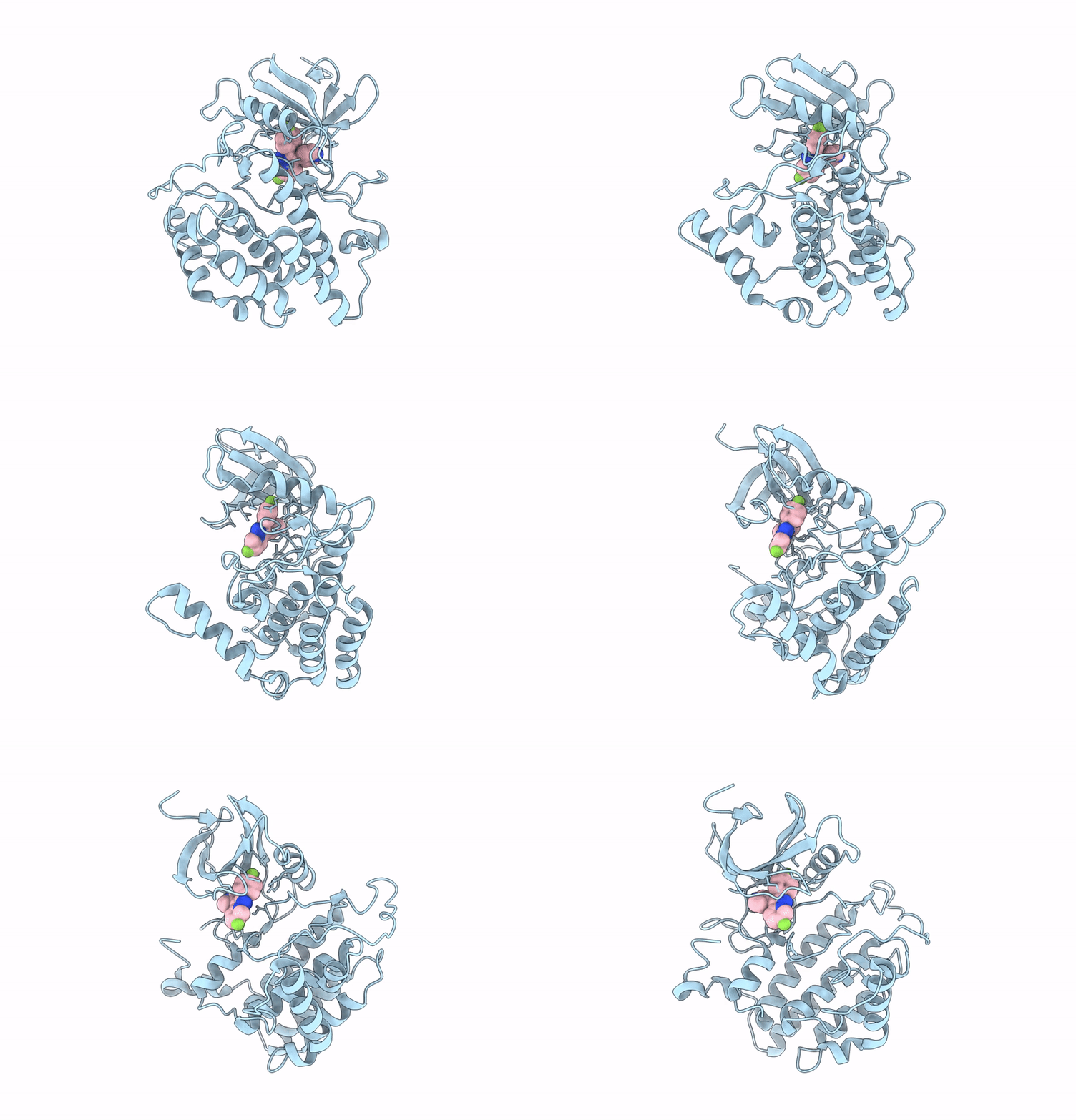
9EDY image
Deposition Date 2024-11-18
Release Date 2025-01-08
Last Version Date 2025-09-24
Entry Detail
PDB ID:
9EDY
Title:
Crystal structure of Yck2 from Candida albicans in complex with inhibitor 2b: 6-fluoro-2-(4-fluorophenyl)-3-(pyridin-4-yl)pyrazolo[1,5-a]pyridine
Biological Source:
Source Organism:
Host Organism:
Method Details:
Experimental Method:
Resolution:
2.30 Å
R-Value Free:
0.23
R-Value Work:
0.20
R-Value Observed:
0.20
Space Group:
H 3
Macromolecular Entities
Structures with similar UniProt ID
Protein Blast
Polymer Type:polypeptide(L)
Molecule:non-specific serine/threonine protein kinase
Chain IDs:A
Chain Length:311
Number of Molecules:1
Biological Source:Candida albicans
Primary Citation
Structure-guided optimization of small molecules targeting Yck2 as a strategy to combat Candida albicans.
Nat Commun 16 2156 2156 (2025)
PMID: 40038303 DOI: 10.1038/s41467-025-57346-z

Abstact

Candida albicans is the most common cause of life-threatening fungal infection in the developed world but remains a therapeutic challenge. Protein kinases have been rewarding drug targets across diverse indications but remain untapped for antifungal development. Previously, screening kinase inhibitors against C. albicans revealed a 2,3-aryl-pyrazolopyridine, GW461484A (GW), which targets casein kinase 1 (CK1) family member Yck2. Here, we report optimization of GW via two complementary approaches, synthesis of bioisosteres possessing an imidazo[1,2-a]pyridine core, and R-group substitution of GW's pyrazolo[1,5-a]pyridine core. Characterization of compounds reveals two 6-cyano derivatives with improved pharmacological properties that retain whole-cell bioactivity and selectivity for fungal Yck2 compared to human CK1α. Efficacy studies in mice indicate both analogs possess single-agent activity against C. albicans resistant to first-line echinocandin antifungals and potentiate non-curative echinocandin treatment. Results validate Yck2 as an antifungal target and encourage further development of inhibitors acting by this previously unexploited mode of action.

Legend

Protein

Chemical

Disease

Primary Citation of related structures
Feedback Form
Name
Email
Institute
Feedback