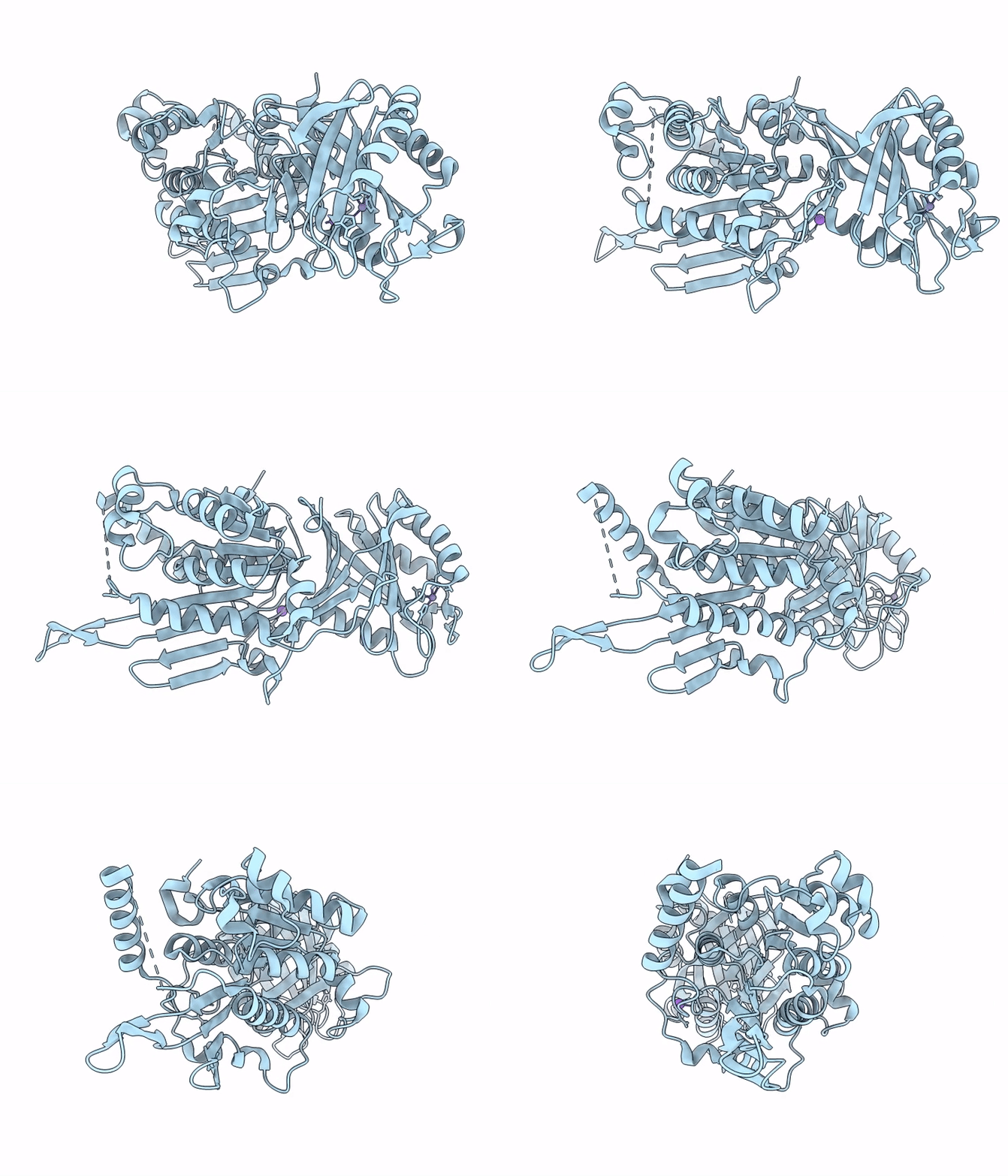
9EA4 image
Deposition Date 2024-11-10
Release Date 2025-09-24
Last Version Date 2025-11-26
Entry Detail
PDB ID:
9EA4
Keywords:
Title:
Structure of Citrobacter BubCD
Biological Source:
Source Organism:
Host Organism:
Method Details:
Experimental Method:
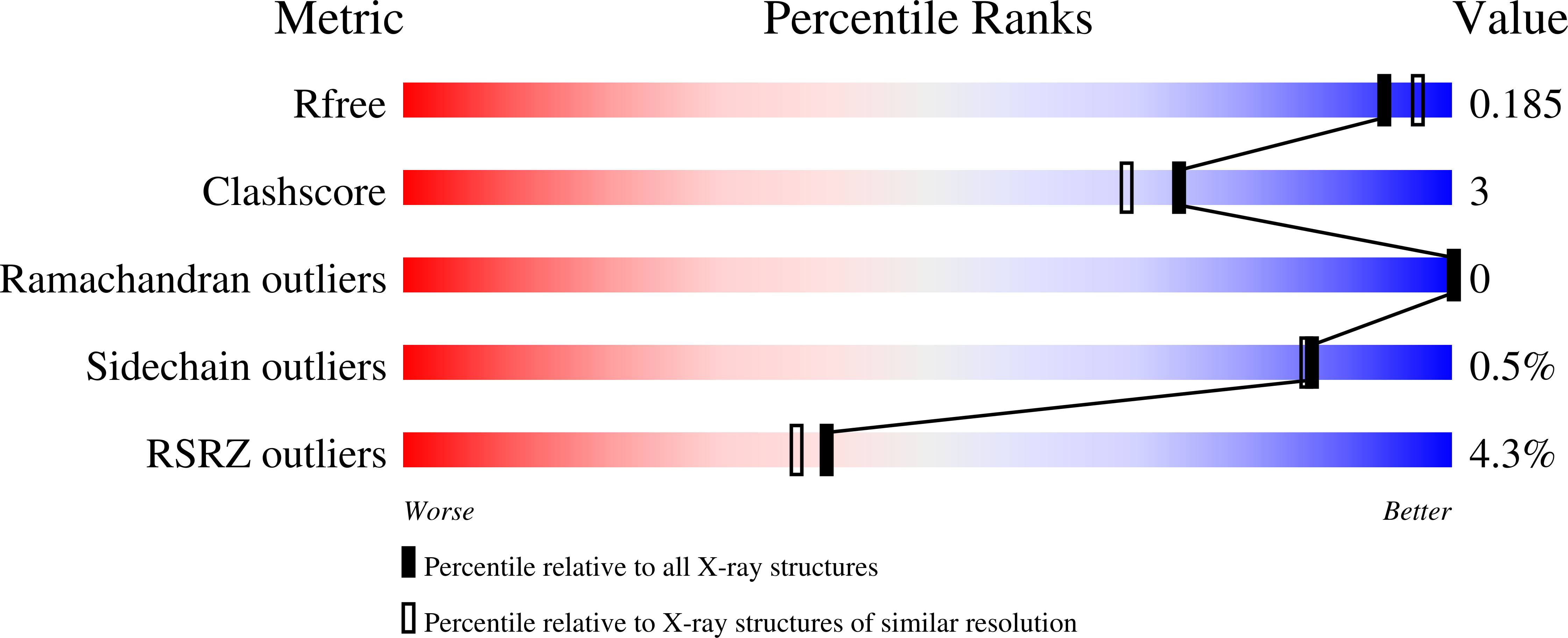
Resolution:
1.80 Å
R-Value Free:
0.18
R-Value Work:
0.15
R-Value Observed:
0.16
Space Group:
P 32 2 1
Macromolecular Entities
Polymer Type:polypeptide(L)
Molecule:Citrobacter BubCD
Chain IDs:A
Chain Length:458
Number of Molecules:1
Biological Source:Citrobacter sp. RHBSTW-00271
Primary Citation
Mechanistic basis for protein conjugation in a diverged bacterial ubiquitination pathway.
Nat.Struct.Mol.Biol. ? ? ? (2025)
PMID: 41184514 DOI: 10.1038/s41594-025-01696-1

Abstact

Ubiquitination is a fundamental eukaryotic protein post-translational modification pathway, in which ubiquitin or a ubiquitin-like protein (Ubl) is typically conjugated to a lysine of a target protein. Ubiquitination is initiated by adenylation of the Ubl C terminus, followed by sequential formation of Ubl-cysteine thioester intermediates with E1, E2 and (optionally) E3 proteins before formation of the final Ubl-lysine isopeptide linkage. Recent work has revealed two ubiquitination-related bacterial pathways in the context of antiphage immunity. Bioinformatics analyses have hinted at the existence of additional uncharacterized bacterial pathways that include ubiquitination-like machinery. Here, we describe the architecture and biochemical mechanisms of an alternative Bub (bacterial ubiquitination-like) pathway, revealing structural parallels and mechanistic differences when compared to other ubiquitination pathways. We show that Bub operons encode functional E1, E2 and Ubl proteins that are related to their eukaryotic counterparts but likely function through oxyester rather than thioester intermediates. We also identify an enzyme family in Bub operons with a conserved catalytic site and a role in Ubl-target conjugation. The genomic context of Bub operons suggests that they also function in antiphage immunity and we present evidence that one Bub pathway may regulate translation in response to stress. Overall, our results reveal an uncharacterized family of bacterial ubiquitination-related pathways with a distinctive biochemical mechanism.

Legend

Protein

Chemical

Disease

Primary Citation of related structures
Feedback Form
Name
Email
Institute
Feedback