9E9D image
Deposition Date 2024-11-08
Release Date 2026-02-11
Last Version Date 2026-02-11
Entry Detail
PDB ID:
9E9D
Title:
Structure of full length AMPA receptor GluA2 and auxiliary subunit TARP gamma-2 in complex with anti-miR 17 oligonucleotide RGLS4326
Biological Source:
Source Organism(s):
Expression System(s):
Method Details:
Experimental Method:
Resolution:
3.24 Å
Aggregation State:
PARTICLE
Reconstruction Method:
SINGLE PARTICLE
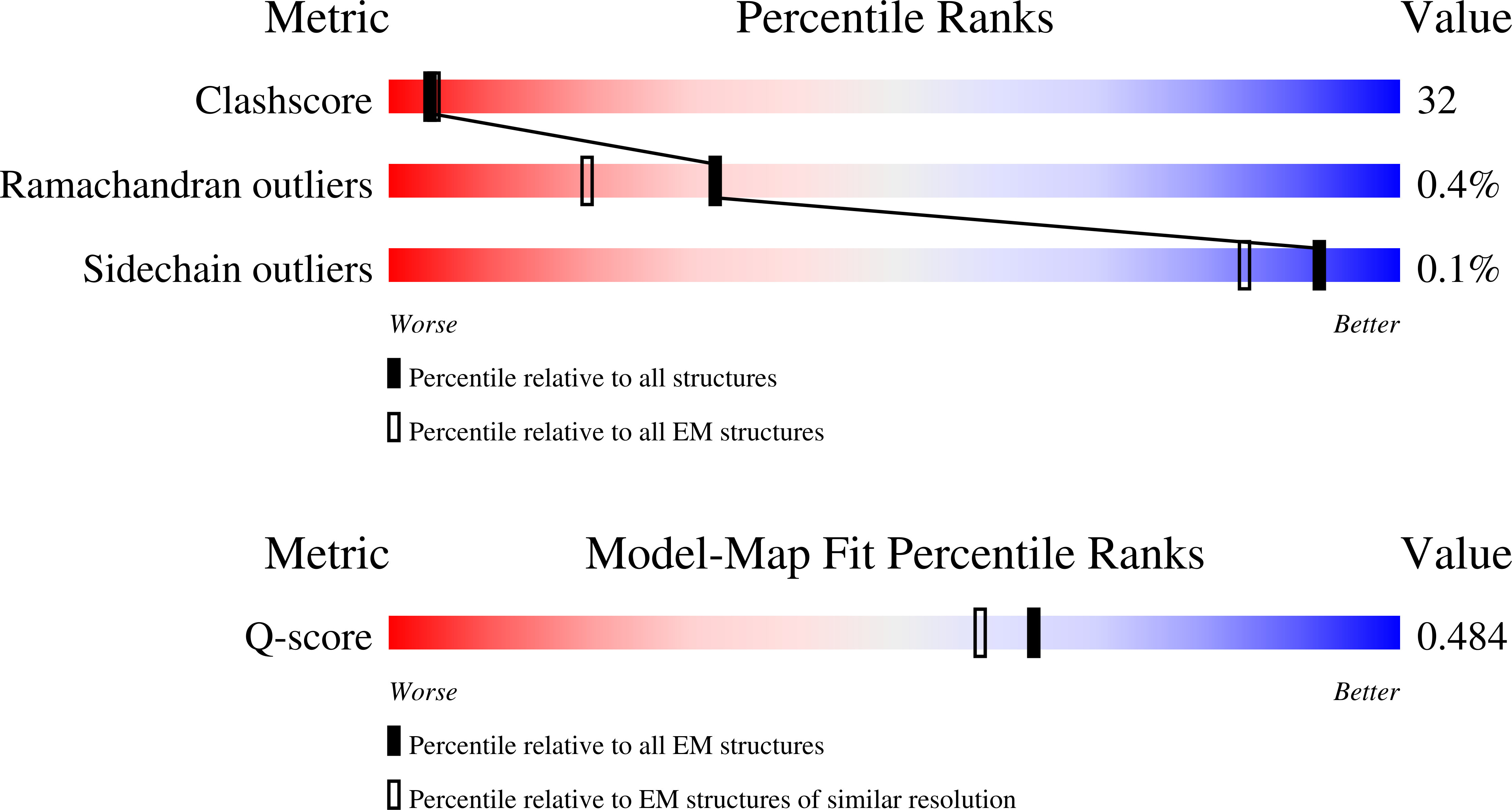
Macromolecular Entities
Protein Blast
Polymer Type:polypeptide(L)
Molecule:Isoform Flip of Glutamate receptor 2,Voltage-dependent calcium channel gamma-2 subunit
Gene (Uniprot):Gria2, Cacng2
Chain IDs:A, B, C, D
Chain Length:1028
Number of Molecules:4
Biological Source:Rattus norvegicus
Ligand Molecules
Primary Citation
The nucleobase guanine at the 3'-terminus of oligonucleotide RGLS4326 drives off-target AMPAR inhibition and CNS toxicity.
Nat Commun 16 10762 10762 (2025)
PMID: 41315228 DOI: 10.1038/s41467-025-65799-5

Abstact

Designing safe and effective oligonucleotide (ON) therapeutics requires thorough understanding of structural-activity relationship (SAR) with the intended on-target(s) as well as the unintended off-target(s). Despite encouraging pharmacodynamic activity in a Phase 1b study, development of the first-generation anti-miR-17 ON RGLS4326 for the treatment of autosomal dominant polycystic kidney disease was discontinued due to dose-limiting central nervous system (CNS)-related toxicity observed in nonclinical chronic toxicity studies. Here, we provide SAR evidence that the nucleobase guanine at the 3'-terminus of RGLS4326 drives an unexpected off-target aptamer-like direct interaction with α-amino-3-hydroxy-5-methyl-4-isoxazolepropionic acid receptor (AMPAR), thereby causing CNS toxicity. By replacing the 3'-terminal guanine with adenine, we discover the next-generation anti-miR-17 RGLS8429 that is devoid of off-target AMPAR interaction and CNS toxicity while preserving the potency against the on-target miR-17. Here, we show a way to avoid off-target CNS effects and, more importantly, data that support the clinical development of RGLS8429.

Legend

Protein

Chemical

Disease

Primary Citation of related structures
Feedback Form
Name
Email
Institute
Feedback