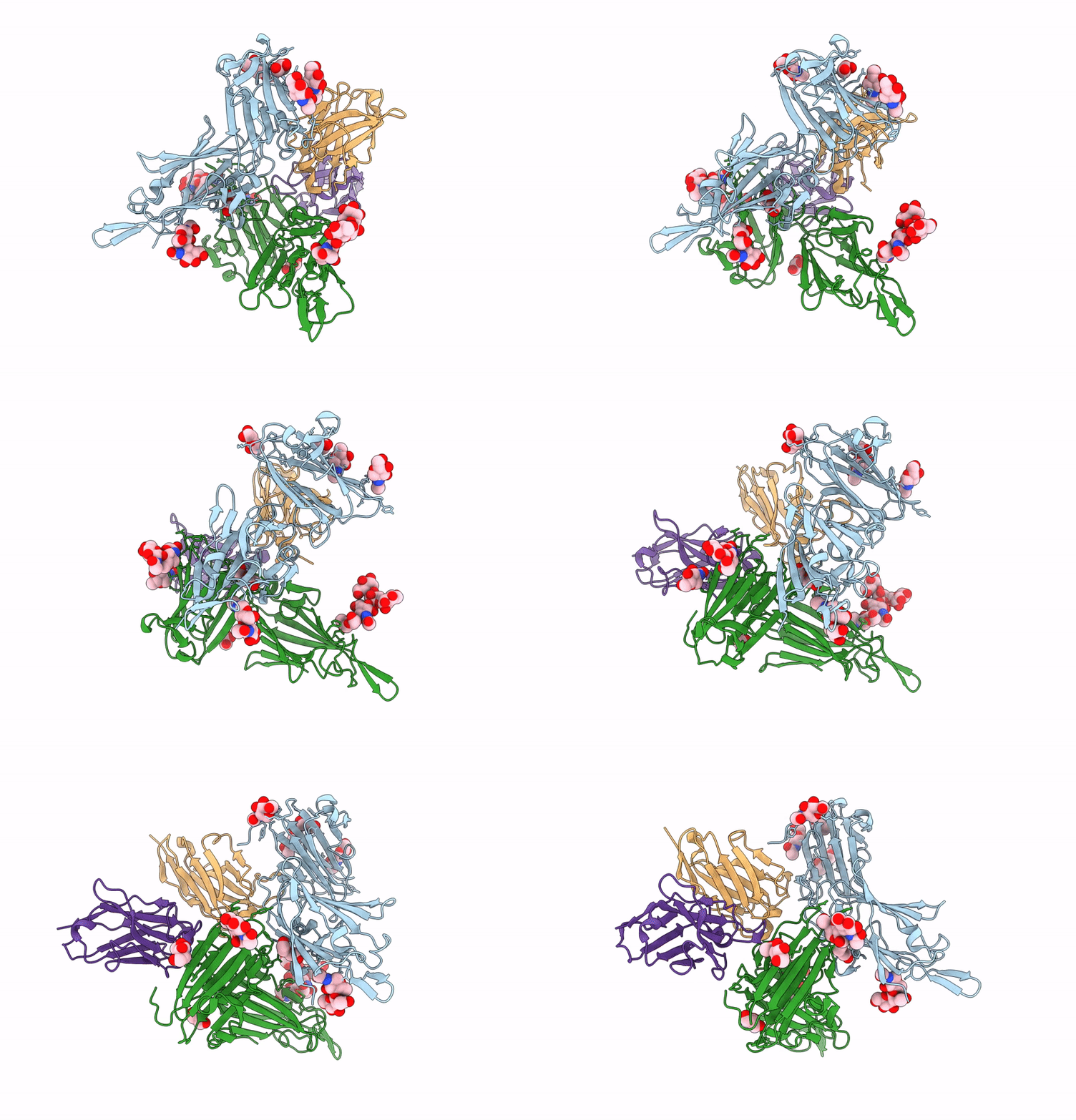
9E7N image
Deposition Date 2024-11-03
Release Date 2025-07-30
Last Version Date 2025-09-24
Entry Detail
PDB ID:
9E7N
Keywords:
Title:
Pfs230 D13D14 in complex with nanobody W2809
Biological Source:
Source Organism:
Host Organism:
Method Details:
Experimental Method:
Resolution:
2.49 Å
R-Value Free:
0.26
R-Value Work:
0.22
R-Value Observed:
0.22
Space Group:
P 43 21 2

Macromolecular Entities
Structures with similar UniProt ID
Protein Blast
Polymer Type:polypeptide(L)
Molecule:Gametocyte surface protein P230
Gene (Uniprot):PFS230
Chain IDs:A (auth: B), B (auth: A)
Chain Length:288
Number of Molecules:2
Biological Source:Plasmodium falciparum 3D7
Polymer Type:polypeptide(L)
Molecule:Nanobody W2809
Chain IDs:C, D
Chain Length:130
Number of Molecules:2
Biological Source:Vicugna pacos
Primary Citation

Abstact

Malaria parasite fertilization occurs in the midgut of a female Anopheles mosquito. Blocking fertilization within the mosquito can prevent malaria transmission. Plasmodium falciparum Pfs230 and Pfs48/45 are critical for male fertility and transmission of the malaria parasite. They form a core fertilization complex, but it is unknown how they interact. We determined a cryo-electron microscopy structure of endogenous Pfs230-Pfs48/45 complex showing that Pfs48/45 interacts with Pfs230 domains 13 and 14. Transgenic parasite lines with these domains removed were defective in Pfs230 gamete localization and showed reduced oocyst formation. Nanobodies against domains 13 and 14 inhibited Pfs230-Pfs48/45 complex formation, reduced transmission and structural analyses revealed their epitopes. These Pfs230 domains were targets of naturally acquired immunity and immune sera from mRNA-lipid nanoparticle immunizations blocked parasite transmission.

Legend

Protein

Chemical

Disease

Primary Citation of related structures
Feedback Form
Name
Email
Institute
Feedback