9E61 image
Deposition Date 2024-10-29
Release Date 2025-10-15
Last Version Date 2025-11-19
Entry Detail
PDB ID:
9E61
Keywords:
Title:
Cryo-EM structure of Saccharomyces cerevisiae Pmt4 apo form
Biological Source:
Source Organism:
Method Details:
Experimental Method:
Resolution:
3.90 Å
Aggregation State:
PARTICLE
Reconstruction Method:
SINGLE PARTICLE
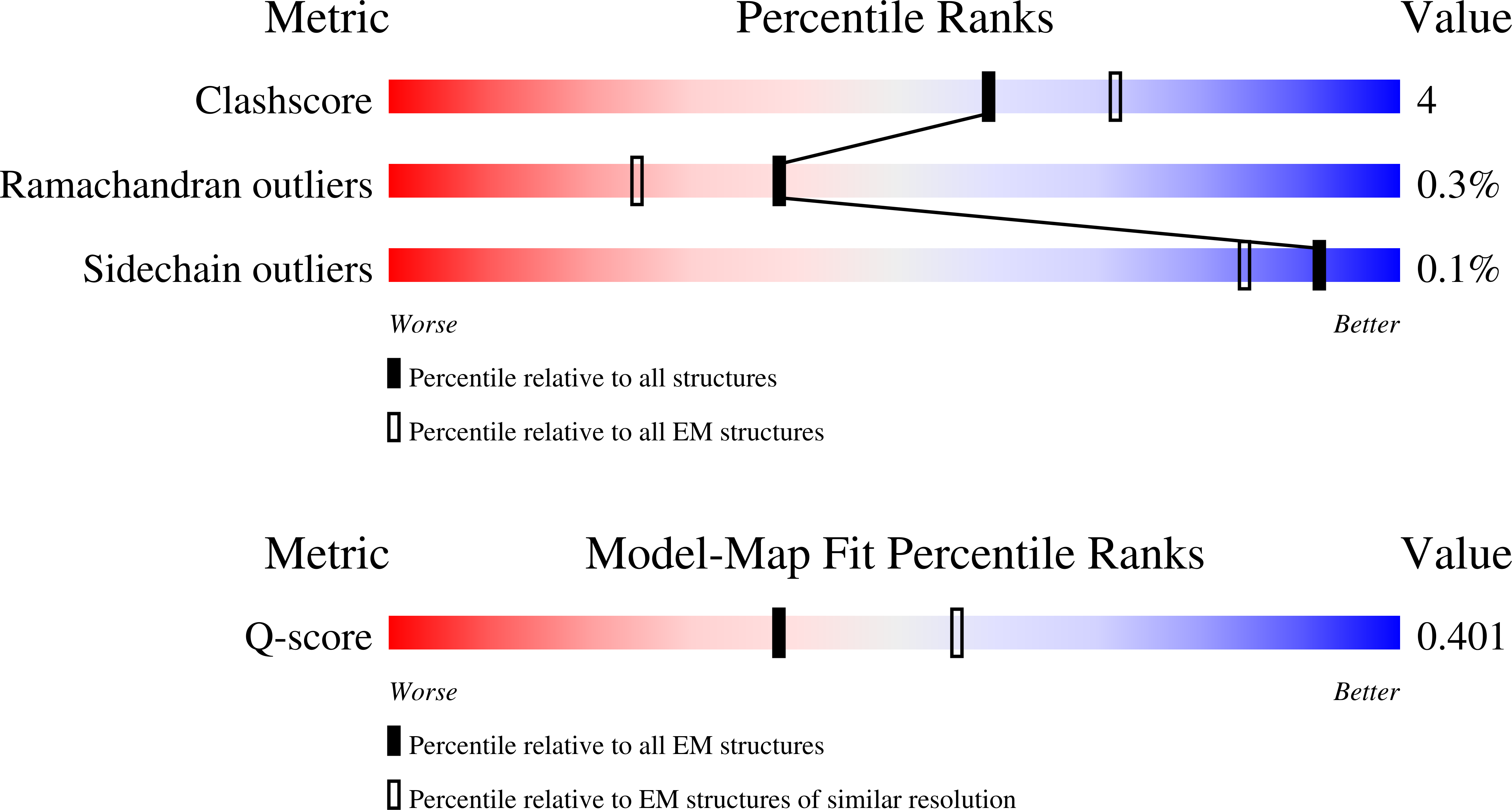
Macromolecular Entities
Structures with similar UniProt ID
Protein Blast
Polymer Type:polypeptide(L)
Molecule:Dolichyl-phosphate-mannose--protein mannosyltransferase 4
Gene (Uniprot):PMT4
Chain IDs:A, B
Chain Length:762
Number of Molecules:2
Biological Source:Saccharomyces cerevisiae
Ligand Molecules
Primary Citation
Pmt4 recognizes two separate acceptor sites to O-mannosylate in the S/T-rich regions of substrate proteins.
Nat Commun 16 9726 9726 (2025)
PMID: 41188226 DOI: 10.1038/s41467-025-64729-9

Abstact

Protein O-mannosyltransferases (PMTs) add mannose to serine/threonine (S/T)-rich proteins in the endoplasmic reticulum, facilitating proper folding and trafficking through the secretory pathway. These enzymes share a conserved architecture that includes a large transmembrane domain housing the catalytic pocket and a lumenal β-trefoil-folded MIR domain. Although S/T-rich regions in acceptor proteins are generally disordered, it remains unclear how PMTs selectively target these regions over other intrinsically disordered sequences. Here, using cryo-EM and X-ray crystallography, we demonstrate that the Saccharomyces cerevisiae Pmt4 dimer recognizes an S/T-rich peptide at two distinct sites. A groove above the catalytic pocket in the transmembrane domain binds the mannose-accepting S/T site, while the lumenal MIR domain engages an S/T-X-S/T motif. Notably, the substrate peptide is simultaneously bound by the catalytic pocket of one Pmt4 protomer and the MIR domain of the other, revealing an unexpected cooperative dual substrate recognition mechanism. This mechanism likely underpins the invariant dimeric architecture observed in all PMT family members.

Legend

Protein

Chemical

Disease

Primary Citation of related structures
Feedback Form
Name
Email
Institute
Feedback