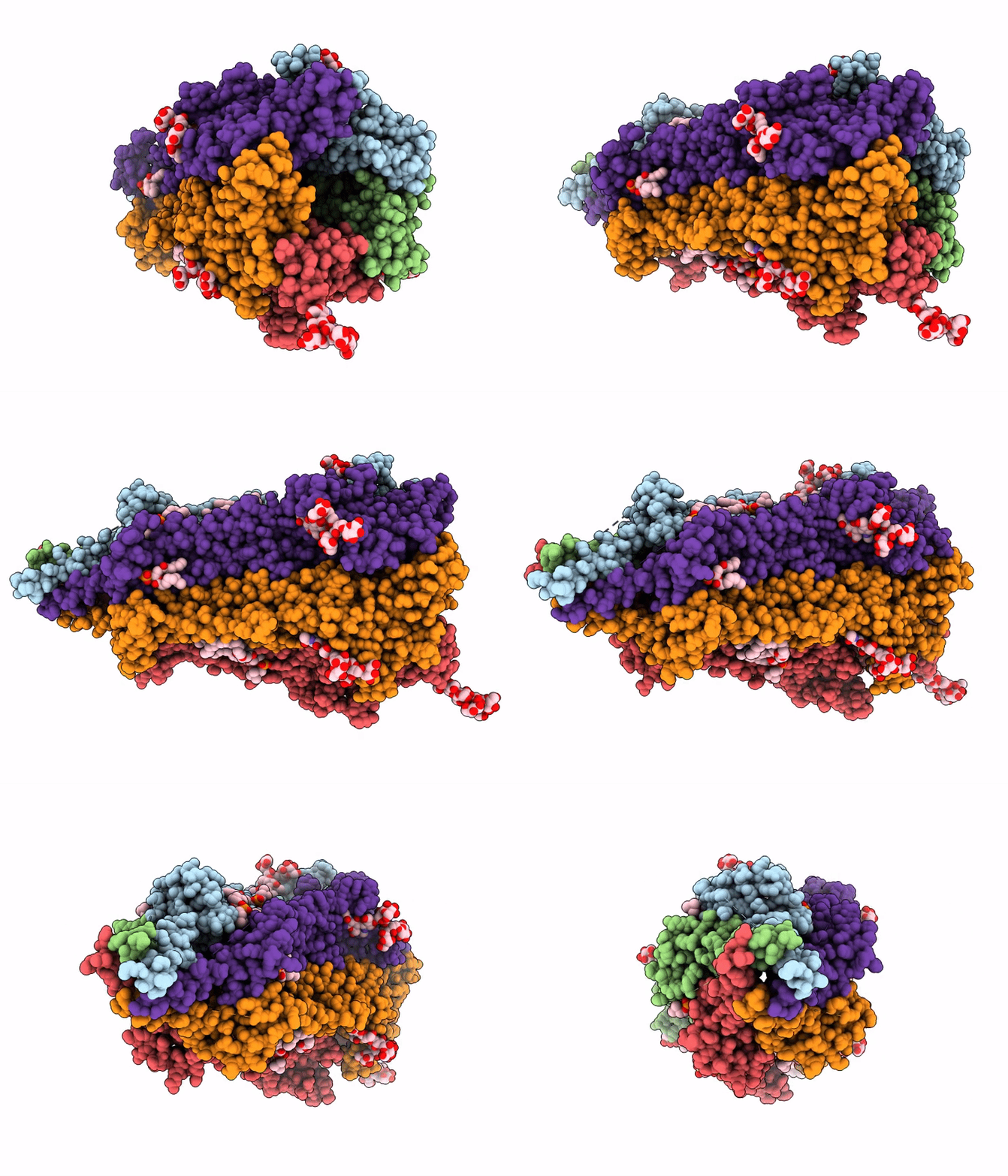
9E3F image
Deposition Date 2024-10-23
Release Date 2025-10-08
Last Version Date 2025-10-15
Entry Detail
PDB ID:
9E3F
Title:
Torpedo muscle-type nicotinic acetylcholine receptor - Unliganded State
Biological Source:
Source Organism:
Method Details:
Experimental Method:
Resolution:
3.20 Å
Aggregation State:
PARTICLE
Reconstruction Method:
SINGLE PARTICLE
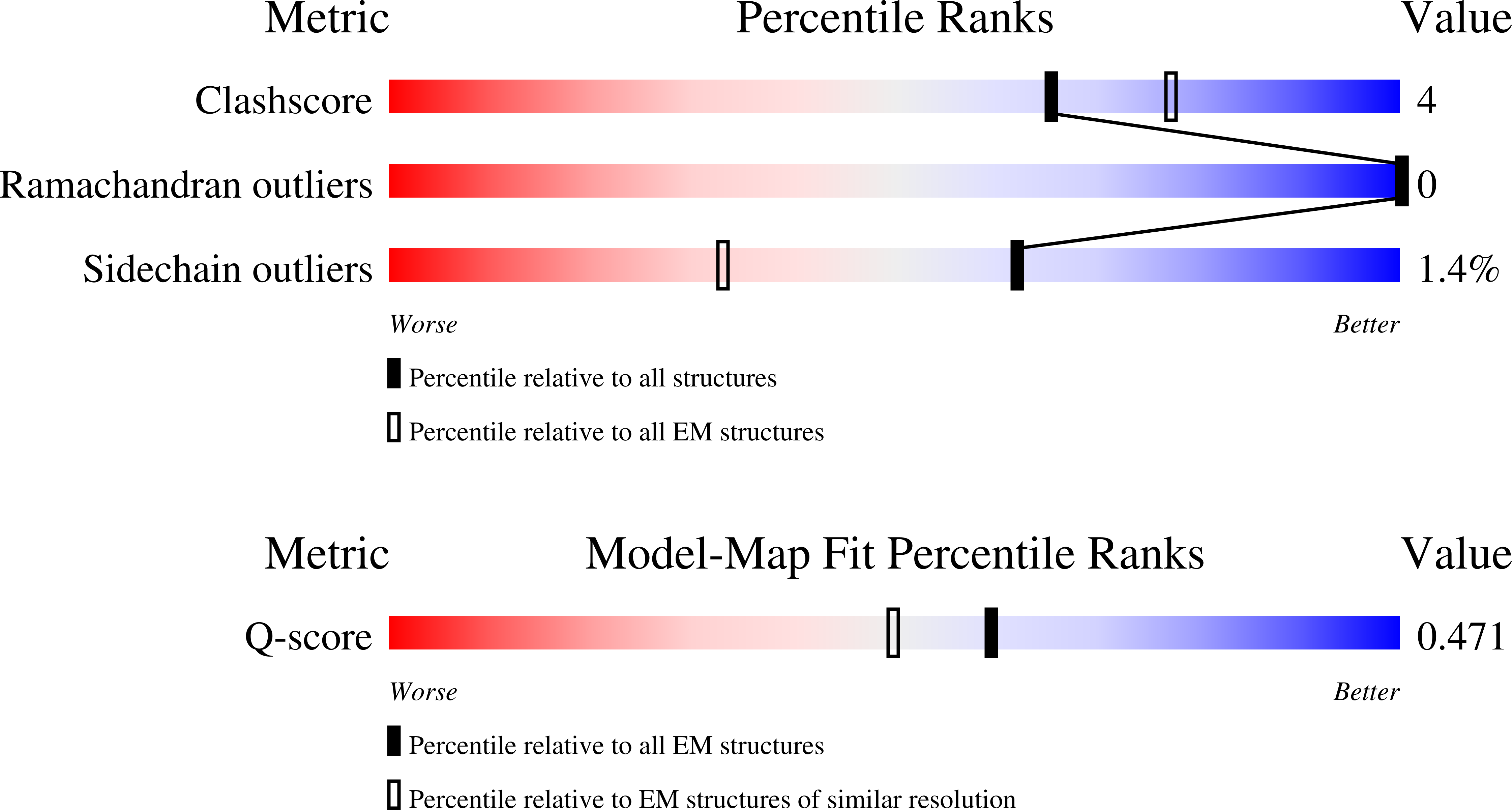
Macromolecular Entities
Structures with similar UniProt ID
Protein Blast
Polymer Type:polypeptide(L)
Molecule:Acetylcholine receptor subunit alpha
Gene (Uniprot):CHRNA1
Chain IDs:A, D
Chain Length:437
Number of Molecules:2
Biological Source:Tetronarce californica
Structures with similar UniProt ID
Protein Blast
Polymer Type:polypeptide(L)
Molecule:Acetylcholine receptor subunit beta
Gene (Uniprot):CHRNB1
Chain IDs:B
Chain Length:469
Number of Molecules:1
Biological Source:Tetronarce californica
Structures with similar UniProt ID
Protein Blast
Polymer Type:polypeptide(L)
Molecule:Acetylcholine receptor subunit delta
Gene (Uniprot):chrnd
Chain IDs:C
Chain Length:501
Number of Molecules:1
Biological Source:Tetronarce californica
Structures with similar UniProt ID
Protein Blast
Polymer Type:polypeptide(L)
Molecule:Acetylcholine receptor subunit gamma
Gene (Uniprot):CHRNG
Chain IDs:E
Chain Length:488
Number of Molecules:1
Biological Source:Tetronarce californica
Ligand Molecules
Primary Citation
Asynchronous subunit transitions prime acetylcholine receptor activation.
Science ? eadw1264 eadw1264 (2025)
PMID: 41037590 DOI: 10.1126/science.adw1264

Abstact

Communication at synapses is facilitated by postsynaptic receptors, which convert a chemical signal into an electrical response. For ligand-gated ion channels, agonist binding triggers rapid transitions through intermediate states leading to a transient open-pore conformation, with these transitions shaping the post-synaptic response. Here, we determine structures of the muscle-type nicotinic acetylcholine receptor in unliganded, mono-liganded, and di-liganded states. Agonist binding to a single site stabilizes a closed structure where an entire principal agonist-binding subunit transitions to an active-like conformation, while the other unoccupied principal subunit remains inactive, albeit poised for activation. Uniting this intermediate structure with single-channel recordings informs a sequential activation mechanism where asynchronous subunit transitions prime the receptor for activation, a finding with implications for an entire superfamily of pentameric ligand-gated ion channels.

Legend

Protein

Chemical

Disease

Primary Citation of related structures
Feedback Form
Name
Email
Institute
Feedback