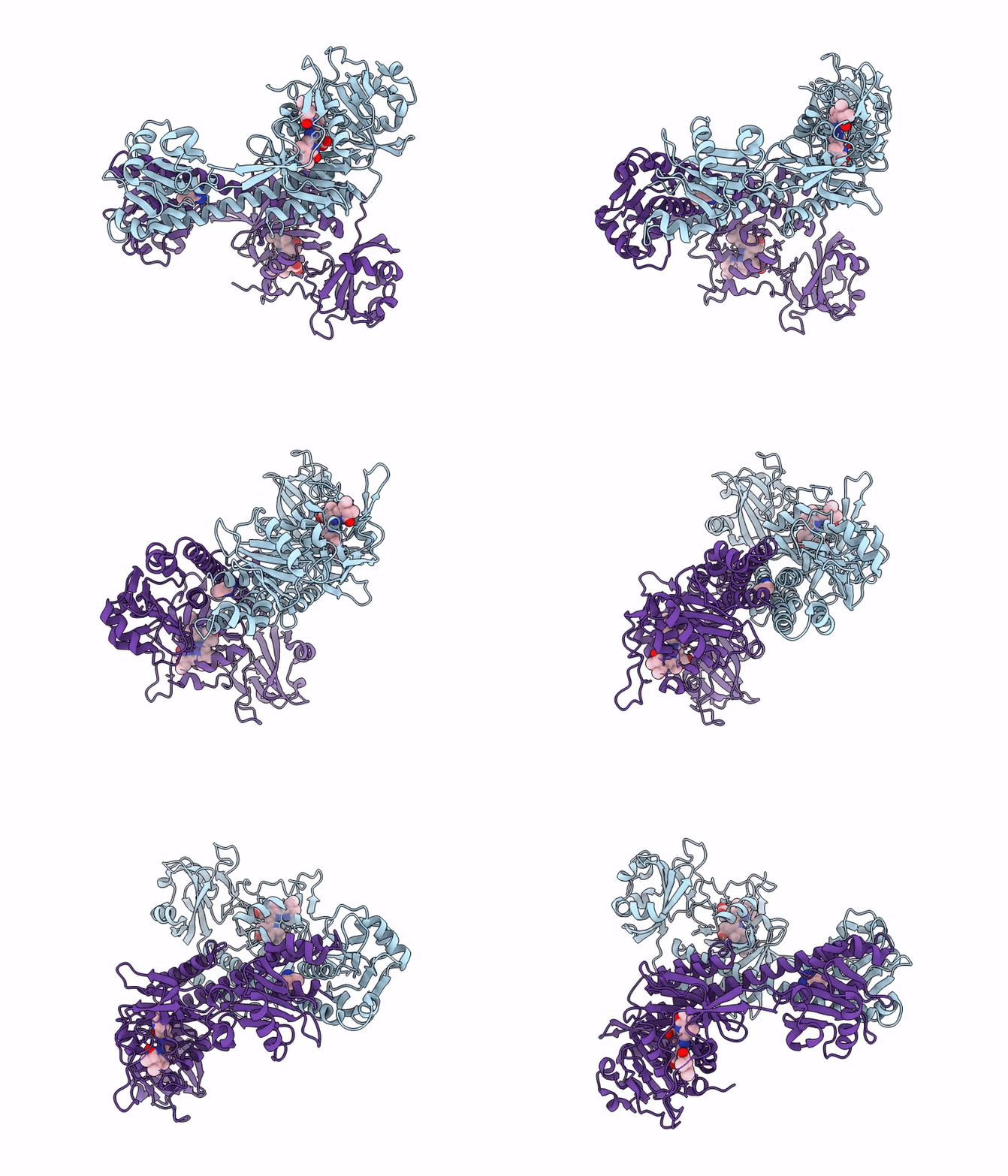
9DZ3 image
Deposition Date 2024-10-15
Release Date 2025-10-08
Last Version Date 2025-10-08
Entry Detail
PDB ID:
9DZ3
Title:
Photoactivation in Bacteriophytochromes, reference (dark) structure for the 3 ps time point
Biological Source:
Source Organism:
Host Organism:
Method Details:
Experimental Method:
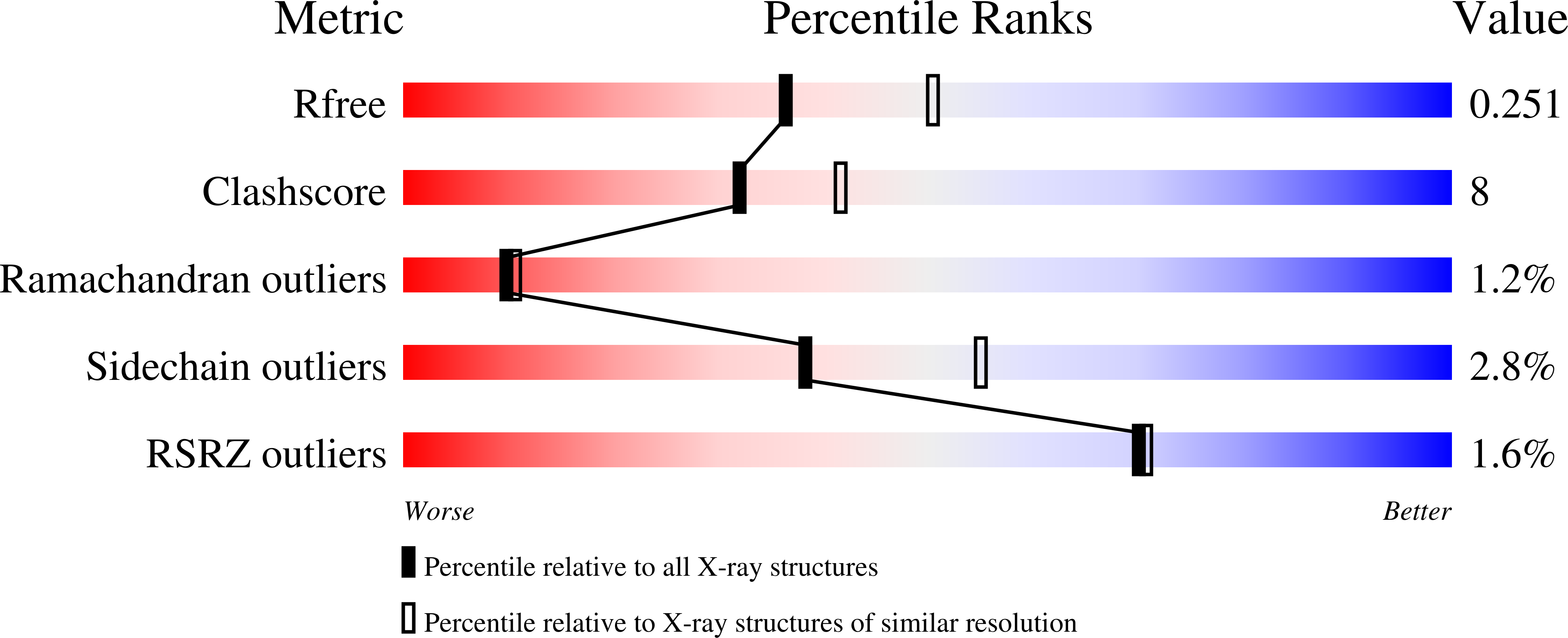
Resolution:
2.30 Å
R-Value Free:
0.25
R-Value Work:
0.19
R-Value Observed:
0.19
Space Group:
P 1 21 1
Macromolecular Entities
Structures with similar UniProt ID
Protein Blast
Polymer Type:polypeptide(L)
Molecule:Photoreceptor-histidine kinase BphP
Gene (Uniprot):STIAU_8420
Chain IDs:A, B
Chain Length:482
Number of Molecules:2
Biological Source:Stigmatella aurantiaca
Primary Citation

Abstact

Myxobacteria are non-photosynthetic, soil-dwelling bacteria distinguished by a multicellular stage in their life cycle known as fruiting bodies that are stimulated by light. Myxobacterial phytochromes are candidates for the perception of red-light. The mechanism how light is perceived and converted to a physiological response is unknown. Here, time-resolved serial femtosecond crystallographic (TR-SFX) experiments were conducted on microcrystals of the photosensory core module of the Stigmatella aurantiaca bacteriophytochrome 2 (SaBphP2). Initial events of the Z to E isomerization reaction of the covalently bound, open-chain tetrapyrrole biliverdin (BV) chromophore were determined. At 3 ps after light activation, the BV ring-D assumes a configuration needed for the isomerization. At 100 ps, a mixture of BV in the Z or E configuration is observed in subunit A, while in the other subunit the chromophore remains in the Z configuration. In conjunction with prior results, these structures reveal the molecular mechanism of phytochrome activation in the photomorphogenesis of the myxobacteria and provide the molecular foundation for physiological responses to red light in other bacteria.

Legend

Protein

Chemical

Disease

Primary Citation of related structures
Feedback Form
Name
Email
Institute
Feedback