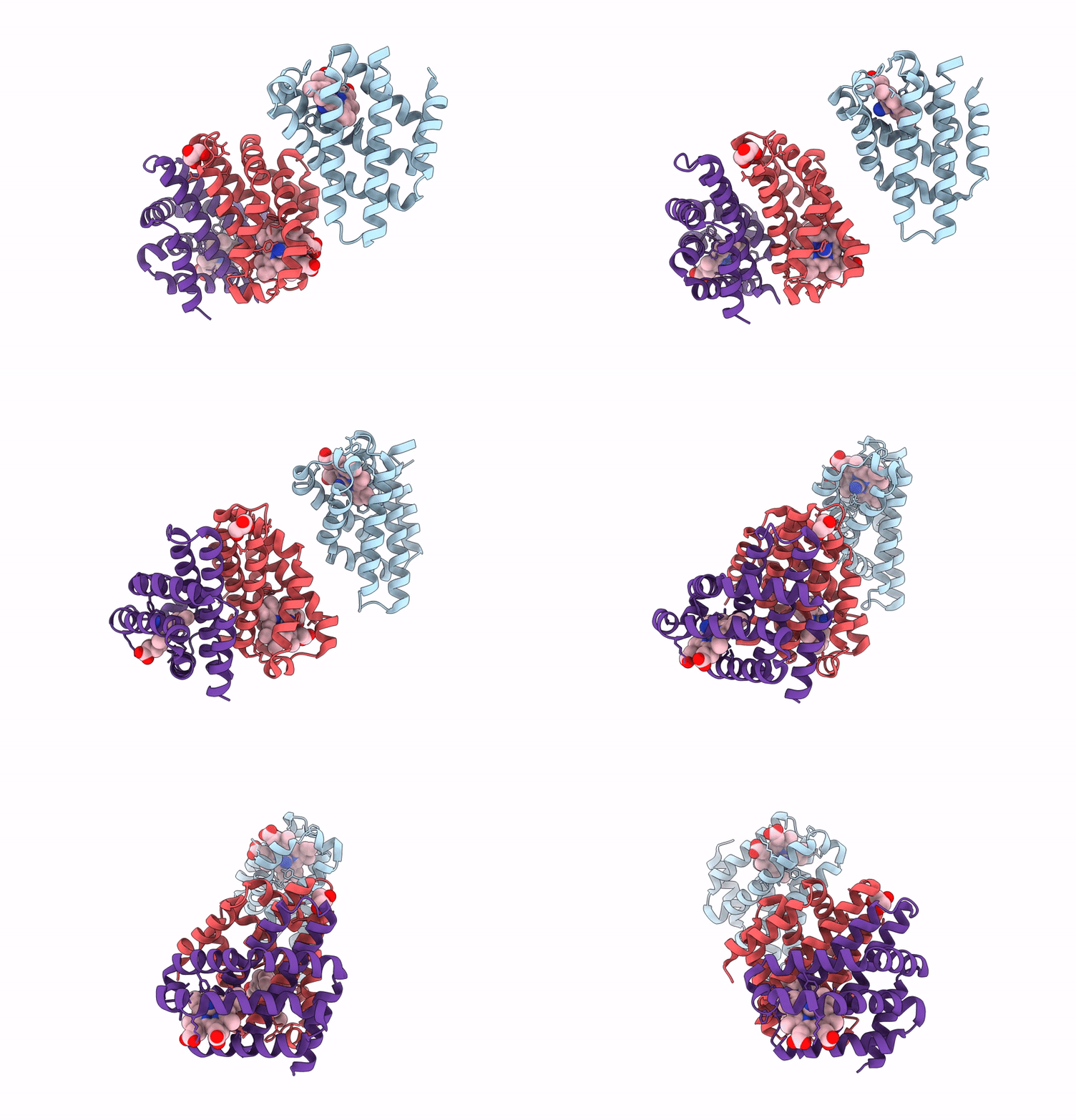
9DSF image
Deposition Date 2024-09-27
Release Date 2025-12-24
Last Version Date 2025-12-24
Entry Detail
PDB ID:
9DSF
Title:
Cyanide-ligated Bordetella pertussis globin coupled sensor regulatory domain S68A
Biological Source:
Method Details:
Experimental Method:
Resolution:
1.85 Å
R-Value Free:
0.23
R-Value Work:
0.20
R-Value Observed:
0.20
Space Group:
C 1 2 1

Macromolecular Entities
Structures with similar UniProt ID
Protein Blast
Polymer Type:polypeptide(L)
Molecule:Diguanylate cyclase DosC
Gene (Uniprot):BP3507
Mutagens:S68A
Chain IDs:A, B, C
Chain Length:170
Number of Molecules:3
Biological Source:Bordetella pertussis (strain Tohama I / ATCC BAA-589 / NCTC 13251)
Primary Citation
Cooperative Ligand Binding in a Bacterial Heme-Based Oxygen Sensor.
J.Biol.Chem. ? 111025 111025 (2025)
PMID: 41371339 DOI: 10.1016/j.jbc.2025.111025

Abstact

Bacteria modulate essential phenotypes in response to external signals such as the availability of molecular oxygen (O2). A class of direct O2-sensing heme proteins, globin coupled sensors, have been implicated in O2-dependent regulation of pathogenic phenotypes including biofilm formation, motility, and virulence. While cooperative O2 binding is well known in both mammalian and prokaryotic hemoglobins, cooperative ligand binding previously has not been observed in bacterial sensor globins. This study explores the O2-dependent allosteric communication between globin domains in the globin-coupled sensor protein from Pectobacterium carotovorum (PccGCS) through equilibrium O2 binding measurements, X-ray crystallography, resonance Raman spectroscopy, and hydrogen-deuterium exchange mass spectrometry. Based on these experiments, we propose a model of allosteric regulation of O2 binding that is directed by subtle changes in distal heme pocket protein conformation and transduced through dynamics of helices at the dimer interface of the PccGCS sensor globin. Together this work identifies cooperative ligand binding in a family of bacterial heme proteins, which could allow the bacteria to more robustly respond to small changes in O2 levels. Furthermore, this work highlights the importance of heme pocket residues in transducing the O2 binding event within the dimer and suggests a pathway for signal transduction in dimeric myoglobin-like sensor proteins.

Legend

Protein

Chemical

Disease

Primary Citation of related structures
Feedback Form
Name
Email
Institute
Feedback