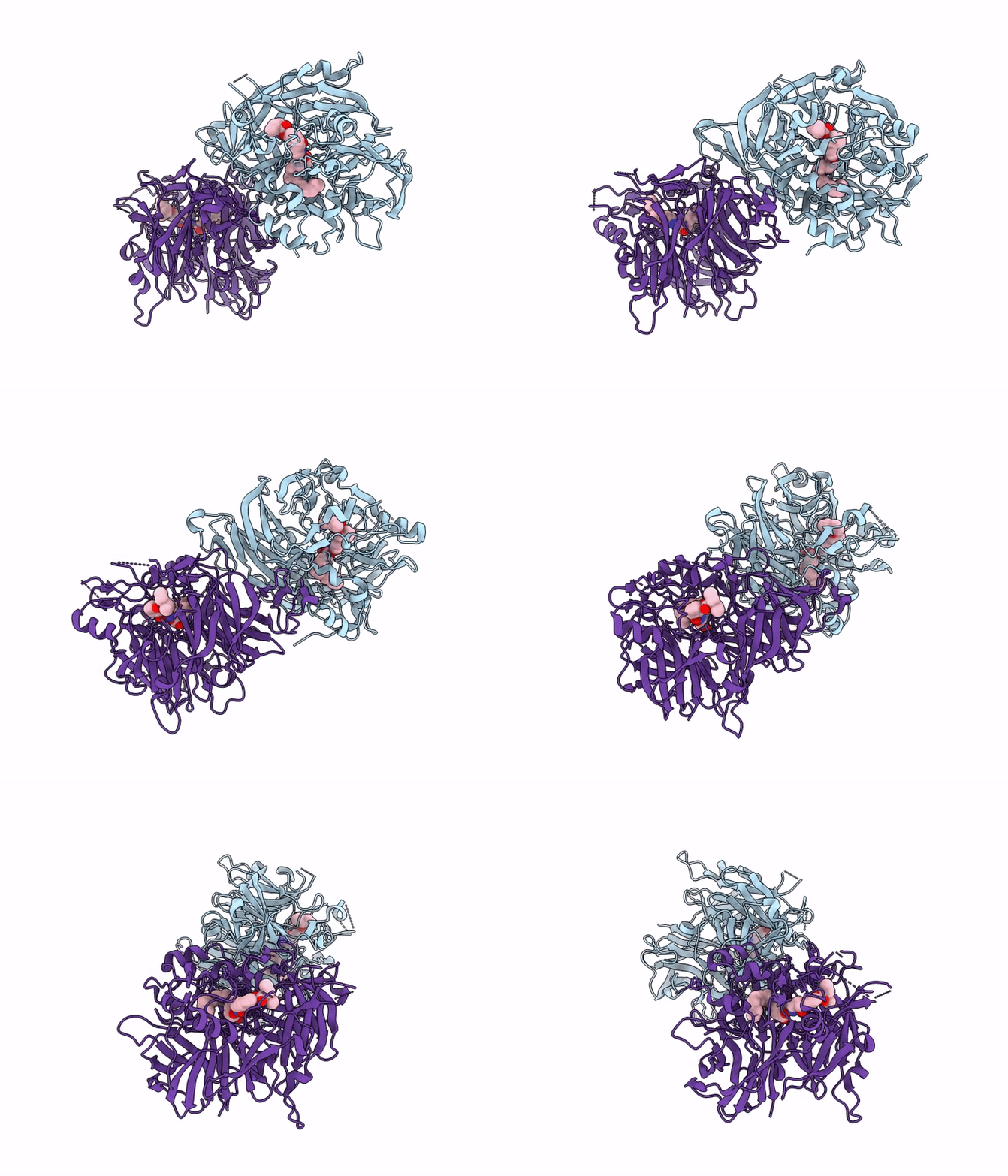
9DQA image
Deposition Date 2024-09-23
Release Date 2025-09-03
Last Version Date 2025-09-10
Entry Detail
PDB ID:
9DQA
Title:
Crystal structure of bovine RPE65 in complex with EYE-002
Biological Source:
Source Organism:
Bos taurus (Taxon ID: 9913)
Method Details:
Experimental Method:
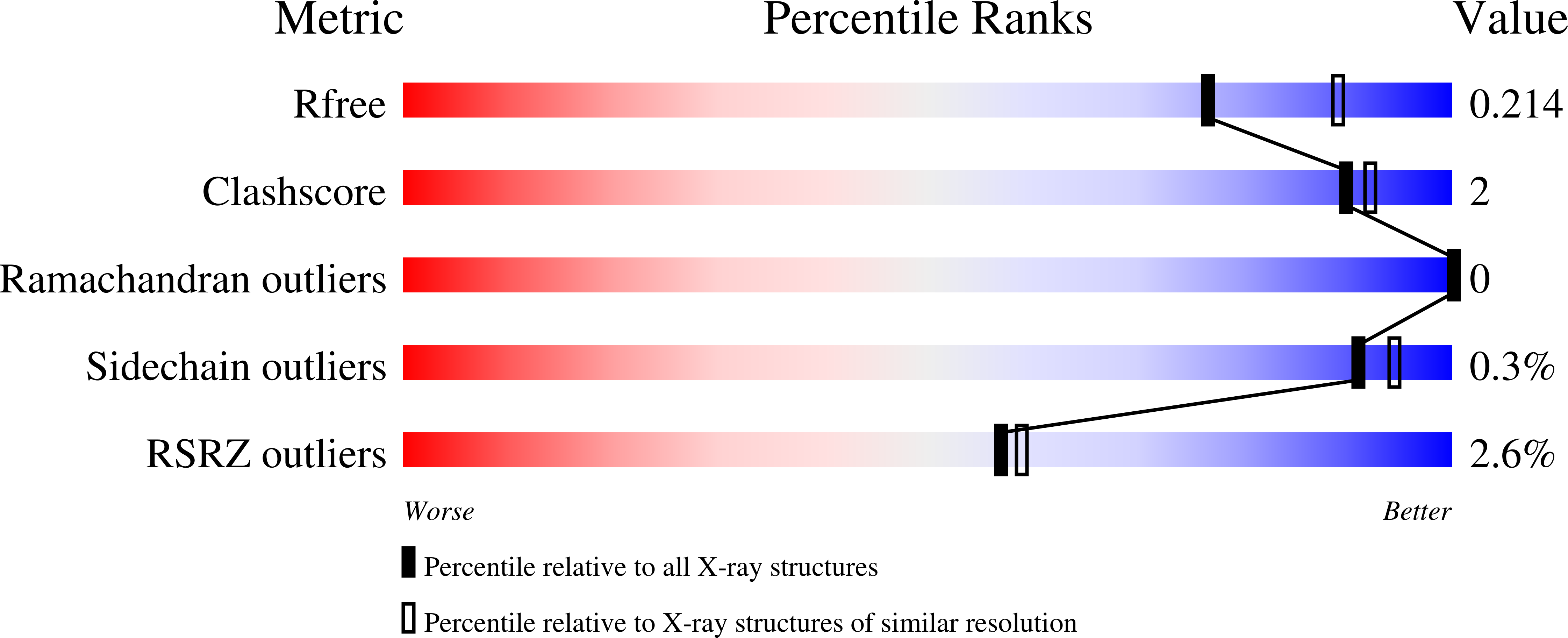
Resolution:
2.10 Å
R-Value Free:
0.20
R-Value Work:
0.18
Space Group:
P 65
Macromolecular Entities
Structures with similar UniProt ID
Protein Blast
Polymer Type:polypeptide(L)
Molecule:Retinoid isomerohydrolase
Gene (Uniprot):RPE65
Chain IDs:A, B
Chain Length:533
Number of Molecules:2
Biological Source:Bos taurus
Primary Citation
Rationally Designed, Short-Acting RPE65 Inhibitors for Visual Cycle-Associated Retinopathies.
J.Med.Chem. 68 17638 17652 (2025)
PMID: 40764714 DOI: 10.1021/acs.jmedchem.5c01353

Abstact

The visual cycle is a metabolic pathway essential for visual function. The bisretinoid byproducts of this pathway can induce retinal toxicity, as occurs in Stargardt disease type 1 (STGD1). Emixustat, which inhibits bisretinoid production, is a visual cycle modulator (VCM) that targets RPE65. However, it causes visual impairment due to its unfavorable duration of action. Here, we report ester-containing analogs of emixustat that are susceptible to hydrolytic clearance and function as short-acting VCMs. We show that the esterase-mediated metabolism of these compounds can be tuned while maintaining high-affinity RPE65 targeting. Compounds 6 (EYE-002) and 7 (EYE-003) containing diethyl acetate and valproate esters, respectively, allowed faster recovery of visual cycle function compared to emixustat. These molecules protected against retinal degeneration in mouse models of photic retinopathy and STGD1. These data demonstrate that shorter attenuation of the visual cycle can therapeutically intervene in retinal diseases with fewer visual side effects compared to emixustat.

Legend

Protein

Chemical

Disease

Primary Citation of related structures
Feedback Form
Name
Email
Institute
Feedback