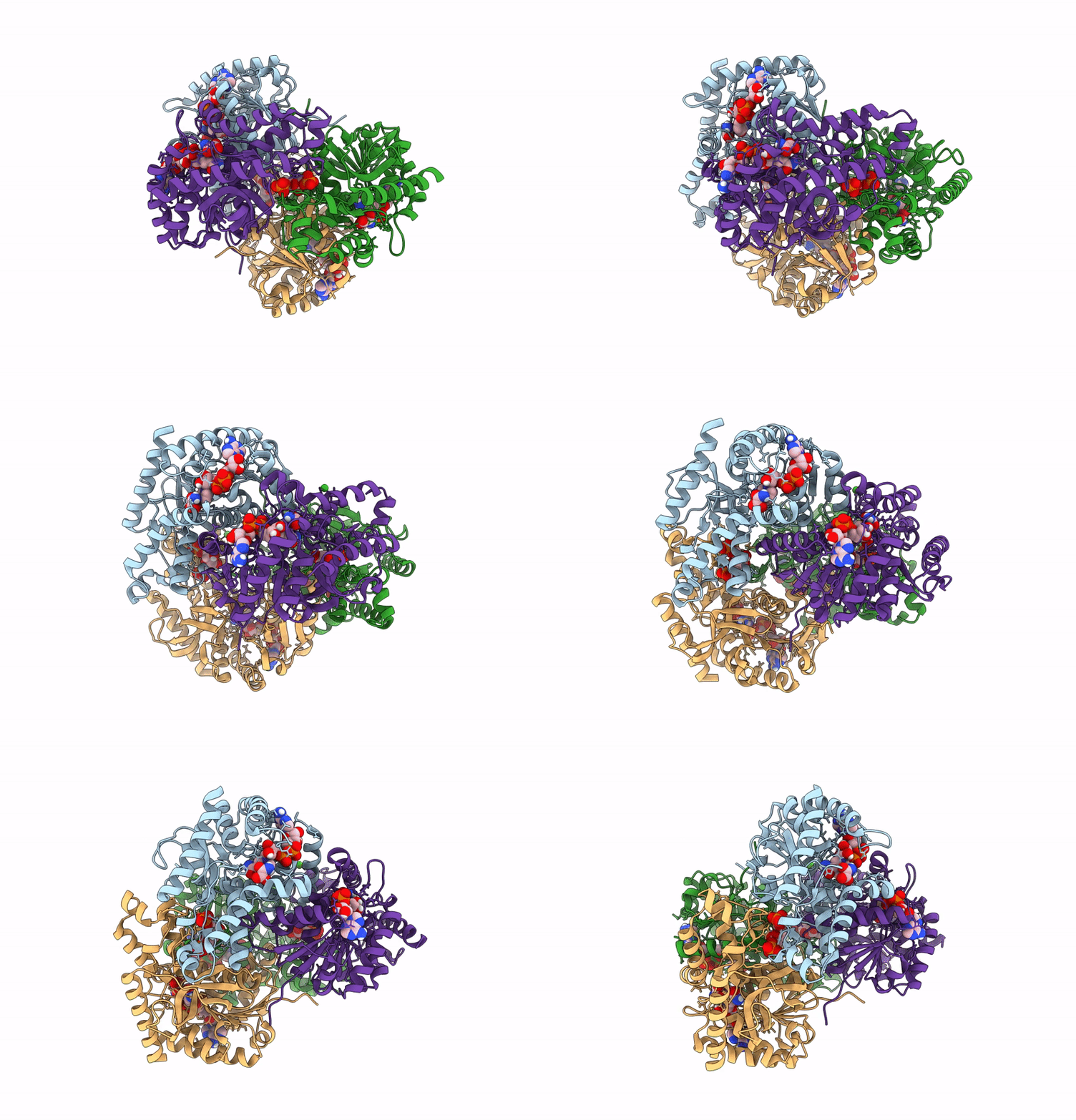
9DQ7 image
Deposition Date 2024-09-23
Release Date 2025-03-12
Last Version Date 2025-09-24
Entry Detail
PDB ID:
9DQ7
Keywords:
Title:
Borrelia burgdorferi LDH with NADH, oxamate and FBS
Biological Source:
Source Organism:
Method Details:
Experimental Method:
Resolution:
2.11 Å
R-Value Free:
0.22
R-Value Work:
0.17
R-Value Observed:
0.17
Space Group:
P 21 21 21

Macromolecular Entities
Structures with similar UniProt ID
Protein Blast
Polymer Type:polypeptide(L)
Molecule:L-lactate dehydrogenase
Gene (Uniprot):ldh
Chain IDs:A (auth: P), B (auth: A), C (auth: B), D (auth: C)
Chain Length:314
Number of Molecules:4
Biological Source:Borreliella burgdorferi
Primary Citation
Lactate dehydrogenase is the Achilles' heel of Lyme disease bacterium Borreliella burgdorferi.
Mbio 16 e0372824 e0372824 (2025)
PMID: 40111021 DOI: 10.1128/mbio.03728-24

Abstact

UNLABELLED As a zoonotic pathogen, the Lyme disease bacterium Borreliella burgdorferi has evolved unique metabolic pathways, some of which are specific and essential for its survival and thus present as ideal targets for developing new therapeutics. B. burgdorferi dispenses with the use of thiamin as a cofactor and relies on lactate dehydrogenase (BbLDH) to convert pyruvate to lactate for balancing NADH/NAD+ ratios. This report first demonstrates that BbLDH is a canonical LDH with some unique biochemical and structural features. A loss-of-function study then reveals that BbLDH is essential for B. burgdorferi survival and infectivity, highlighting its therapeutic potential. Drug screening identifies four previously unknown LDH inhibitors with minimal cytotoxicity, two of which inhibit B. burgdorferi growth. This study provides mechanistic insights into the function of BbLDH in the pathophysiology of B. burgdorferi and lays the groundwork for developing genus-specific metabolic inhibitors against B. burgdorferi and potentially other tick-borne pathogens as well. IMPORTANCE Lyme disease (LD) is the most commonly reported tick-borne illness in the U.S. and Europe, and its geographic distribution is continuously expanding worldwide. Though early LD can be treated with antibiotics, chronic LD is recalcitrant to antibiotic treatments and thus requires multiple courses of antibiotic therapy. Currently, there are no human vaccines nor prophylactic antibiotics to prevent LD. As the causative agent of LD, Borreliella burgdorferi has evolved unique metabolic pathways, some of which are specific and essential for its survival and thus present as ideal targets for developing new therapeutics. By using an approach of genetics, biochemistry, structural biology, drug screening, and animal models, this report provides evidence that lactate dehydrogenase can be a potential target for developing genus-specific metabolic inhibitors against B. burgdorferi and potentially other tick-borne pathogens as well.

Legend

Protein

Chemical

Disease

Primary Citation of related structures
Feedback Form
Name
Email
Institute
Feedback