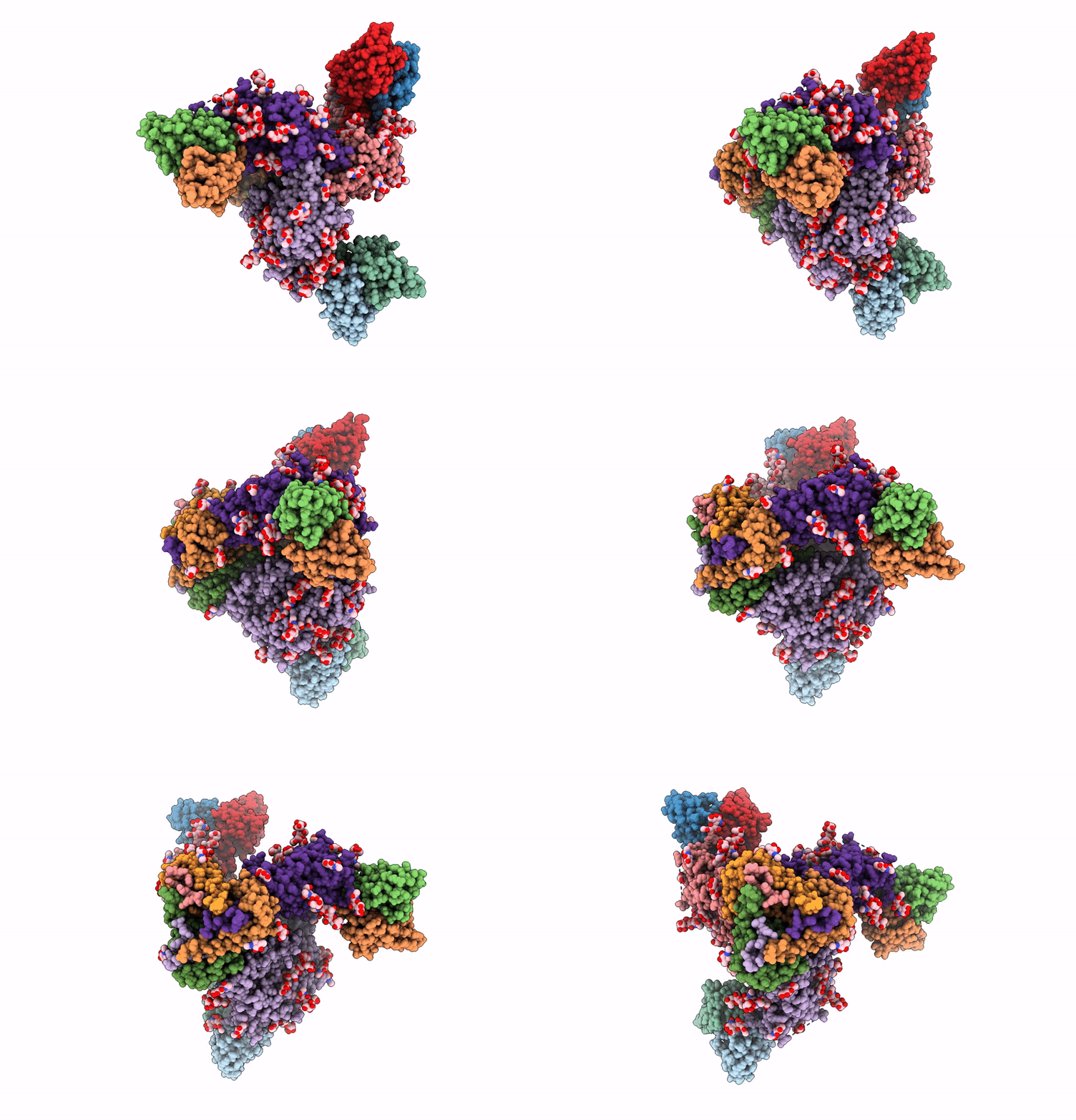
9DMB image
Deposition Date 2024-09-12
Release Date 2025-06-18
Last Version Date 2025-06-25
Entry Detail
PDB ID:
9DMB
Keywords:
Title:
Rhesus RHA10.01 Fab in complex with HIV-1 Env BG505 DS-SOSIP trimer
Biological Source:
Source Organism:
Host Organism:
Method Details:
Experimental Method:
Resolution:
4.27 Å
Aggregation State:
PARTICLE
Reconstruction Method:
SINGLE PARTICLE

Macromolecular Entities
Polymer Type:polypeptide(L)
Molecule:RHA10.01 Light chain
Chain IDs:A, D (auth: B), G (auth: D)
Chain Length:219
Number of Molecules:3
Biological Source:Macaca mulatta
Polymer Type:polypeptide(L)
Molecule:RHA10.01 Heavy chain
Chain IDs:B (auth: C), E (auth: G), H
Chain Length:243
Number of Molecules:3
Biological Source:Macaca mulatta
Structures with similar UniProt ID
Protein Blast
Polymer Type:polypeptide(L)
Molecule:BG505 DS-SOSIP glycoprotein gp41
Gene (Uniprot):env
Chain IDs:C (auth: E), F (auth: I), I (auth: J)
Chain Length:153
Number of Molecules:3
Biological Source:Human immunodeficiency virus 1
Structures with similar UniProt ID
Protein Blast
Polymer Type:polypeptide(L)
Molecule:Envelope glycoprotein gp120
Gene (Uniprot):env
Chain IDs:J (auth: L), K (auth: F), L (auth: K)
Chain Length:480
Number of Molecules:3
Biological Source:Human immunodeficiency virus 1
Ligand Molecules
Primary Citation

Abstact

Broadly neutralizing antibodies (bNAbs) targeting the HIV-1 CD4-binding site (CD4bs) occur infrequently in macaques and humans and have not been reproducibly elicited in any outbred animal model. To address this challenge, we first isolated RHA10, an infection-induced rhesus bNAb with 51% breadth. The cryoelectron microscopy (cryo-EM) structure of RHA10 with the HIV-1 envelope (Env) resembled prototypic human CD4bs bNAbs with CDR-H3-dominated binding. Env-antibody co-evolution revealed transient elimination of two Env CD4bs-proximal glycans near the time of RHA10-lineage initiation, and these glycan-deficient Envs bound preferentially to early RHA10 intermediates, suggesting that glycan deletions in infecting SHIVs could induce CD4bs bNAbs. To test this hypothesis, we constructed SHIV.CH505 variants with CD4bs-proximal glycan deletions. Infection of 11 macaques resulted in accelerated CD4bs bNAb responses in 9 compared with 1 of 115 control macaques. Glycan hole-based immunofocusing coupled to Env-Ab co-evolution can consistently induce broad CD4bs responses in macaques and serve as a model for HIV vaccine design.

Legend

Protein

Chemical

Disease

Primary Citation of related structures
Feedback Form
Name
Email
Institute
Feedback