9DGO image
Deposition Date 2024-09-03
Release Date 2025-06-18
Last Version Date 2025-06-18
Entry Detail
PDB ID:
9DGO
Keywords:
Title:
Designed miniproteins potently inhibit and protect against MERS-CoV. Crystal structure of MERS-CoV S RBD in complex with miniprotein cb3
Biological Source:
Method Details:
Experimental Method:
Resolution:
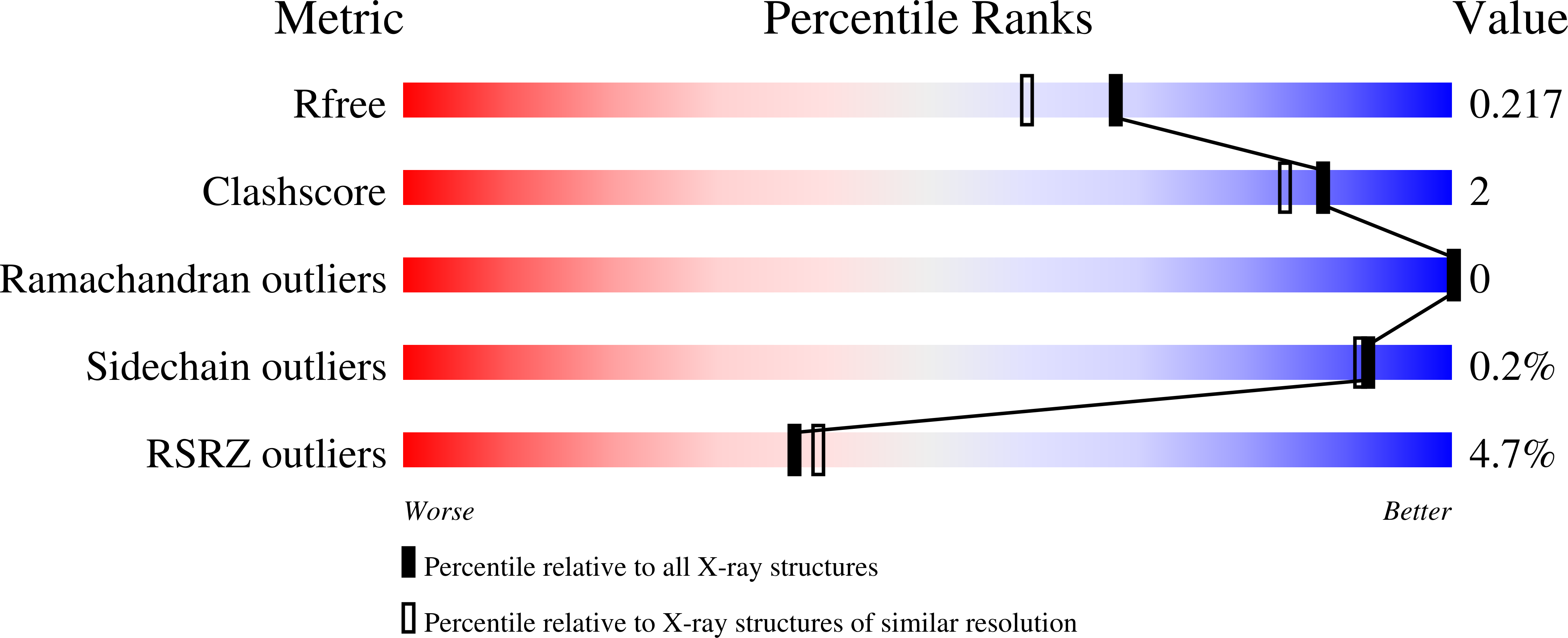
1.85 Å
R-Value Free:
0.21
R-Value Work:
0.18
R-Value Observed:
0.19
Space Group:
P 21 21 21
Macromolecular Entities
Structures with similar UniProt ID
Protein Blast
Polymer Type:polypeptide(L)
Molecule:Spike glycoprotein
Gene (Uniprot):S
Chain IDs:A, B
Chain Length:258
Number of Molecules:2
Biological Source:Middle East respiratory syndrome-related coronavirus
Polymer Type:polypeptide(L)
Molecule:Designed miniprotein cb_3
Chain IDs:C, D
Chain Length:58
Number of Molecules:2
Biological Source:synthetic construct
Ligand Molecules
Primary Citation

Abstact

Middle East respiratory syndrome coronavirus (MERS-CoV) is a zoonotic pathogen with a 36% case-fatality rate in humans. No vaccines or specific therapeutics are currently approved for use in humans or the camel host reservoir. Here, we computationally designed monomeric and homo-oligomeric miniproteins that bind with high affinity to the MERS-CoV spike (S) glycoprotein, the main target of neutralizing antibodies and vaccine development. We show that these miniproteins broadly neutralize a panel of MERS-CoV S variants, spanning the known antigenic diversity of this pathogen, by targeting a conserved site in the receptor-binding domain (RBD). The miniproteins directly compete with binding of the dipeptidylpeptidase 4 (DPP4) receptor to MERS-CoV S, thereby blocking viral attachment to the host entry receptor and subsequent membrane fusion. Intranasal administration of a lead miniprotein provides prophylactic protection against stringent MERS-CoV challenge in mice, motivating its future clinical development as a next-generation countermeasure against this virus with pandemic potential.

Legend

Protein

Chemical

Disease

Primary Citation of related structures
Feedback Form
Name
Email
Institute
Feedback