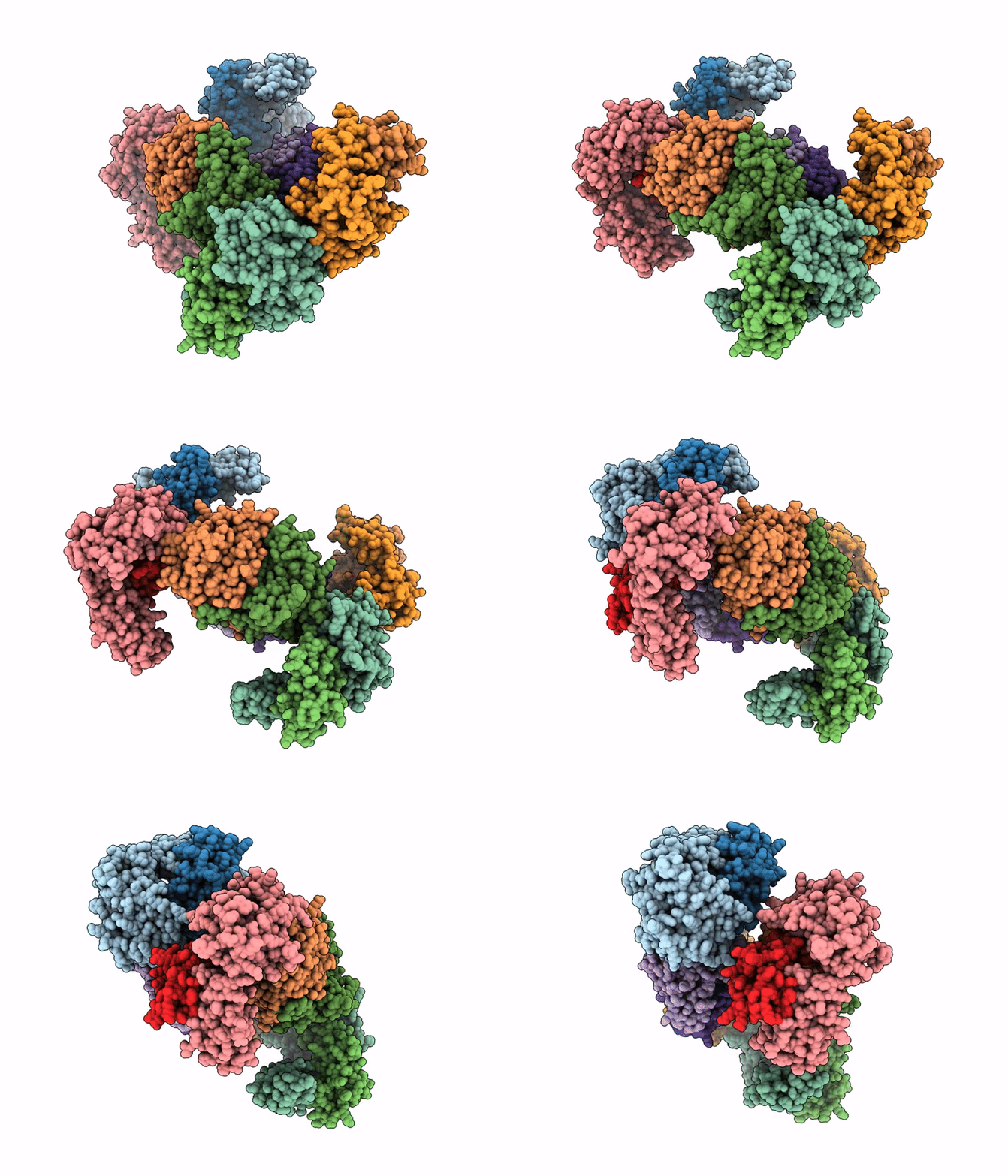
9DBT image
Deposition Date 2024-08-23
Release Date 2025-09-03
Last Version Date 2025-11-19
Entry Detail
PDB ID:
9DBT
Title:
Crystal structure of human astrovirus 1 capsid spike bound to human neonatal Fc receptor
Biological Source:
Source Organism:
Homo sapiens (Taxon ID: 9606)
Human astrovirus 1 (Taxon ID: 12456)
Host Organism:
Method Details:
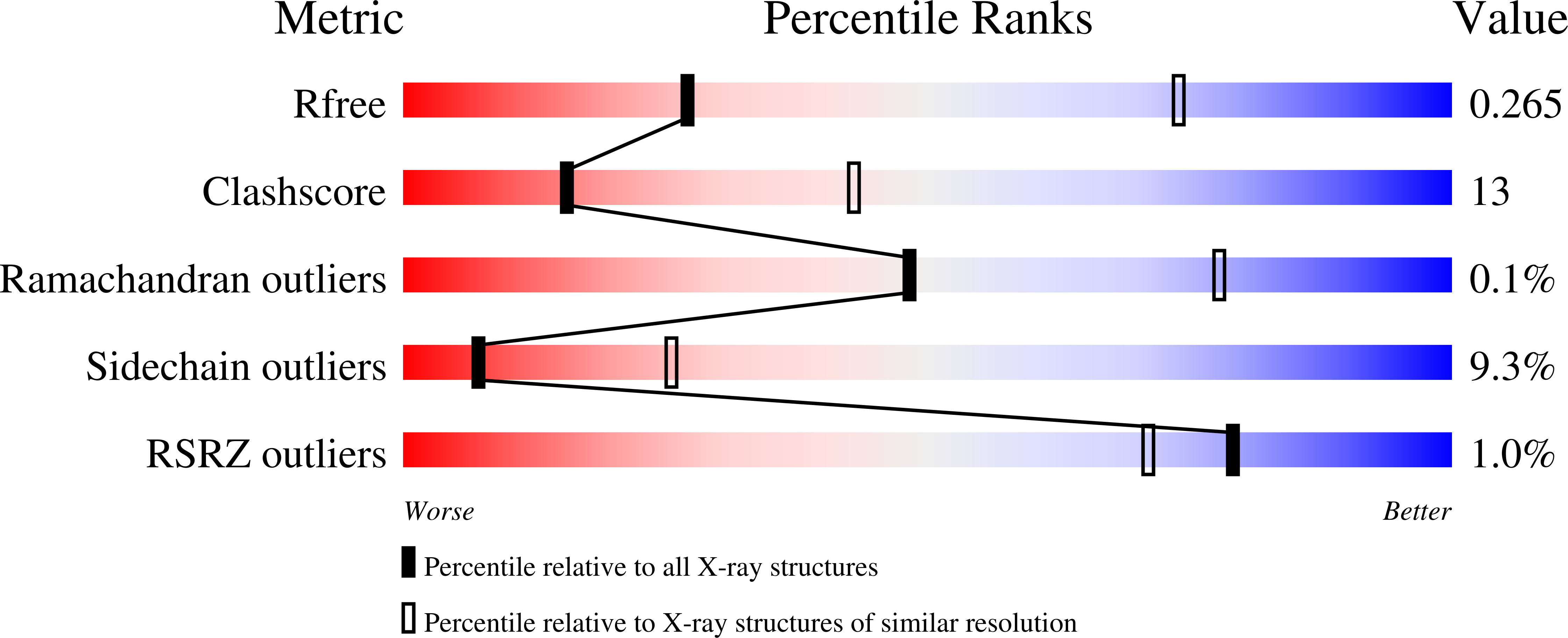
Experimental Method:
Resolution:
3.40 Å
R-Value Free:
0.26
R-Value Work:
0.20
R-Value Observed:
0.21
Space Group:
P 2 21 21
Macromolecular Entities
Structures with similar UniProt ID
Protein Blast
Polymer Type:polypeptide(L)
Molecule:IgG receptor FcRn large subunit p51
Gene (Uniprot):FCGRT
Chain IDs:A, C (auth: F), E (auth: I), J (auth: C)
Chain Length:278
Number of Molecules:4
Biological Source:Homo sapiens
Structures with similar UniProt ID
Protein Blast
Polymer Type:polypeptide(L)
Molecule:Beta-2-microglobulin
Gene (Uniprot):B2M
Chain IDs:B, D (auth: G), F (auth: J), K (auth: D)
Chain Length:99
Number of Molecules:4
Biological Source:Homo sapiens
Structures with similar UniProt ID
Protein Blast
Polymer Type:polypeptide(L)
Molecule:Structural protein
Chain IDs:G (auth: H), H (auth: K), I (auth: L), L (auth: E)
Chain Length:228
Number of Molecules:4
Biological Source:Human astrovirus 1
Ligand Molecules
Primary Citation
Structure of the human astrovirus capsid spike in complex with the neonatal Fc receptor.
Nat Commun 16 9621 9621 (2025)
PMID: 41184319 DOI: 10.1038/s41467-025-65203-2

Abstact

Human astroviruses (HAstVs) are a leading cause of viral gastroenteritis in children worldwide. Recently the neonatal Fc receptor (FcRn) was identified as a receptor for HAstV, however the molecular basis for the FcRn-HAstV interaction remained unclear. Here, we report the crystal structure of FcRn bound to the HAstV capsid spike domain at 3.4 angstroms resolution. We show that all classical HAstV spikes bind to FcRn and we identify three conserved HAstV spike residues that mediate binding to FcRn. Using competition binding assays, we show that the HAstV spike competes with IgG for binding to FcRn. Additionally, we demonstrate that the FcRn inhibitor, nipocalimab, and anti-HAstV neutralizing monoclonal antibodies block HAstV spike binding to FcRn, revealing their neutralization mechanisms and supporting their therapeutic potential. Overall, our findings illuminate a crucial interaction in the HAstV life cycle, which may help to inform the development of a HAstV vaccine and antibody therapies.

Legend

Protein

Chemical

Disease

Primary Citation of related structures
Feedback Form
Name
Email
Institute
Feedback