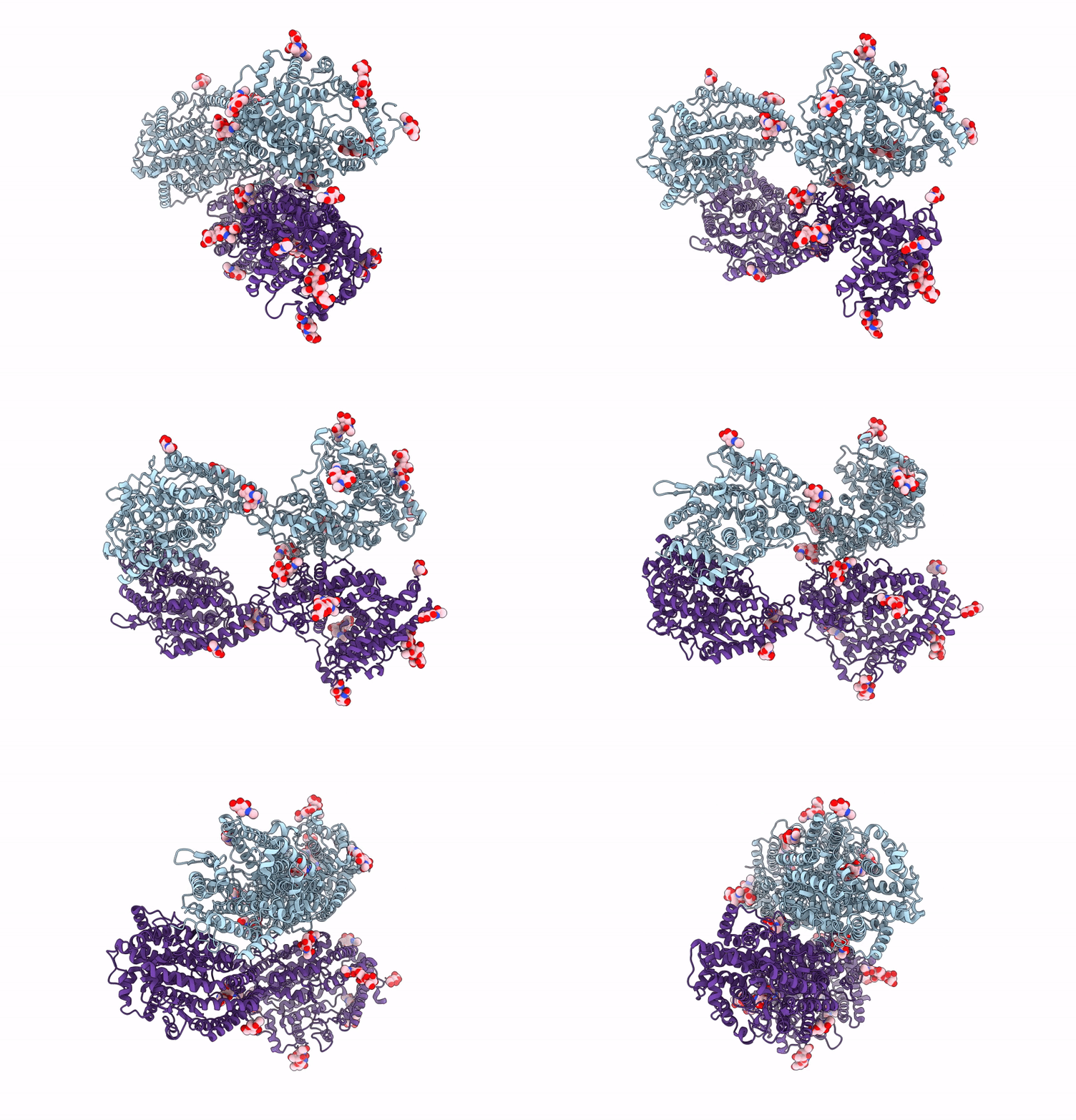
9D5M image
Deposition Date 2024-08-13
Release Date 2025-06-18
Last Version Date 2025-10-08
Entry Detail
PDB ID:
9D5M
Keywords:
Title:
Apo ACE full dimer 1 prepared by chameleon
Biological Source:
Source Organism:
Homo sapiens (Taxon ID: 9606)
Host Organism:
Method Details:
Experimental Method:
Resolution:
3.05 Å
Aggregation State:
PARTICLE
Reconstruction Method:
SINGLE PARTICLE

Macromolecular Entities
Structures with similar UniProt ID
Protein Blast
Polymer Type:polypeptide(L)
Molecule:Angiotensin-converting enzyme
Gene (Uniprot):ACE
Chain IDs:A, B
Chain Length:1241
Number of Molecules:2
Biological Source:Homo sapiens
Ligand Molecules
Primary Citation
Dimerization and dynamics of human angiotensin-I converting enzyme revealed by cryo-EM and MD simulations.
Elife 14 ? ? (2025)
PMID: 40988601 DOI: 10.7554/eLife.106044

Abstact

Angiotensin-I converting enzyme (ACE) regulates the levels of disparate bioactive peptides, notably converting angiotensin-I to angiotensin-II and degrading amyloid beta. ACE is a heavily glycosylated dimer, containing four analogous catalytic sites, and exists in membrane-bound and soluble (sACE) forms. ACE inhibition is a frontline, FDA-approved, therapy for cardiovascular diseases yet is associated with significant side effects, including higher rates of lung cancer. To date, structural studies have been confined to individual domains or partially denatured cryo-EM structures. Here, we report the cryo-EM structure of the glycosylated full human sACE dimer. We resolved four structural states at 2.99 - 3.65 Å resolution which are primarily differentiated by varying degrees of solvent accessibility to the active sites and reveal the full dimerization interface. We also employed all-atom molecular dynamics (MD) simulations and heterogeneity analysis in cryoSPARC, cryoDRGN, and RECOVAR to elucidate the conformational dynamics of sACE and identify key regions mediating conformational change. We identify differences in the mechanisms governing the conformational dynamics of individual domains that have implications for the design of domain-specific sACE modulators.

Legend

Protein

Chemical

Disease

Primary Citation of related structures
Feedback Form
Name
Email
Institute
Feedback