9CUS image
Deposition Date 2024-07-26
Release Date 2025-08-13
Last Version Date 2025-12-03
Entry Detail
PDB ID:
9CUS
Title:
BmrCD in the outward-facing conformation bound to Hoechsts
Biological Source:
Method Details:
Experimental Method:
Resolution:
3.10 Å
Aggregation State:
PARTICLE
Reconstruction Method:
SINGLE PARTICLE
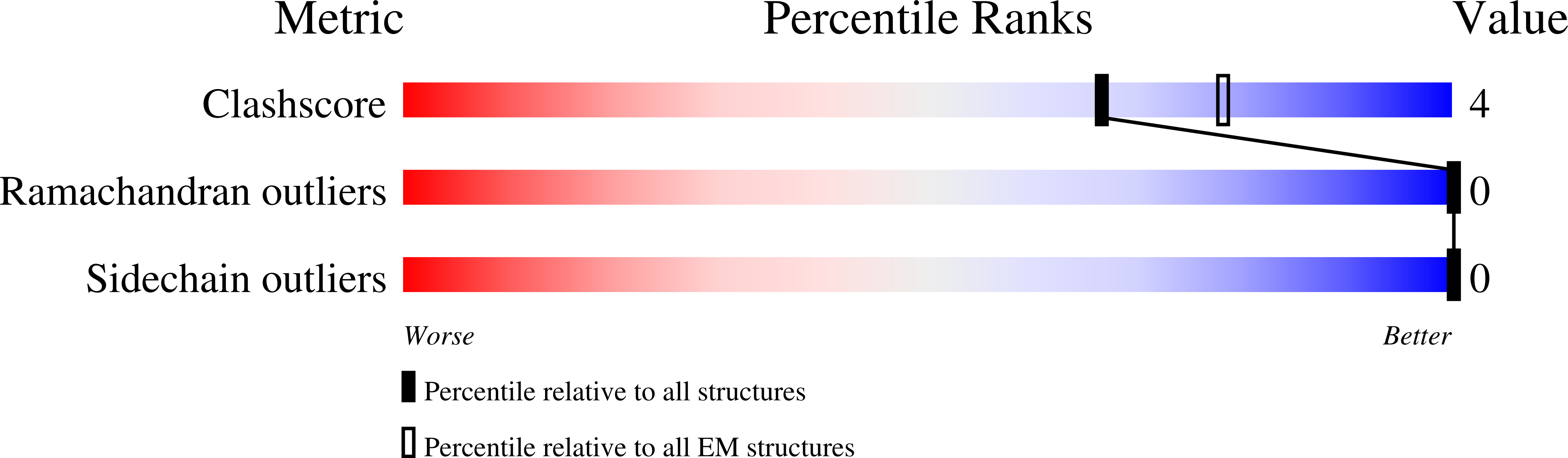
Macromolecular Entities
Structures with similar UniProt ID
Protein Blast
Polymer Type:polypeptide(L)
Molecule:Probable multidrug resistance ABC transporter ATP-binding/permease protein YheI
Gene (Uniprot):yheI
Chain IDs:A (auth: C)
Chain Length:607
Number of Molecules:1
Biological Source:Bacillus subtilis subsp. subtilis str. 168
Structures with similar UniProt ID
Protein Blast
Polymer Type:polypeptide(L)
Molecule:Probable multidrug resistance ABC transporter ATP-binding/permease protein YheH
Gene (Uniprot):yheH
Chain IDs:B (auth: D)
Chain Length:681
Number of Molecules:1
Biological Source:Bacillus subtilis subsp. subtilis str. 168
Primary Citation
Drug-bound outward-facing conformation of a heterodimeric ABC exporter suggests a putative mechanism of drug translocation.
Nat Commun 16 10403 10403 (2025)
PMID: 41285748 DOI: 10.1038/s41467-025-65318-6

Abstact

Multidrug transport by ATP binding cassette (ABC) exporters entails a mechanism to modulate drug affinity across the transport cycle. Here, we combine cryo-EM and molecular dynamics (MD) simulations to illuminate a lipid-competition mechanism to drive substrate translocation by ABC exporters. We determine cryo-EM structures of the ABC transporter BmrCD in drug-loaded inward-facing (IF) and outward-facing (OF) conformations in lipid nanodiscs to reveal the structural basis of alternating access, details of drug-transporter interactions, and the scale of drug movement between the two conformations. Remarkably, the structures uncover lipid molecules bound in or near the transporter vestibule along with the drugs. MD trajectories from the IF structure show that these lipids stimulate drug disorder and translocation towards the innermost constricted region of the vestibule. Similarly, bound lipids enter the OF vestibule and weaken drug-transporter interactions facilitating drug release. Our results complete a near-atomic model of BmrCD's conformational cycle and suggest the modulation of substrate-transporter interactions by lipids.

Legend

Protein

Chemical

Disease

Primary Citation of related structures
Feedback Form
Name
Email
Institute
Feedback