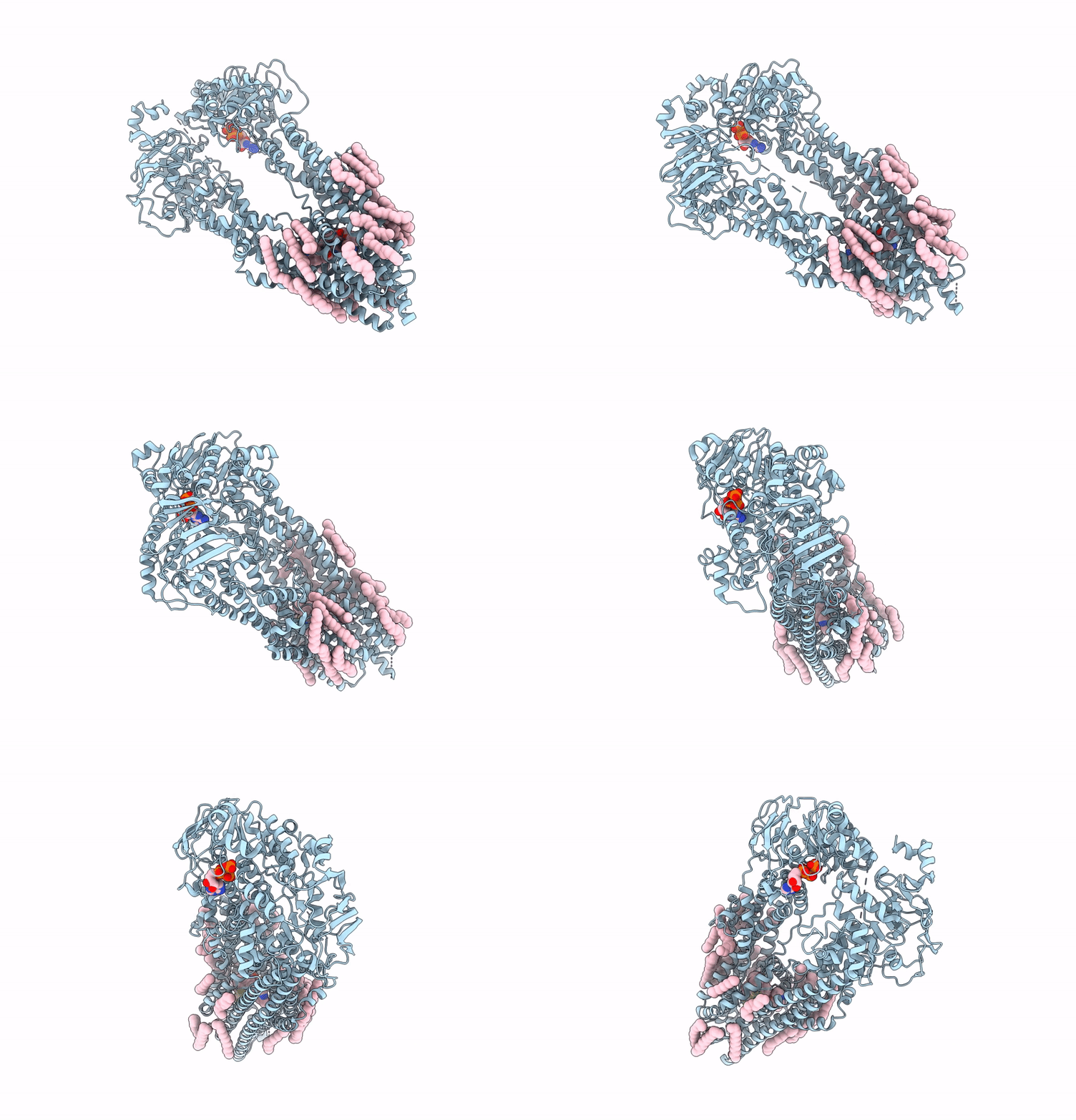
9CTC image
Deposition Date 2024-07-24
Release Date 2025-01-22
Last Version Date 2025-05-28
Entry Detail
PDB ID:
9CTC
Title:
SapNP reconstituted Human ABCB1 in complex with Zosuquidar and ATP/Mg
Biological Source:
Source Organism:
Homo sapiens (Taxon ID: 9606)
Host Organism:
Method Details:
Experimental Method:
Resolution:
3.60 Å
Aggregation State:
PARTICLE
Reconstruction Method:
SINGLE PARTICLE

Macromolecular Entities
Structures with similar UniProt ID
Protein Blast
Polymer Type:polypeptide(L)
Molecule:ATP-dependent translocase ABCB1
Gene (Uniprot):ABCB1
Chain IDs:A
Chain Length:1280
Number of Molecules:1
Biological Source:Homo sapiens
Primary Citation
Structural insights into binding-site access and ligand recognition by human ABCB1.
Embo J. 44 991 1006 (2025)
PMID: 39806099 DOI: 10.1038/s44318-025-00361-z

Abstact

ABCB1 is a broad-spectrum efflux pump central to cellular drug handling and multidrug resistance in humans. However, how it is able to recognize and transport a wide range of diverse substrates remains poorly understood. Here we present cryo-EM structures of lipid-embedded human ABCB1 in conformationally distinct apo-, substrate-bound, inhibitor-bound, and nucleotide-trapped states at 3.4-3.9 Å resolution, in the absence of stabilizing antibodies or mutations. The substrate-binding site is located within one half of the molecule and, in the apo state, is obstructed by the transmembrane helix (TM) 4. Substrate and inhibitor binding are distinguished by major TM rearrangements and their ligand binding chemistry, with TM4 playing a central role in all conformational transitions. Furthermore, our data identify secondary structure-breaking residues that impart localized TM flexibility and asymmetry between the two transmembrane domains. The resulting structural changes and lipid interactions that are induced by substrate and inhibitor binding can predict substrate-binding profiles and may direct ABCB1 inhibitor design.

Legend

Protein

Chemical

Disease

Primary Citation of related structures
Feedback Form
Name
Email
Institute
Feedback