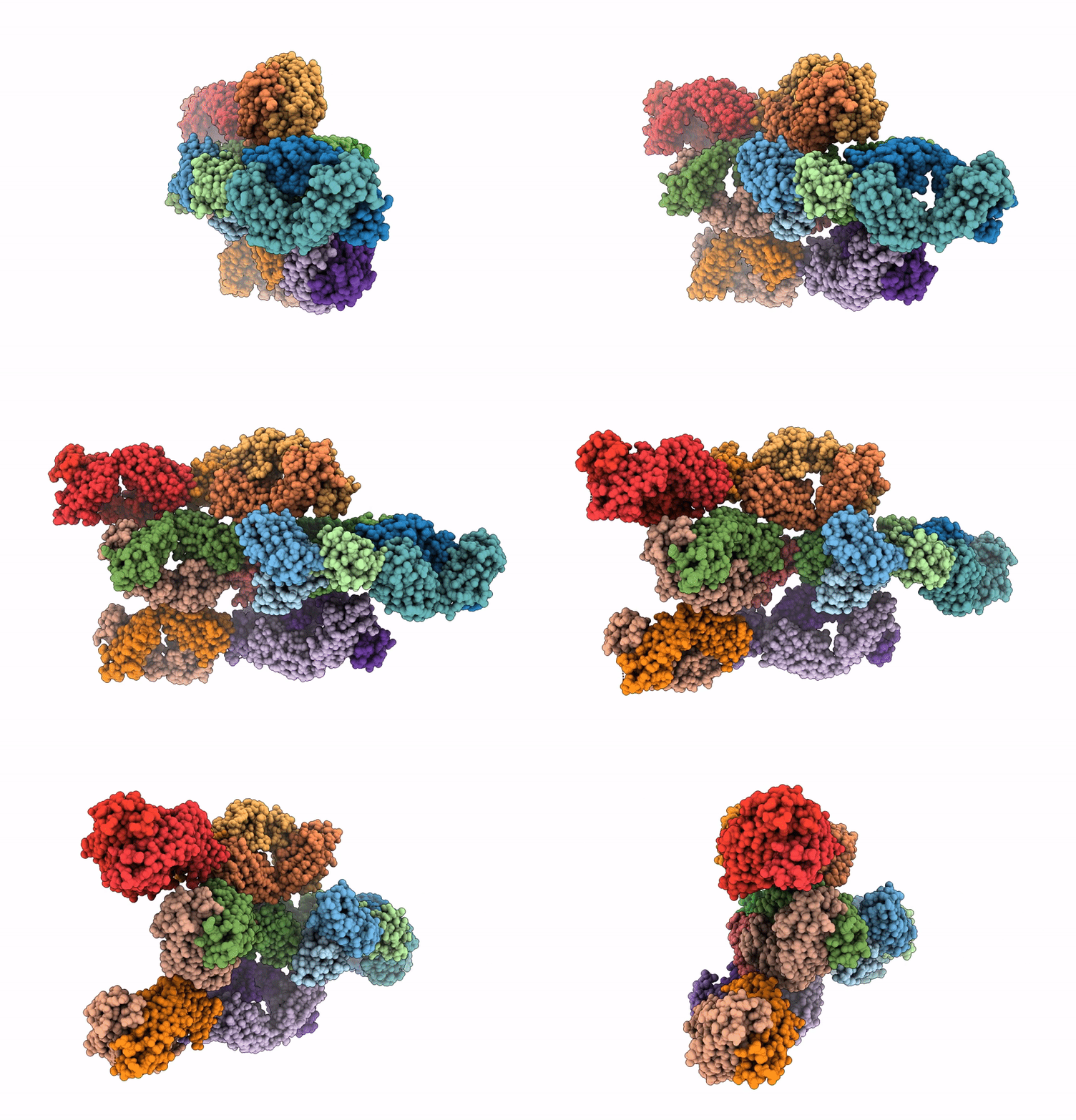
9CMC image
Deposition Date 2024-07-14
Release Date 2025-06-11
Last Version Date 2025-06-25
Entry Detail
PDB ID:
9CMC
Keywords:
Title:
Crystal structure of the peanut allergen Ara h 2 with two human derived Fab antibodies 22S1 and 23P34
Biological Source:
Source Organism:
Homo sapiens (Taxon ID: 9606)
Arachis hypogaea (Taxon ID: 3818)
Host Organism:
Method Details:
Experimental Method:
Resolution:
2.95 Å
R-Value Free:
0.25
R-Value Work:
0.21
R-Value Observed:
0.21
Space Group:
P 1 21 1
Macromolecular Entities
Polymer Type:polypeptide(L)
Molecule:Fab 23P34 heavy chain
Chain IDs:A, F, K, P
Chain Length:225
Number of Molecules:4
Biological Source:Homo sapiens
Polymer Type:polypeptide(L)
Molecule:Fab 23P34 light chain
Chain IDs:B, G, L, Q
Chain Length:218
Number of Molecules:4
Biological Source:Homo sapiens
Polymer Type:polypeptide(L)
Molecule:Fab 22S1 heavy chain
Chain IDs:C, H, M, R
Chain Length:228
Number of Molecules:4
Biological Source:Homo sapiens
Polymer Type:polypeptide(L)
Molecule:Fab 22S1 light chain
Chain IDs:D, I, N, S (auth: V)
Chain Length:214
Number of Molecules:4
Biological Source:Homo sapiens
Structures with similar UniProt ID
Protein Blast
Polymer Type:polypeptide(L)
Molecule:Ara h 2 allergen
Gene (Uniprot):Ara h 2
Chain IDs:E, J, O, T
Chain Length:140
Number of Molecules:4
Biological Source:Arachis hypogaea
Primary Citation

Abstact

Humans develop immunoglobulin G (IgG) antibodies to the foods they consume. In the context of food allergy, allergen-specific IgG antibodies can sequentially class-switch to pathogenic IgE. However, the mechanism underlying the antigenicity of food proteins remains uncharacterized. Here, we identified convergent antibodies arising from different antibody gene rearrangements that bind to the immunodominant peanut allergen Ara h 2 and characterized allelic and junctional constraints on germline antibody specificity. Structurally, we found similar epitope-paratope interactions across multiple gene rearrangements. We demonstrate that these germline-encoded epitope-specific convergent antibodies to peanut occur commonly in the population because of the worldwide prevalence of the relevant gene rearrangements, allelic independence, and junctional malleability. As a result, serum IgG to this public epitope is prevalent among diverse cohorts of nonallergic peanut-consuming infants and peanut-allergic children and adults. This work demonstrates that IgG recognition of dietary antigens can be intrinsically programmed by the germline antibody repertoire.

Legend

Protein

Chemical

Disease

Primary Citation of related structures
Feedback Form
Name
Email
Institute
Feedback