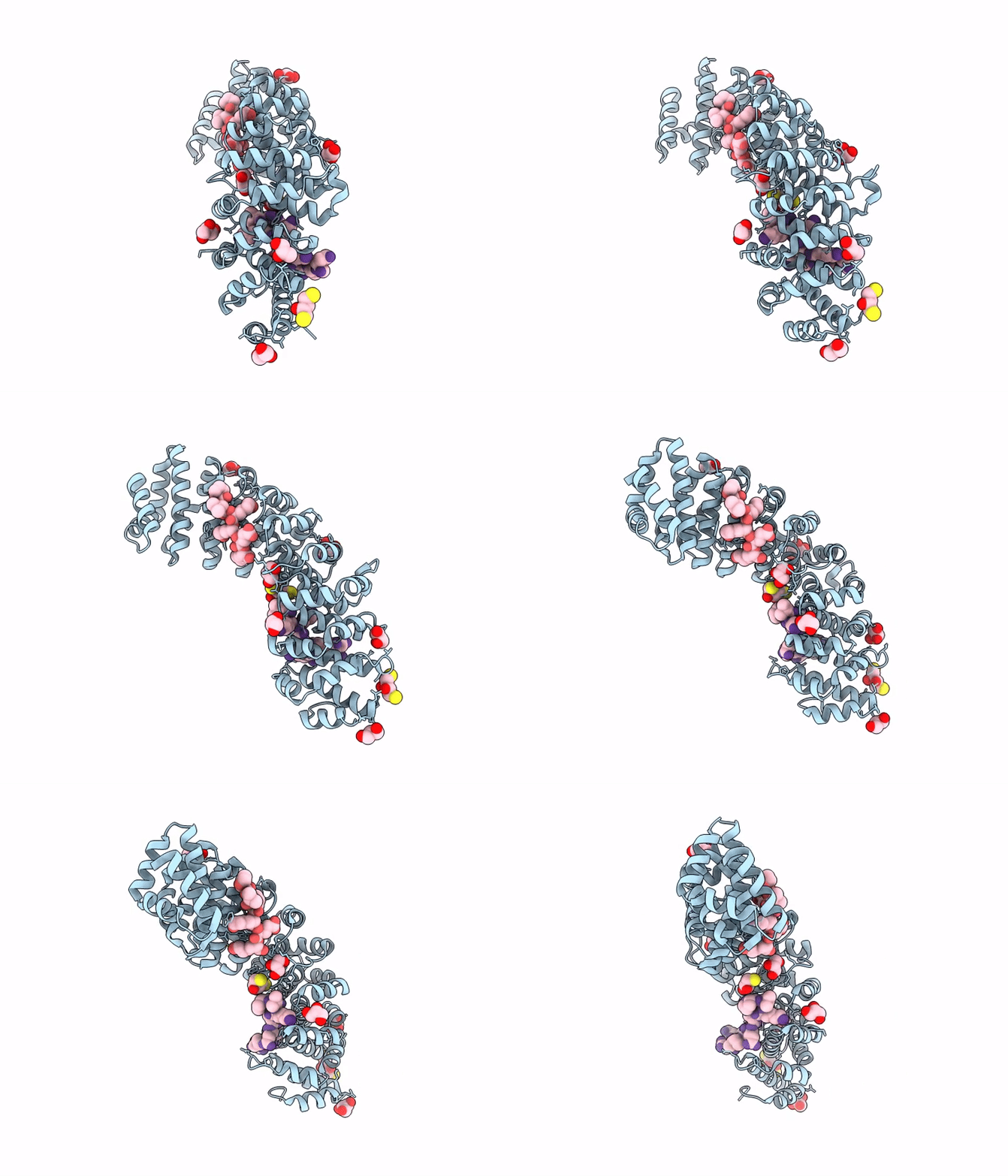
9CLG image
Deposition Date 2024-07-11
Release Date 2025-09-03
Last Version Date 2025-09-03
Entry Detail
PDB ID:
9CLG
Title:
Importin alpha isoform 2 with synthetic zero net-charge nuclear localization signal
Biological Source:
Source Organism:
Method Details:
Experimental Method:
Resolution:
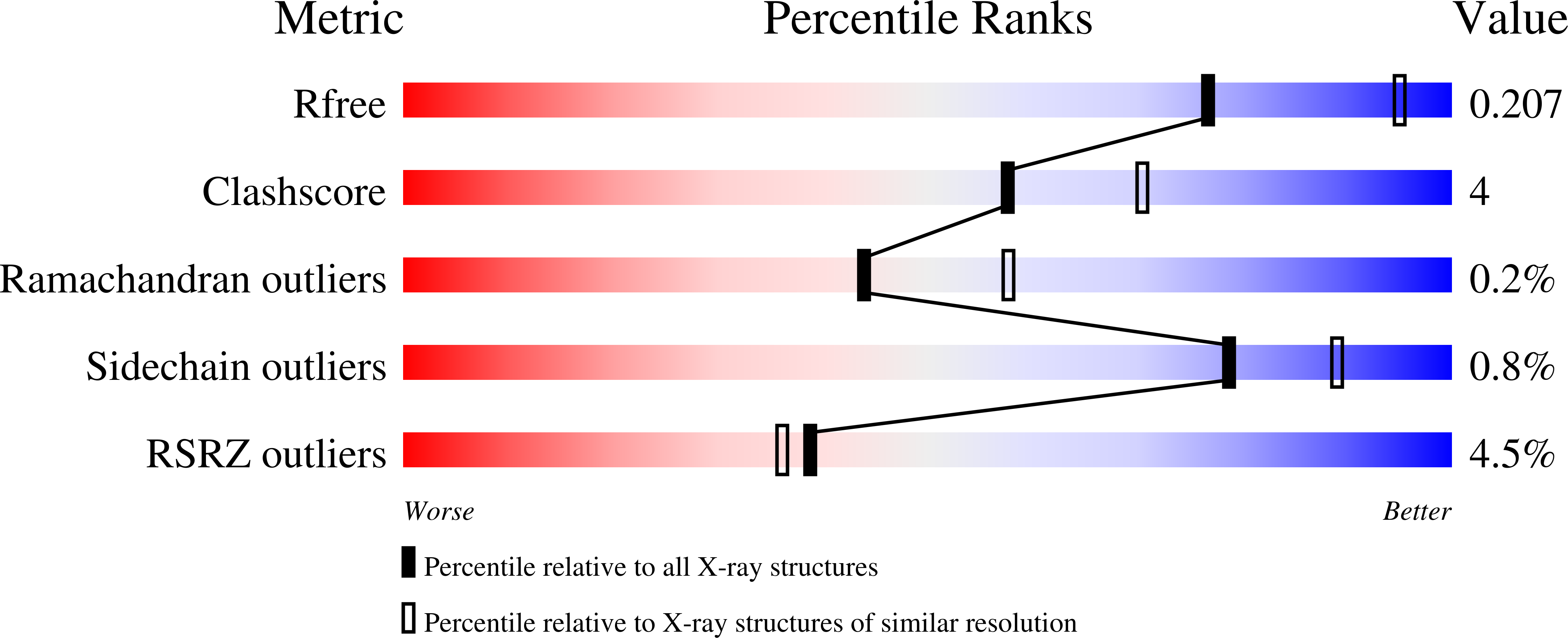
2.42 Å
R-Value Free:
0.20
R-Value Work:
0.16
R-Value Observed:
0.16
Space Group:
P 21 21 21
Macromolecular Entities
Structures with similar UniProt ID
Protein Blast
Polymer Type:polypeptide(L)
Molecule:Importin subunit alpha-1
Gene (Uniprot):Kpna2
Chain IDs:A
Chain Length:510
Number of Molecules:1
Biological Source:Mus musculus
Polymer Type:polypeptide(L)
Molecule:Zero net-charge NLS
Chain IDs:B, C
Chain Length:9
Number of Molecules:2
Biological Source:synthetic construct
Primary Citation
Probing the extent of importin-alpha targeting of the TAF8 NLS by eliminating its cationic net-charge.
Protein Sci. 34 e70272 e70272 (2025)
PMID: 40852899 DOI: 10.1002/pro.70272

Abstact

The nucleus, as the control center of the eukaryotic cell, is a prime target for therapeutic interventions due to its role in regulating genetic material. Importin-α is critical for successful nuclear import as it recognizes and binds to cargo proteins bearing a classical nuclear localization signal (NLS), which facilitates their transport from the cytoplasm into the nucleus. NLS tagging to 'actively' import therapeutics provides the most effective means of maximizing nuclear localization and therapeutic efficacy. However, traditional NLSs are highly cationic due to the recognition and binding requirements with importin-α. Because of their highly 'super-charged' nature, NLS-tagged therapeutics face significant challenges, including poor pharmacokinetics due to non-specific interactions. In this study, we engineered novel NLS tags with zero net charge to potentially overcome this limitation. Computational modeling and experimental validation revealed that these net-neutral NLSs bind to importin-α with similar modes and energies as their cationic counterpart. High-resolution structural determination and analysis by X-ray crystallography then confirmed their binding modes. Biophysical methods using circular dichroism, microscale thermophoresis, and cellular localization studies demonstrated that these NLSs maintain sufficiently stable complexes and acceptable binding to importin-α and are functional. Additionally, this study revealed that the minor NLS-binding site of importin-α, with its extensive cationic surface area, was particularly suited for interactions with the acidic residues of the net-neutral NLSs. This study provides a foundational understanding of NLS-importin interactions and presents net-neutral NLSs as viable candidates for next-generation NLS-therapeutic development and expands the scope of nuclear-targeting therapies.

Legend

Protein

Chemical

Disease

Primary Citation of related structures
Feedback Form
Name
Email
Institute
Feedback