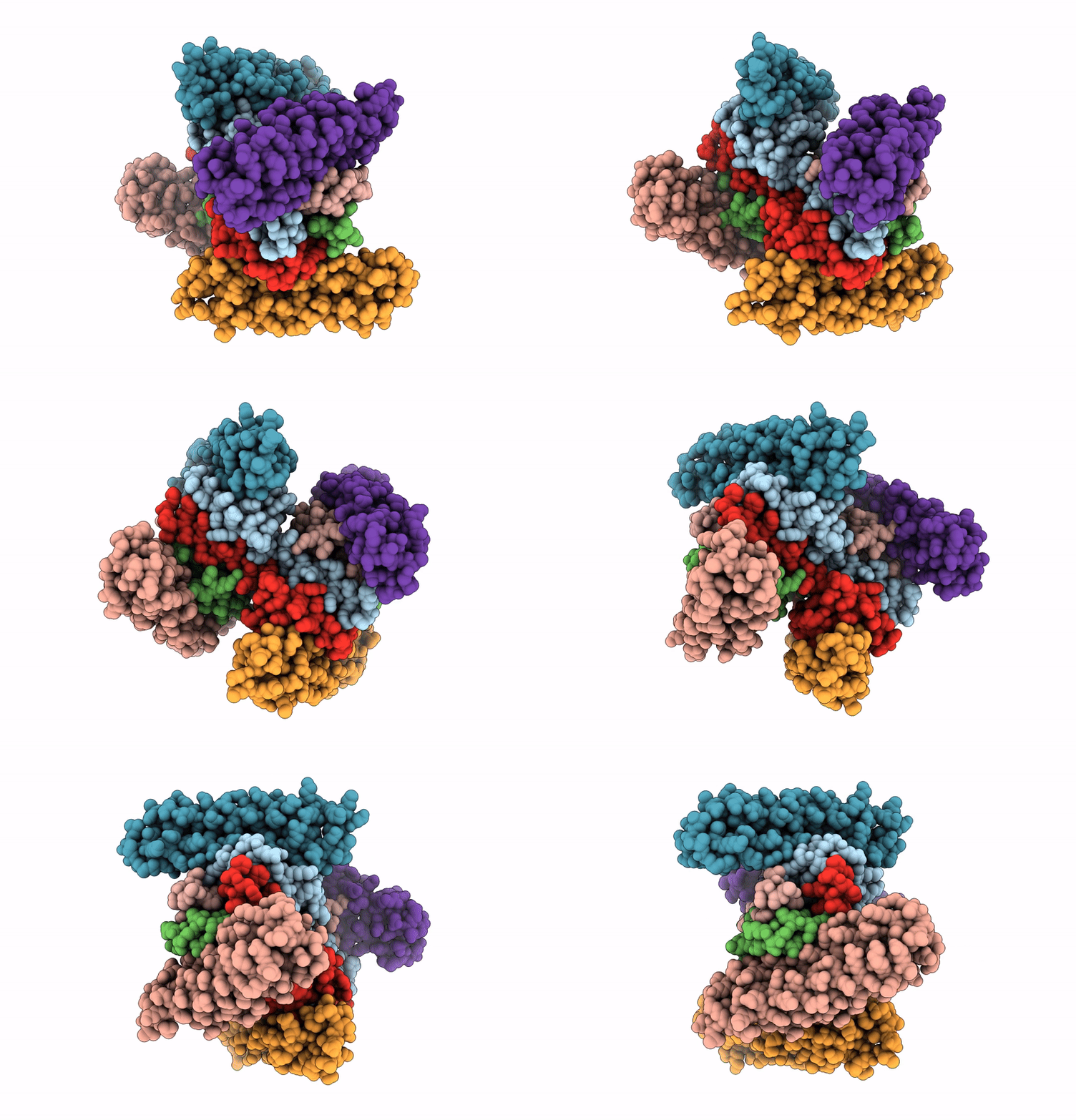
9CLB image
Deposition Date 2024-07-10
Release Date 2025-07-16
Last Version Date 2025-09-17
Entry Detail
PDB ID:
9CLB
Keywords:
Title:
Crystal structure of Bak bound to the inhibitory aBAK
Biological Source:
Source Organism:
Host Organism:
Method Details:
Experimental Method:
Resolution:
2.86 Å
R-Value Free:
0.26
R-Value Work:
0.22
R-Value Observed:
0.22
Space Group:
P 1
Macromolecular Entities
Structures with similar UniProt ID
Protein Blast
Polymer Type:polypeptide(L)
Molecule:Bcl-2 homologous antagonist/killer
Gene (Uniprot):BAK1
Mutagens:C166S
Chain IDs:A, C, E, G
Chain Length:101
Number of Molecules:4
Biological Source:Homo sapiens
Polymer Type:polypeptide(L)
Molecule:aBAK
Chain IDs:B, D, F, H
Chain Length:119
Number of Molecules:4
Biological Source:synthetic construct
Ligand Molecules
Primary Citation
Computational design of potent and selective binders of BAK and BAX.
Sci Adv 11 eadt4170 eadt4170 (2025)
PMID: 40911686 DOI: 10.1126/sciadv.adt4170

Abstact

Potent and selective binders of the key proapoptotic proteins BAK and BAX have not been described. We use computational protein design to generate high affinity binders of BAK and BAX with greater than 100-fold specificity for their target. Both binders activate their targets when at low concentration, driving pore formation, but inhibit membrane permeabilization when in excess. Crystallography shows that the BAK binder induces BAK unfolding, exposing the α6 helix and BH3 domain. Together, these data suggest that upon binding, BAK or BAX unfold; at high binder concentrations, self-association of the partially folded BAK or BAX proteins is blocked and the membrane remains intact, whereas at low concentrations, dimers form, and the membrane ruptures. Our designed binders modulate apoptosis via direct, specific interactions with BAK and BAX and reveal that for therapeutic strategies targeting BAK and BAX, inhibition requires saturating binder concentrations at the site of action.

Legend

Protein

Chemical

Disease

Primary Citation of related structures
Feedback Form
Name
Email
Institute
Feedback